Tuesday, March 31, 2020

Vericool raises $19.1 million for its plant-based packaging replacement for plastic coolers

Vericool, a Livermore, Calif.-based startup that’s replacing plastic coolers and packaging with plant-based products, has raised $19.1 million in a new round of financing.

The company’s stated goal is to replace traditional packaging materials like polystyrene with plant-based insulating packaging materials.

Its technology uses 100% recycled paper fibers and other plant-based materials, according to the company, and are curbside recyclable and compostable.

Investors in the round include Radicle Impact PartnersThe Ecosystem Integrity FundID8 Investments and AiiM Partners, according to a statement.

“We’re pleased to support Vericool because of the company’s track record of innovation, high-performance products, well-established patent portfolio and focus on environmental resilience. We are inspired by the company’s social justice commitment to address recidivism and provide workplace opportunity to formerly incarcerated individuals,” said Dan Skaff, managing partner of Radicle Impact Partners and Vericool’s new lead director. 

Post by startupsnows.blogspot.com

OrbitFab secures National Science Foundation funding to propel its satellite refueling tech to space

On-orbit satellite refueling technology is closer than ever to a practical reality, which could help immensely with the cost and sustainability of orbital businesses. Startup OrbitFab, a 2019 TechCrunch Battlefield finalist, is one of the companies working to make orbital refueling a reality, and it just secured a new contract from the National Science Foundation’s early stage deep tech R&D initiative America’s Seed Fund to further its goals.

The contract is specifically for development of a solution that provides rendezvous and docking capabilities in space, managing the end-to-end process of connecting two spacecraft and transferring fuel from one to the other. OrbitFab unveiled its connector hardware for making this possible last October at Disrupt, which it now refers to as its Rapidly attachable Fluid Transfer Interface (RAFTI). The RAFTI is designed as a replacement for existing valves used in satellites for fueling and draining propellant from spacecraft, but would seek to establish a new standard that provides easy interoperability both with ground fueling, and with in-space refueling (or fuel transfer from one satellite to another, depending on what’s needed).

Already, OrbitFab has managed to fly twice to the International Space Station (ISS), and last year it became the first ever private company to supply the orbital lab with water. It’s not resting on its laurels, and this new contract will help it prepare a technology demonstration of the docking process it’s RAFTI facilitates in its own test facilities this summer.

Longer-term, this is just phase one of a multi-par funding agreement with the NSF. Phase one includes $250,000 to make that first demo, and then ultimately that will lead to an inaugural trial of a fuel sale operation in space, which OrbitFab CMO Jeremy Schiel says should happen “within two years.”

“This will involve 2 satellites, our tanker, and a customer satellite, in a low LEO [low Earth orbit] docking, exchanging fuel, and decoupling, and repeating this process as many times as we can to demonstrate our capability,” he wrote via email.

There have been a number of technical projects and demonstrations around orbital refueling, and some of the largest companies in the industry are working on the challenge. But OrbitFab’s approach is aiming for simplicity, and ease of execution, along with a common standard that can be leveraged across a wide range of satellites large and small, from a range of companies. Already, OrbitFab says it’s working with a group of 30 different campaigns and organizations on making RAFTI a broadly adopted interface.

If successful, OrbitFab could underpin a future orbital commercial operating environment in which fuel isn’t nearly as much a concern when it comes to launch costs, with on-orbit roving gas stations addressing demand for spacecraft once they reach space, and paying a price for propellant that’s defrayed by common, bulk shipments instead of broken up piecemeal.

Post by startupsnows.blogspot.com

On-demand shuttle startup Via hits $2.25 billion valuation on latest funding round led by Exor

On-demand shuttle startup Via has hit a $2.25 billion valuation following a Series E funding round led by Exor, the Agnelli family holding company that owns stakes in PartnerRe, Ferrari and Fiat Chrysler Automobiles.

The Series E funding round, which included other investors, totaled $400 million, according to a source familiar with the deal. Exor invested $200 million into Via as part of the round, both companies said in an announcement. Noam Ohana, who heads up Exor Seeds, the holding company’s early-stage investment arm, will join Via’s board.

New investors Macquarie Capital, Mori Building and Shell also participated in the round, as well as existing investors 83North, Broadscale Group, Ervington Investments, Hearst Ventures, Planven Ventures, Pitango and RiverPark Ventures.

Via, which employs about 700 people, plans to use most of these funds to expand its “partnerships,” the software services piece of its business. Via has two sides to its business. The company operates consumer-facing shuttles in Chicago, Washington, D.C. and New York. But the core of its business is really its underlying software platform, which it sells to cities and transportation authorities to deploy their own shuttles.

When the company first launched in 2012, there was little interest from cities in the software platform, according to co-founder and CEO Daniel Ramot. The company started by focusing on its consumer-facing shuttles. Over time, and using the massive amounts of data it collected through these services, Via improved its dynamic, on-demand routing algorithm, which uses real-time data to route shuttles to where they’re needed most.

Via landed its first city partnership with Austin in late 2017, after providing the platform to the transit authority for free. It was enough to allow Via to develop case studies and convince other cities to buy into the service. In 2019, the partnerships side of the business “took off,” Ramot said in a recent interview, adding that the company was signing on two to three cities a week before the COVID-19 pandemic.

Today, the Via platform is used by more than 100 partners, including cities such as Los Angeles and Cupertino, Calif., and Arriva Bus UK, a Deutsche Bahn company that uses it for a first and last-mile service connecting commuters to a high-speed train station in Kent, U.K.

Raising funds in a pandemic

Via managed to close the funding round during an inauspicious time for startups that have found it increasingly difficult to lock in capital due to the COVID-19 pandemic. COVID-19, a disease caused by the coronavirus, has upended markets, along with every industrial and business sector, from manufacturing and transportation to energy and real estate.

Via managed to raise a sizable fund, which just closed, despite the credit tightening and uncertainty. Ramot told TechCrunch that while he was worried the round might be delayed, he noted that Exor is a long-term and patient investor that shares the company’s “same vision of where transit is going.”

Even now, as nearly every category within transportation — including public transit, ride-hailing, shared micromobility and airlines — has seen ridership drop or dry up altogether, Ramot and Ohana see a promising future.

Ohana said that the market is starting to understand the limits of ride-hailing — hurdles such as poor unit economics and an uncertain path to profitability. “On the other hand, the size of the market for an on-demand dynamic shuttle service is large and underappreciated,” Ohana said. “When we look at public transit today, there is a significant opportunity for Via, which already has impressive experience working with municipal and public transit partners across the globe.”

That doesn’t mean Via is immune to the widespread tumult caused by the COVID-19 pandemic. Via’s consumer business has been negatively affected as ridership has dropped due to the spreading disease.

However, there has been some promise with its partnerships business, Ramot said.

Existing partners, a list that includes transit authorities in Berlin, Germany, Ohio and Malta, have worked with Via to convert or adapt the software to meet new needs during the pandemic. A city might dedicate its shuttle service to transporting goods or essential personnel. For instance, Berlin converted its 120-shuttle fleet transport to an overnight service that provides free transit to healthcare workers traveling to and from work.

“There has been a real interest in emergency services,” Ramot said, adding he expects to see more demand for the software platform and the flexibility it provides as the pandemic unfolds.

Post by startupsnows.blogspot.com

Join the FirstMark Capital squad for a live Q&A on Zoom tomorrow at 9am PDT

Stuck at home?

JK! I know you are! You’re not alone.

FirstMark Capital partners Rick Heitzmann, Amish Jani, Matt Turck and Beth Ferreira are also working from home. But neither distance nor virus can truly keep us all apart.

That’s why I’m thrilled to announce that tomorrow at 12pm EDT/9am PDT, we will be joined by these wonderful FirstMark partners for a live Zoom chat.

We’ll ask how they’re advising their portfolio companies during this challenging times, how Covid-19 has changed their investment thesis (if at all) and what trends are exciting to them. More importantly, guests of the Zoom will also be able to ask questions and have them answered live on the call.

FirstMark has an impressive portfolio that includes Shopify, Airbnb, InVision, Pinterest, DraftKings, Discord, and many, many more. The NYC-based firm is on its fourth early stage fund and second growth-stage fund, with $480 million between the pair. (TechCrunch covered FirstMark’s latest funds here.)

I’m amped to talk to Heitzmann, Jani, Turck and Ferreira and hope you’ll join us. Interested? Hit up this Zoom link at 12pm EDT/9am PDT to take part! (Please observe normal human manners: Wear clothes, don’t screenshare, generally be polite.)

We’ll publish a lightly edited audio recording and transcript to Extra Crunch on Thursday for folks who miss out! But for everyone who can make it, we’ll see you tomorrow at Noon Eastern. West Coast folks can dial in over breakfast.

Post by startupsnows.blogspot.com

How to value a startup in a downturn

The value of technology companies has fallen as the broader public markets have repriced themselves in light of COVID-19-related market and economic disruptions.

And as the public markets sort out the new value of a huge piece of global business, private companies are being shaken as well.

What happens in the public markets trickles into the private markets, so if we’re seeing the value of public tech companies fall, startups are going to take a hit. To understand that dynamic, we spoke with Mary D’Onofrio, an investor with Bessemer Venture Partners. She’s the right person to chat with about the links between private valuations and public share prices as she not only helps put capital into growing startups, she also helps run the Bessemer cloud index (now a partnership with Nasdaq, and trackable on a day-to-day basis).

As she’s versed on both sides of the public-private divide, we asked her how she values startups in normal market conditions and in more turbulent times like today. We also dug into how founders are reacting to the changing world that may no longer be as amenable to their business plans. Pulling from our conversation, D’Onofrio told TechCrunch that startups want to be valued like companies were a few months ago, while investors want to pay today’s market prices.

But enough introduction, let’s get to the conversation. This interview has been edited for length and clarity; thanks to Holden Page and Walter Thompson for help with the transcription.

TechCrunch: During our last conversation, we discussed how to value startups. You explained a method in which you consider the future value of cash flows. How do you value startups today versus how much you think they’ll be worth down the road?

Mary D’Onofrio: I think what’s important to know is that outside of a market disruption, which I think was the the nature of the question to begin with, cloud software tends to trade on revenue and revenue growth. Companies should fundamentally be valued on the present value of their future free cash flows. But I think with cloud software, in particular, there’s a prioritization of taking [market]share, and then applying a very long term healthy margin structure on a very massive revenue base once you get there, and generating cash then.

And so I think in bull markets, when capital is readily available, prioritizing growth makes a lot of sense because you want to capture as much share as you can. And then losses are also tolerable because the capital is available to fund that massive growth. And there are actual measurable metrics that validate that structure, with CLTV to CAC [customer lifetime value to customer acquisition costs] being one of them.

Post by startupsnows.blogspot.com

Color is launching a high-capacity COVID-19 testing lab and will open-source its design and protocols

Genomics health technology startup Color is doing its part to address the global COVID-19 pandemic, and has detailed the steps it’s taking to support expansion of testing efforts in a new blog post and letter from CEO Othman Laraki on Tuesday. The efforts include development of a high-throughput lab that can process as many as 10,000 tests per day, with a turnaround time of within 24 hours for reporting results to physicians. In order to provide the most benefit possible from the effort of standing this lab up, Color will also make the design, protocols and specifics of this lab available open-source to anyone else looking to establish high-capacity lab testing.

Color’s lab is also already nearly ready to begin processing samples — it’s going live “in the coming week,” according to Laraki. The Color team worked in tandem with MIT’s Broad Institute, as well as Harvard and Weill Cornell Medicine to develop its process and testing techniques that can allow for higher bandwidth results output versus standard, in-use methods.

The focus of Color’s efforts in making this happen have been on using automation wherever possible, and seeking techniques that source parts and components, including reagents, that can come from different supply chains. That’s actually a crucial ingredient to being able to ramp efforts at scale nationally and globally, because if everyone is using the same lab processing methods, you’re going to run up against a bottleneck pretty quickly in terms of supplies. Being able to process tens of thousands of tests per day is great on paper, but it means nothing if one ingredient you need to make that happen is also required by every other testing lab in the country.

Color has also made efforts to address COVID-19 response in two other key areas: testing for front-line and essential workers, and post-test follow-up and processing. To address the need for testing for those workers who continue to operate in public-facing roles despite the risks, Color has redirected its enterprise employee base to providing, in tandem with governments and employers, onsite clinical test administration, lab transportation and results reporting with patient physicians.

For its post-test workflow, Color is working to address the challenges reported by other clinicians and health officials around how difficult it is to be consistent and effective in following up on the results of tests, as well as next steps. So the company is opening up their own platform for doing so, which they’ve re-tooled in response to their experience to date, and making that available to any other COVID-19 testing labs for free use. These resources include test result reporting, guidelines and instructions for patients, follow-up questionnaires around contact tracing and support for how to reach out to potentially exposed individuals tied to a patient who tests positive.

To date, Color says that it has been able to operate at cost, in part backed by support by philanthropic public and private donations. The company is encouraging direct outreach via its covid-response@color.com email in case anyone thinks they can contribute to or benefit from the project and the resources being made available.

Post by startupsnows.blogspot.com

VR workplace training startup Strivr lands $30 million Series B

Virtual reality has been two years away from mainstream adoption for the past six years. In that time, huge companies have made big VR bets only to walk away, countless VR startups have faded or flared out and investment has slowed significantly.

Building an attractive VR product for large enterprises to train employees remotely has remained one of the few major areas of opportunity, one that has been largely dominated by Strivr, which just locked down new funding bringing their total funding to $51 million.

The VR training startup has closed a $30 million Series B round led by Georgian Partners, a Canadian firm that hasn’t been very active in the AR/VR space. CEO Derek Belch says the company ended up pitching a few dozen firms in this raise, and that while the feedback was “overwhelmingly positive,” there were certainly some skeptics.

“Everyone knows that VR has been slower to adopt and tougher to anticipate,” Belch told TechCrunch.

While AR/VR startups seemed to be raising money left and right in 2016 when Strivr closed its seed round, the market is much sparser in 2020 after years of missed estimates and a relentless parade of shutdowns.

While consumer VR startups have almost unilaterally struggled to get off the ground in recent months, there has still been movement among enterprise offerings. Earlier this month, a competing VR training platform, Talespin, closed $15 million in funding. In late January, enterprise AR/VR teleconferencing app Spatial locked down $14 million. HaptX, which makes a high-end VR glove for enterprise use cases, nabbed $12 million in December.

Landing post-Series A funding has remained a tough challenge for VR enterprise startups where players are often positioning themselves to be judged in relation to their VR peers rather than to a Salesforce, Box or Atlassian.

“Nobody can get beyond a pilot program,” Belch said. “Investors want to know how real this market is and where the target is.”

Strivr emerged from Belch’s research at Stanford in 2014 as a VR application made to help football players train off the field. Belch had previously been a kicker for Stanford’s football team and his co-founder Jeremy Bailenson led the school’s Virtual Human Interaction Lab, a leading research hub that Facebook CEO Mark Zuckerberg visited while doing diligence on the Oculus deal.

As virtual reality gear was further commoditized and investment in the space grew hotter, Strivr soon pivoted from sports training towards workplace training, pitching their solution as a better way for companies to hand top-down instruction to employees. Their software offering is often a combination of interactive 360 videos and computer-generated scenarios that require more active participation from a trainee.

While other VR startups have pushed to integrate phone or tablet-based experiences, Belch says that he has pushed back on customer requests to move away from headset-only experiences towards phone-based 360-degree videos.

“Those are not our disruption, those are gimmicky and a cheap way to bring a new logo on,” Belch says.

The company’s customer base now includes FedEx, JetBlue, Verizon and BMW. Their biggest get was a deal with Walmart in 2017 that eventually grew into a company-wide rollout across all of their stores, a massive deal that Belch says has been a “blessing and a curse” due to the rollout’s scale.

“You have to be smart in terms of what you do that’s Walmart specific,” Belch told TechCrunch. “They’ll swallow you whole if you let them.”

Alongside the company’s funding news, the startup has announced that they’ve received a patent to use motion data to predict how effective users will be at the real world task post-training. Strivr now has 22,000 VR headsets out in the wild, which Belch says have registered 1.6 million sessions. The hardware is all from Oculus.

Strivr is in the fortunate position of closing this deal ahead of the recent pandemic-related market uncertainty– a situation that has complicated their ability to meet with prospective customers and has raised issues with sanitation that Strivr says they have addressed. While Belch sees this Series B as a validation of the customer feedback he’s gotten, he also knows that the VR industry remains fraught with challenges.

“Thirty million doesn’t last very long if you’re stupid, we’re going to make sure we’re very smart about it,” Belch says.

Post by startupsnows.blogspot.com

Cue Health awarded $13 million government contract to develop portable, point-of-care COVID-19 test

Biotech startup Cue Health has secured a $13 million contract from the U.S. Department of Health and Human Service’ Biomedical Research and Development Authority (BARDA), which will be used to speed the development and testing of a handheld molecular test that can detect the presence of the SARS-CoV-2 novel coronavirus that causes COVID-19.

Cue, which broke cover in 2014 with plans for a connected lab in a box for at-home testing and a $7.5 million funding round, is developing a product that pairs cartridge-like test kits with a compact and connected mini lab device that can transmit results to a personalized app-based health dashboard.

The startup received a previous $30 million contract from BARDA in 2018, which was earmarked for the development and validation of an over-the-counter diagnostic test for influenza and multiplex respiratory pathogens. This pre-existing relationship and work will be useful in helping jump-start the effort on developing COVID-19 testing, the company says.

“We have worked with the BARDA team for the past two years developing and testing a 20-minute, molecular influenza test designed for home and point-of-care use,” said Cue Health CEO Ayub Khattak in a statement. “Our connected platform could serve as a critical tool in identifying the SARS-CoV-2 virus.”

The company also raised a $45 million Series B funding round the same year, which was designed to help it fund the first set of FDA clinical products used to validate its first products aimed at providing consumer diagnostics.

Cue’s proposed test solution would provide results in under 25 minutes, using samples collected via nasal swab, with all testing done at point-of-care rather than requiring any round-trip shipping.

It’s far from the only rapid, point-of-care test either in development, in testing or already approved for use under the FDA’s Emergency Use Authorization, and there’s no specific timeline for this to become available. But the fact remains that the current testing gap needs to be addressed essentially by as many solutions as can be proven effective and viable – and this work should be useful long-term in addressing similar global crises and pandemics in future.

Post by startupsnows.blogspot.com

Startup group works to get flat-packed protective boxes to frontline COVID-19 medical workers

There are a number of initiatives by startup companies and entrepreneurs looking to support the healthcare response to COVID-19, and one that’s addressing a need in the realm of personal protective equipment is the COVID Box project launched by a group of volunteers in Toronto that includes startup founders and employees, as well as doctors and healthcare professionals.

The COVID-19 intubation box that this group is working to produce is a polycarbonate box that can be flat-packed for easy shipping, and assembled quickly on the receiving end, for use in healthcare facilities while medical personnel intubate a patient. Intubation is the process of inserting a plastic tube into a patient’s trachea to help keep their airway open, and is specifically necessary when someone needs to be put on a ventilator – a common outcome for patients severely affected by COVID-19.

The intubation box provides healthcare workers with an additional layer of protection, while the transparent plastic used means they can still perform the procedure. The design is based on an open-sourced original plan that was released by Dr. Hsien Yung Lai, a medical practitioner in Taiwan, specifically to address the global challenge of intubating COVID-19 patients worldwide while maintaining care worker safety as much as is possible.

The COVID Box project provides instructions on how to make your own box with the requisite materials, but it is hoping to secure more mass production capacity to deliver them at scale, starting with Canadian hospitals and hopefully expanding to address healthcare needs around the world, too. Project co-founder Jonathan Norris (co-founder and CTO of Taplytics) said the team has been working for a week on prototyping and production.

“Early last week Taplytics Head of Finance, Gloria Cheung, came to us letting us know that a group of Doctors were looking to get a simple plastic box made to protect Medical Providers while intubating patients who have COVID-19,” he said via message. “We were able to connect the doctors with a group of engineers from Taplytics and folks I know from mentoring in the FIRST Robotics program, to design and build multiple prototypes of a flat-packable box designed for this use. We worked with Eventscape to quickly built prototypes and got the final version approved for use in the Trillium Health Network yesterday.”

The group is looking for donations to help scale its efforts, as well as manufacturing partners that can help – especially those who have access to CNC router hardware, which is essentially the only equipment needed to put these out, as well as anyone who can supply 1/4″ polycarbonate sheets.

Post by startupsnows.blogspot.com

Xage adds full-stack data protection to blockchain security platform

Xage, a startup that has been taking an unusual path to secure legacy companies like oil and gas and utilities with help from the blockchain, announced a new data protection service today.

Xage CEO Duncan Greatwood, says that up until this point, the company has concentrated on protecting customers at the machine layer, but today’s announcement involves protecting data as it travels between parties, which is more of a classic blockchain security scenario.

“We are moving beyond the protection of machines with greater focus on the protection of data. And this announcement around Dynamic Data Security that we’re delivering today is really a data protection layer that spans multiple dimensions. So it spans from the physical machine layer right up to business transaction,” Greatwood explained.

He says that what separates his company from competitors is the ability to have that protection up and down the stack. “We can guarantee the authenticity, integrity and the confidentiality of data, as it’s produced at the machine, and we can maintain that all the way to [delivery to the various parties],” he said.

Greatwood says that this solution is designed to help protect data, even in highly complex data sharing scenarios, using the blockchain as the trust mechanism. Imagine a supply chain scenario in which the parties are sharing data, but each participant only needs to see the piece of data they need to complete their part of the transaction and no more. To do this, Xage has the concept of security fabric, which acts as a layer of protection across the platform.

“What Xage is doing is to use this kind of security outsource approach we bring to authenticity, integrity and confidentiality, and then using the fabric to replicate all of that security metadata across the extent of the fabric, which may very well cover multiple locations and multiple participants,” he said.

This approach enables customers to have confidence in the providence and integrity of the data they are seeing. “We’re able to allow all of the participants to define a set of security policies that gives them control of their own data, but it also allows them to share very flexibly with the rest of the participants in the ecosystem, and to have confidence in that data, up to and including the point where they’ll pay each other money, based on the integrity of the data.”

The new solution is available today. It has been in testing with three beta customers, which included an oil and gas customer, a utility and a smart city scenario.

Xage was founded in 2016 and has raised just over $16 million, according to PitchBook data.

Post by startupsnows.blogspot.com

Substack offers $100K in grants for independent writers

Substack is taking several steps to support the writers and publications using its newsletter platform.

After all, just as writers and newsrooms are starting to build real businesses on Substack, the COVID-19 pandemic is dealing a huge financial blow to the media industry.

In response, the startup says it will donate $100,000 in grants — which will range from $500 to $5,000 in cash, “no strings attached” — to independent writers who are experiencing financial hardship. Applications open today and will close next week, on April 7.

The startup also says it will waive its 10 percent fee for publications if they donate their earnings to the effort against COVID-19 (that could mean donating to nonprofits, or to businesses that are threatened by the pandemic). The initial waiver is for one month, but it could be extended for up to three months.

Lastly, Substack publications will soon be able to customize their subscription pages, so that readers do more to support their favorite writers. For example, a publication could add a “super supporters” option that allows subscribers to pay even more than an annual subscription price.

In a blog post, CEO Chris Best said:

Unfortunately, we … know that writers and creatives are among the hardest hit by the economic downturn and are experiencing decreasing job opportunities, canceled projects, and pay cuts. Yet while advertising budgets get slashed, readers are more eager than ever to directly support the creators they care about because they believe, like we do, that journalism and the arts are more necessary than ever in times of crisis.

Post by startupsnows.blogspot.com

Venture capital isn’t escaping the downward spiral of the global economy

Hello and welcome back to our regular morning look at private companies, public markets and the gray space in between.

This morning we’re looking at what venture capitalists got up to in the first quarter of the year and how they are really responding to the current global crisis.

It’s easy to find mixed signals on Twitter, with some VCs noting that they have slowed their investing cadence or tightened criteria as the markets shed value. Others claim to be as active as before. Founders are reporting new, higher standards that private capital deals now appear to require. TechCrunch compiled a number of reports from entrepreneurs which described an either slowed, more conservative or utterly frozen venture capital scene.

It seems very likely, then, that the United States’ venture capital results for Q1 will be somewhat weak. The full impact of the COVID-19 pandemic, however, may show up more acutely in Q2 2020. Why? Because venture data is famously — and annoyingly — laggy. Rounds are announced weeks or months after they are completed, and the timing of their announcements is impacted by news cycles.

So what we see in Q1 2020 venture data will contain deals that took place in the latter days of 2019; Q2 2020 data, in contrast, will feature mostly 2020 deals and will include a reporting period in which a lot of later Q1 deals would have been completed. This does not mean that there’s no use in looking at Q1 results — we’re looking for early signals, not complete answers in the data.

So let’s dig up what information we can on our own, mix in some data from other reports and see what the tea leaves are saying about Q1 venture results so far.

Post by startupsnows.blogspot.com

Dining and takeout startup Allset raises $8.25M as it adapts to life under lockdown

Even though this might seem to be the absolute worst time to try to round up funding for a restaurant-related startup, Allset is announcing that it’s raised an $8.25 million Series B.

It was not, to be clear, an easy process. CEO Stas Matviyenko (who founded the company with COO Anna Polishchuk) admitted that when he set out to fundraise, the goal was actually $12 million. And at one point, it looked like he might even raise more than that — but as he finalized the round in the week before widespread social distancing measures started to take effect around the United States (effectively ending dine-in options in some cities), he said, “A few investors just disappeared.”

Still, Matviyenko said he feels “lucky” to have closed out the round at all. And he pointed to signs that consumers and restaurants are still turning to Allset during the COVID-19 pandemic.

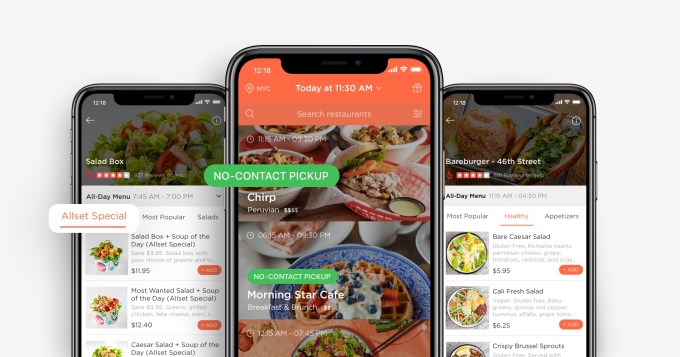
The company started out with a focus on delivering a quick dining experience in restaurants, allowing diners to make a reservation, order ahead and then pay directly through the Allset app. Over time, Matviyenko said, the app also began to offer personalized, healthy recommendations at each restaurant.

At the same time, Allset has added takeout options — and most recently, a feature that allows restaurants to offer contactless takeout, akin to the contactless option offered by many restaurant delivery apps. In fact, Allset is waiving its 12 percent commission fee for restaurants offering this option. (It’s also been promoting usage by offering a daily $4 discount for takeout orders.)

Allset

Image Credits: Allset

And while Matviyenko said that orders dropped by around 60 percent as social distancing measures went into place, they’ve apparently they’ve bounced back (by 10 percent as Allset signed up new partners — usually in more residential neighborhoods, away from the office-heavy areas where the companies had previously focused. Matviyenko said the startup has added more than 200 new restaurants in the past couple weeks.

He also emphasized the distinction between AllSet and the various delivery apps. He didn’t rule out adding a delivery option to Allset in the future, but since delivery requires such an investment in logistics, he’d likely to do it by partnering with a company already working in this area. Conversely, he suggested that for most delivery apps, takeout is usually an afterthought (assuming they support it at all), while Allset is trying to offer “the best [takeout] experience” possible.

The new round brings Allset’s total funding to $16.6 million. It was led by led by EBRD (the European Bank for Reconstruction and Development), with participation from Andreessen Horowitz, Greycroft, SMRK VC Fund and Inovo Venture Partners.

“The Allset team is building a great product and their effective execution yields strong unit economics with sustainable growth,” said EBRD’s Maria Barsuk in a statement. “We’re excited to partner with them in their next phase, as well as proud to support their efforts in serving local businesses and customers during this unprecedented time for the restaurant industry.”

Post by startupsnows.blogspot.com

Axonius nabs $58M for its cybersecurity-focused network asset management platform

As companies get to grips with a wider (and, lately, more enforced) model of remote working, a startup that provides a platform to help track and manage all the devices that are accessing networked services — an essential component of cybersecurity policy — has raised a large round of growth funding. Axonius, a New York-based company that lets organizations manage and track the range of computing-based assets that are connecting to their networks — and then plug that data into some 100 different cybersecurity tools to analyse it — has picked up a Series C of $58 million, money it will use to continue investing in its technology (its R&D offices are in Tel Aviv, Israel) and expanding its business overall.

The round is being led by prolific enterprise investor Lightspeed Venture Partners, with previous backers OpenView, Bessemer Venture Partners, YL Ventures, Vertex, and WTI also participating in the round.

Dean Sysman, CEO and Co-Founder at Axonius, said in an interview that the company is not disclosing its valuation, but for some context, the company has now raised $95 million, and PitchBook noted that in its last round, a $20 million Series B in August 2019, it had a post-money valuation of $110 million.

The company has had a huge boost in business in the last year, however — especially right now, not a surprise for a company that helps enable secure remote working, at a time when many businesses have gone remote in an effort to follow government policies encouraging social distancing to slow the spread of the coronavirus pandemic. As of this month, Axonius has seen customer growth increase 910% compared to a year ago.

Sysman said that this round had been in progress for some time ahead of the announcement being made, but the final stages of closing it were all done remotely last week, which has become something of a new normal in venture deals at the moment.

“We’ve all been staying at home for the last few weeks,” he said in an interview. “The crisis is not helping with deals. It’s making everything more complex for sure. But specifically for us there wasn’t a major difference in the process.”

Sysman said that he first thought of the idea for Axonius when at a previous organization — his experience includes several years with the Israeli Defense Forces, as well as time at a startup called Integrity Project, acquired by Mellanox — where he realised the organization itself, and all of its customers, never actually knew how many devices accessed their network, which is a crucial first step in being able to secure any network.

“Every CIO I met I would ask, do you know how many devices you have on your network? And the answer was either ‘I don’t know,’ or big range, which is just another way of saying, ‘I don’t know,'” Sysman said. “It’s not because they’re not doing their jobs but because it’s just a tough problem.”

Part of the reason, he added, is because IP addresses are not precise enough, and de-duplicating and correlating numbers is a gargantuan task, especially in the current climate of people using not just a multitude of work-provided devices, but a number of their own.

That was what prompted Sysman and his cofounders Ofri Shur and Avidor Bartov to build the algorithms that formed the basis of what Axonius is today. It’s not based on behavioural data as some cybersecurity systems are, but something that Sysman describes as “a deterministic algorithm that knows and builds a unique set of identifiers that can be based on anything, including timestamp, or cloud information. We try to use every piece of data we can.”

The resulting information becomes a very valuable asset in itself that can then be used across a number of other pieces of security software to search for inconsistencies in use (bringing in the behavioural aspect of cybersecurity) or other indicators of malicious activity — specifically following the company’s motto, “Know Your Assets, Identify Gaps, and Automate Security Policy Enforcement” — even as data itself may seem a little pedestrian on its own.

“We like to call ourselves the Toyota Camry of cybersecurity,” Sysman said. “It’s nothing exotic in a world of cutting-edge AI and advanced tech. However it’s a fundamental thing that people are struggling with, and it is what everyone needs. Just like the Camry.”

For now, Axonius is following the route of providing a platform that can interconnect with a number of other security products — currently numbering around 100 — rather than building those tools itself, or acquiring them to bring them in house. That could be one option for how potentially it might evolve over time, however.

For now, the idea of being agnostic to those specific tools and providing a platform just to identify and manage assets is a formula that has already seen a lot of traction with customers — which include companies like Schneider Electric, the New York Times, and Landmark Medical, among others — as well as investors.

“Any enterprise CISO’s top priority, with unwavering consistency, is asset discovery and management. You can’t protect a device if you don’t know it exists.” said Arsham Menarzadeh, general partner at Lightspeed Venture Partners, in a statement. “Axonius integrates into any security and management product to show customers their full asset landscape and automate policy enforcement. Their integrated approach and remediation capabilities position them to become the operating system and single source of truth for security and IT teams. We’re excited to play a part in helping them scale.”

Post by startupsnows.blogspot.com

Leading VCs discuss how COVID-19 has impacted the world of digital health

In December 2019, Extra Crunch spoke to a group of investors leading the charge in health tech to discuss where they saw the most opportunity in the space leading into 2020.

At the time, respondents highlighted startups in digital therapeutics, telehealth and mental health that were improving medical practitioner efficiency or streamlining the distribution of care, amongst a variety of other digital health markets that were garnering the most attention.

In the months since, the COVID-19 crisis has debilitated national healthcare systems and the global economy. Weaknesses in healthcare systems have become clearer than ever, while startups and capital providers have struggled to operate while wide swaths of the market effectively shut down.

Given significant volatility and the rapid changes seen in the worlds of healthcare, venture and startups broadly, we wanted to understand which inefficiencies might have been brought to light, what new opportunities might exist for founders looking to reduce friction in healthcare systems, how digital health startups have been impacted and how health tech investing as a whole has changed.

We asked several of the VCs who participated in our last digital health survey to update us on how COVID-19 is impacting digital health startups and broader healthcare systems around the world:

Annie Case, Kleiner Perkins

Our current unprecedented global crisis has put a spotlight on digital health. In the last few weeks alone, we have seen what feels like a decade’s worth of societal and regulatory changes that require digital health companies to step up and embrace new challenges and opportunities.

Post by startupsnows.blogspot.com

Monzo CEO won’t take salary for 12 months after limited number of staff offered voluntary furlough

Monzo, the U.K. challenger bank with over 4 million account holders, is taking a number of precautionary steps to help see it through the current coronavirus downturn, including voluntary furloughs and its CEO forgoing a salary, TechCrunch understands.

In an internal company-wide memo issued by co-founder and CEO Tom Blomfield, he tells the bank’s over 1,500 staff that he won’t be taking a salary for the next twelve months, and that the senior management team and board have volunteered to take a 25% cut in salary, as have other “Monzonaughts” within the company.

In addition, a limited number of Monzo’s U.K. employees are being offered voluntary furloughing for two months, as part of the scheme rolled out by the U.K. government to protect jobs during the coronavirus lockdown, which is already impacting many companies — not just Monzo — including several other fintechs I know of. Furlough ensures that employees still get paid even when work has decreased and that when things hopefully return to normal there is a job to come back to.

Although well capitalised, like other banks and fintechs, Monzo has seen customer card spend reduce at home and (of course) abroad, meaning it is seeing less revenue from interchange fees. New account signups have also slowed, as has customer support requests. It therefore makes sense to utilise the furlough scheme to help protect jobs in the future when demand picks up again. By making it voluntary, it also means staff with kids to home school or loved ones to take care of, can use the option to hopefully make their lives easier for the time being.

Specifically, I understand Monzo is accepting up to 175 furlough applications in customer support, and up to 120 applications from other parts of the business.

Meanwhile, it’s not clear if other U.K. challenger banks are also using the government’s furlough scheme. I’ve asked Starling and Revolut, for example, but have yet to hear back. As already mentioned, the scheme is available to U.K. companies right across the board and several startups, including fintechs, have already applied furloughing as a pre-cautionary measure.

Lastly, it should be stressed that none of the above should impact customers at Monzo, which, as a digital bank, is pretty well-positioned to operate during lockdown and with all staff already working from home. It is also a fully licensed bank, with customer deposits up to £85,000 protected as part of the U.K. government’s deposit protection scheme.

Post by startupsnows.blogspot.com

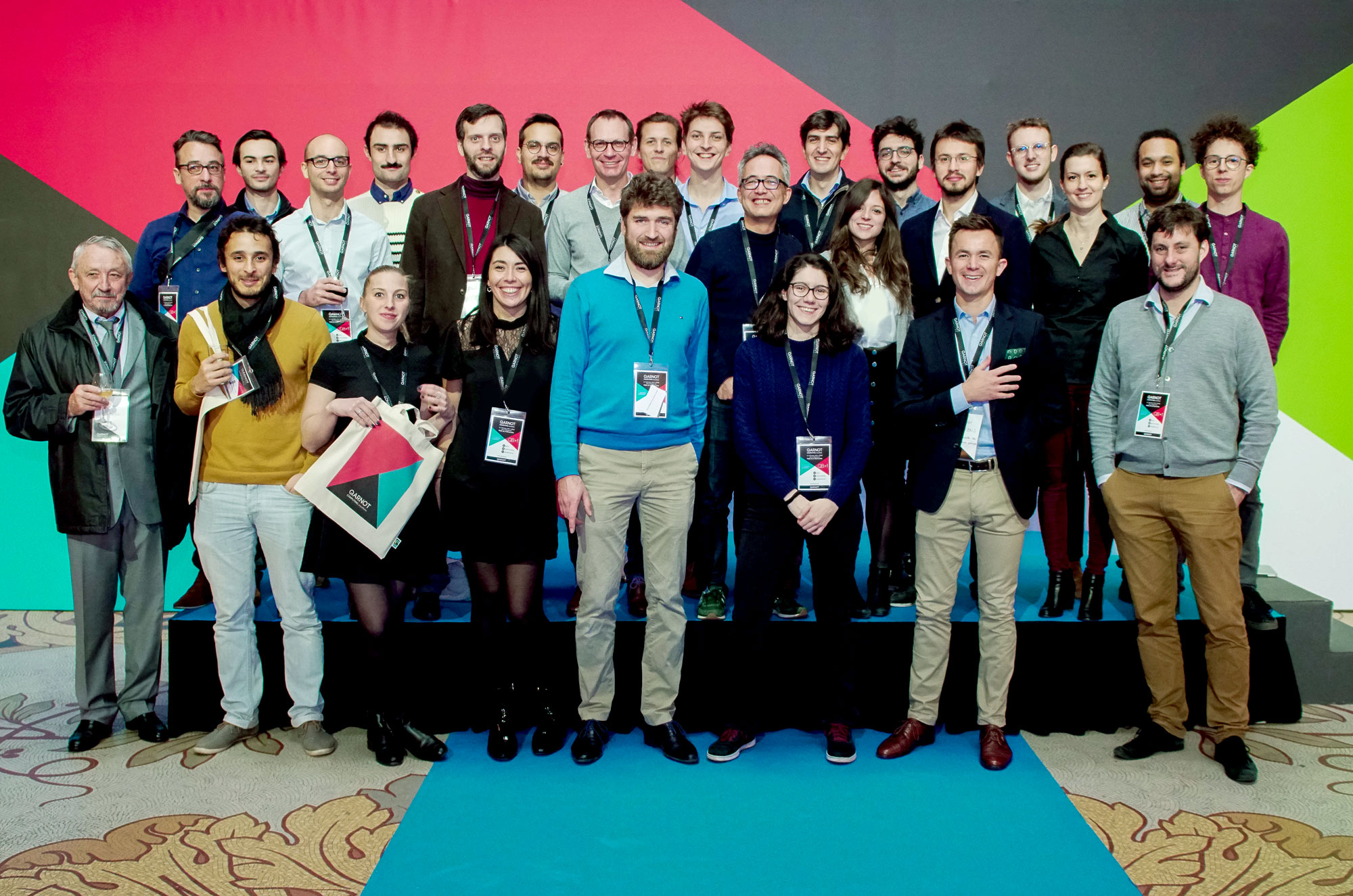
Qarnot raises $6.5 million for its computer servers that heat buildings

French startup Qarnot has raised a $6.5 million (€6 million) funding round. The company manufactures heaters and boilers with a special trick — they pack computers as computers tend to generate a lot of heat. Qarnot then lets companies leverage that computing power by running tasks on those unusual servers.

Banque des Territoires, Caisse des Dépôts, Engie Rassembleur d'Énergies, A/O PropTech and Groupe Casino are participating in today’s funding round.

When you design a data center, you transform electricity into computing resources and heat. Data centers always have to find clever new ways to get rid of heat with powerful cooling mechanisms.

Qarnot is designing alternative data centers by taking advantage of heat instead of fighting heat. The company first started with computing heaters, an electrical heater with a server. The company sells those devices to construction companies looking for heaters for their new buildings.

People living or working in those buildings can then control heating directly on the heaters or through a mobile app. Nearly 1,000 social housing units are heated by Qarnot.

At the other end of the equation, companies such as BNP Paribas, Société Générale and Natixis rent those servers for their own needs. Illumination Mac Guff is also using the platform to generate 3D models for animated movies.

Heating suffers from seasonality. That’s why Qarnot has also designed scalable boiler systems. Those boilers pack CPU servers or a mix of CPU and GPU servers. Qarnot has also set up a joint venture with Groupe Casino to heat warehouses with computer racks.

Post by startupsnows.blogspot.com

Monday, March 30, 2020

Local services marketplace Thumbtack lays off 250 employees

Thumbtack CEO Marco Zappacosta announced in a blog post today that the company has laid off 250 employees.

Much has been written about the impact that the COVID-19 and the resulting social distancing/shelter in place measures are having on small businesses (and the steps that internet platforms like Facebook and Yelp — which, after all, make money from small businesses advertising — are taking to help)

Similarly, Zappacosta said the local services that Thumbtack showcases in its marketplace are also seeing anything from a “dramatic decline” to an “outright collapse.” Apparently the company’s business has fallen 61 percent in San Francisco, 55 percent in Detroit and 50 percent in New York City.

Thumbtack raised a $150 million round of funding last year, but Zappacosta said, “No business operates with enough of a buffer to sustain prolonged revenue declines of 40%+ without making radical changes.”

Those changes include reduced marketing, a hiring freeze and 25 percent salary reductions for executives. (Zappacosta said he will not take any salary at all, starting today.) And it also includes big layoffs.

Laid off workers will receive a severance package with both “cash and equity components,” Zappacosta said. He also said Thumbtack is doing what it can to help its service providers, such as “building features that support more remote work with customers — like video consults for a sink replacement that would typically be done onsite.”

Post by startupsnows.blogspot.com

Rebecca Minkoff has some advice for e-commerce companies right now

When Rebecca Minkoff first moved to New York City, the then-18-year-old was making $4.75 an hour.

“I just kept working for this designer and someone was telling me what to do every day. I just didn’t like that. And I thought if I’m going to work as hard, it’s going to be for myself and I want to call my own shots,” she said. “I didn’t want to be told what to do, frankly.”

Self-employment for Minkoff turned out just fine; in 2001, she redesigned the iconic “I Love New York” shirt and it appeared on The Tonight Show. After a shout-out from Jay Leno, Minkoff spent the next eight months making T-shirts on the floor of her apartment and quit her job to start designing full time.

We caught up with Minkoff to learn more about how she grew her brand into a global fashion company with the help of her brother, her problem with the unicorn mentality and why she thinks the “invisible barrier” is the future of retail tech.

This interview was edited for brevity and clarity.

TechCrunch: What gave you the energy and drive to become an entrepreneur?

Rebecca Minkoff: Long story. My mom would sell these cast covers, like decorative covers for people with broken arms at the flea market. And I was like, I am going to have a booth here. So I made all these tie-dye shirts and no one bought anything but it was just this idea of like, I can make something I can sell. My mom always taught that. When I wanted a dress, she taught me how to sew a dress instead of buying the dress. And so, I just got this bug for creating things out of nothing.

The constant thread was, “I’m not going to pay for this. You’re going to learn how to do it.”

Post by startupsnows.blogspot.com

Experience Disrupt SF online with the Disrupt Digital Pro Pass

Earlier this month we announced the launch of the Disrupt Digital Pass for TechCrunch’s flagship Disrupt SF event (September 14-16) as a way to help ensure that, no matter what, TechCrunch fans everywhere would be able to enjoy the big interviews at the show. We also hinted that we were working on a Pro edition of the Digital Pass for people who really want to engage as fully as possible with Disrupt SF, including all the programming on the four primary stages and lots of real-time interaction with fellow attendees, founders in Startup Alley, engaging Q&A sessions and our all important exhibitors and partners. That was trickier to figure out, but we’re there. 

Today we’re happy to unveil the Disrupt Digital Pro Pass that we’ve been working hard to finalize. Here’s what you get with your Disrupt Digital Pro Pass, starting at $245: 

  • Live stream and VOD (video-on-demand) from the Extra Crunch Stage. Live and on-demand access to TechCrunch editors’ discussions with top experts — growth marketers, lawyers, investors, technologists, recruiters — on topics critical to founders’ success. Pass holders, in-person and virtual, may submit questions in real time to the moderator onstage.
  • Live stream and VOD from the Q&A Stage. Virtual pass holders can submit questions during live Q&A sessions with speakers after they have appeared with TechCrunch editors on the Disrupt and Extra Crunch stages. 
  • VOD from the Showcase Stage. Watch top founders exhibiting in Startup Alley pitch and take questions from TechCrunch editors. 
  • Interact with early-stage startups in Startup Alley virtually. Browse the hundreds of exhibiting startups, organized by category, and watch their product demos on demand. Digital Pro pass holders can arrange 1:1 meetings with founders whether they be virtual or exhibiting on the show floor in-person.
  • Video conference networking with CrunchMatch. TechCrunch’s hugely popular platform to connect like-minded attendees will be accessible to Digital Pro pass holders as well as in-person attendees. Find attendees, request a meeting and connect via a private video conference. 
  • Virtual sponsor engagements. We love our sponsors, and they will be front and center for Digital Pro pass holders, whether that’s opportunities to set up 1:1 meetings virtually with sponsor reps or watch sponsors’ presentations. 

In addition, of course, Pro pass holders also have access to the features of the free Disrupt Digital Pass:

  • Live stream and VOD from the Disrupt Stage. Live and on-demand access to all the great interviews TechCrunch’s editors conduct with the biggest names in tech. 

You can expect to see the TechCrunch team at San Francisco’s Moscone Center during Disrupt, but now attendees can join us in person and/or virtually

Innovator, Founder, Investor and Startup Alley pass holders (except Expo Only passes) will also have access to all the Disrupt Digital Pro Pass features, as well as the opportunity to be present with us in San Francisco. 

Sign up for Disrupt SF today. 2020 marks the 10th anniversary of Disrupt SF, and we hope you will join us to celebrate, online or at Moscone. We would love to have you, either way.

Post by startupsnows.blogspot.com

Amid concerns that startups could be left out of COVID-19 bailout, investors step up lobbying

The massive bailout package that the U.S. government passed last week to stave off an economic collapse from measures put in place to mitigate the spread of the COVID-19 epidemic is giving out billions to American small businesses. But startups that received venture capital money could be left out.

So the nation’s investment organizations and lobbying firms are stepping up their efforts to get clarification around the specifics of the loan programs established under the Coronavirus Aid, Relief, and Economic Security (CARES) Act.

Their efforts could mean the difference between some of those billions in loans for small businesses going to startup companies or a whole swath of companies left falling through the cracks.

There appear to be two issues for startup entrepreneurs with the different types of loans that companies can receive.

The first is the “Affiliation Rules” that the Small Business Administration (SBA) uses to determine who is eligible for loans. Under the rules, companies could be required to count all of the employees at every company their investors have backed as part of their employee count — pushing the individual companies above the employee size threshold.

“Regardless of the purpose of these rules for traditional 7(a) loans, allowing the rules to exclude some of our country’s most innovative startups in this new loan program is manifestly contrary to the intent of the legislation: to help small businesses keep their lights on and their employees working despite the double financial squeeze created by the economic and financial market downturns,” according to a letter sent to Treasury Secretary Steve Mnuchin and SBA Administrator Jovita Carranza by the NVCA and other startup investment organizations. “Without clear guidance enabling startups and small businesses supported by equity investment to access the loan facility, many of these startups may be rendered ineligible.”

These issues around affiliation and 7(a) loans aren’t the only ones that startups may contend with. Startups could also be eligible for Economic Injury Disaster Loans (EIDL). These loans are part of a $10 billion program within the CARES Act that is also overseen by the SBA. However, these loans have to come with a personal guarantee if they’re over $200,000. And that requirement may be too onerous for startups. 

EIDLs less than $200,000 don’t require a personal guarantee nor do they require real estate as collateral and will take a general security interest in business property, according to an article in Forbes. Borrowers for EIDLs can take an emergency cash grant of $10,000 that can be forgiven if spent on things like paid leave, maintaining payroll, increased costs due to supply chain disruptions, mortgage or lease payments, or repaying obligations that cannot be met due to revenue loss, according to Forbes.

These loans apply to sole proprietors and independent contractors and employee stock ownership plans with fewer than 500 employees, Forbes wrote. The emergency loans are available to companies that don’t qualify for additional funds — and are based on self-certification and a basic credit score, Alex Contreras, Director of Preparedness, Communication, & Coordination at the Office of Disaster Assistance for the SBA told Forbes.

While the EIDLs may be interesting, the biggest issue is the lack of clarity around affiliation rules, Justin Field, NVCA’s senior vice president of government affairs, tells me.

“These rules will make it more difficult for small businesses with equity investors to even understand if they can access the program,” he says. “It’s a tough situation… If you have these non-bright-lined rules it’s going to be tough for anybody that has a company that has minority investors.”

There could be significant implications for the U.S. economy if these startups are ineligible for loans, the NVCA wrote. Companies backed by venture investors are involved in the development of technologies of strategic interest to the U.S. in the long term and are currently working on tools to diagnose, track, monitor and mitigate the spread of COVID-19 in the short term.

“Bottom line: not providing this critical support to startups now will cause both short-term pain and long-term consequences that linger for years,” the organizations wrote. “In 2019 alone, 2.27 million jobs were created in the U.S. by startups across our nation. According to the job site Indeed, 98 percent of firms have fewer than 100 employees and between small and medium sized companies, they jointly employ 55 percent of employees. When implementing the CARES Act, we urge the SBA to issue guidance that makes clear affiliation rules do not arbitrarily exclude our most innovative startups.”

Post by startupsnows.blogspot.com

Compete in Startup Battlefield and Launch at Disrupt SF 2020

Early-stage founders: don’t miss your chance to follow in the footsteps of tech giants. We know COVID19 has created challenges for startup founders, but fear not. Disrupt SF is still proceeding as scheduled with a Disrupt Digital Pass Virtual option. Launch your startup in the world’s most famous pitch competition, Startup Battlefield. The smackdown goes down live on the Main Stage at Disrupt San Francisco 2020 on Sept. 14 – 16. Want a shot at $100,000 and the Disrupt Cup? Fill out your application to compete right here.

Companies such as FitBit, Cloudflare, Mint.com, Dropbox, Vurb, Yammer and Get Around — to name but a few — trace their origins to the Battlefield competition. This Startup Battlefield Alumni Community — 902 companies strong and counting — have collectively raised $9 billion and produced more than 115 successful exits (IPOs or acquisitions). That’s some impressive company to keep. Why not join their ranks?

Here’s how Startup Battlefield works. First, you apply. (Pro tip: applying and competing in the Battlefield is free and TechCrunch does not take any equity). Next, TechCrunch’s Battlefield-savvy editorial team pours over every application looking for approximately 20 startups to pitch on the Main Stage.

The TechCrunch team will put all participants through rigorous, weeks-long training to hone pitches, business models, presentation skills and any other startup issues that require tightening. You’ll be in fighting trim and ready to step out onto the Main Stage.

Teams have just six minutes to pitch and present a live demo to a panel expert judges. After each pitch, the judges (we’re talking folks like Cyan Banister, Kirsten Green, Aileen Lee, Alfred Lin and Roelof Botha) will put each team through a Q&A. No flop-sweat here, thanks to all those weeks of pitch coaching.

The judges will select anywhere from four to six teams to advance to the finals. And that means another pitch and Q&A in front of a fresh set of judges. The winning team takes home $100,000, the coveted Disrupt Cup, and they bask in a spotlight of media and investor attention. Startup Battlefield can be a life-changing experience for all competitors — not just the ultimate winner.

The action takes place in front of an enthusiastic audience of thousands. Plus, we live-stream the entire event on TechCrunch.com, once you sign up for the digital pass. If all that’s not enough, consider this. Startup Battlefield competitors receive a VIP Disrupt experience.

You’ll have access to private VIP events like the Startup Battlefield Reception, and each team receives four complimentary event tickets. You get to exhibit at the show for all three days, and you’ll have access to CrunchMatch, TC’s investor-founder networking platform. And you also get a complimentary ticket to all future TC events and free subscriptions to Extra Crunch.

Whew. That’s a whole lot of opportunity and exposure. So, what are you waiting for? Disrupt San Francisco 2020 takes place on Sept. 14 – 16. Apply to compete in Startup Battlefield for a shot at launching your dream to the world.

TechCrunch is mindful of the COVID-19 issue and its impact on live events. You can follow our updates here.

Is your company interested in sponsoring or exhibiting at Disrupt San Francisco 2020? Contact our sponsorship sales team by filling out this form.

Post by startupsnows.blogspot.com

Online tutoring marketplace Preply banks $10M to fuel growth in North America, Europe

Online learning looks likely to be a key beneficiary of the social distancing and quarantine measures that are being applied around the world as countries grapple with the COVID-19 pandemic.

In turn, this looks set to buoy some relative veterans of the space. To wit: Preply, a 2013-founded tutoring marketplace, is today announcing a $10 million Series A. It said the funding will be used to scale the business and beef up its focus on the US market, where it plans to open an office by the end of the year.

The Series A is led by London-based Hoxton Ventures, with European VC funds Point Nine Capital, All Iron Ventures, The Family, EduCapital, and Diligent Capital also participating.

Preply’s press release also notes a number of individual angel investors jumped aboard this round: Arthur Kosten of Booking.com; Gary Swart, former CEO of Upwork; David Helgason, founder of Unity Technologies; and Daniel Hoffer, founder of Couchsurfing.

The startup said it has seen a record number of daily hours booked on its platform this week. It also reports a spike in the number of tutors registering in markets including the U.S., U.K., Germany, France, Italy and Spain — which are among the regions where schools have been closed as a coronavirus response measure.

Also this week Preply said some countries have seen the number of tutor registrations triple vs the same period in February, while it also reports a doubling of the number of hours students are booking on the platform in some markets.

The former Techstars Berlin alum closed a $1.3M seed back in 2016 to expand its marketplace in Europe, when it said it had 25,000 “registered” tutors — and was generating revenue from more than 130 countries.

The new funding will be used to help scale mainly in North America, France, Germany, Spain, Italy and the UK, it said today.

Another core intent for the funding is to grow Preply’s current network of 10,000 “verified” tutors, who it says are teaching 50 languages to students in 190 countries around the world. So tackling the level of tutor churn it has evidently experienced over the years — by getting more of those who sign up to stick around teaching for a longer haul — looks to be one of the priorities now it’s flush with Series A cash.

It also plans to spend on building additional data-driven tools — including for assessments and homework.

The aim is to increase the platform’s utility by adding more features for tutors to track students’ progress and better support them to hit learning goals. “Preply wants to engage and enable tutors to develop alongside the platform, giving them the opportunity to explore training and lessons plans so they can streamline their income and maximize their classes,” it said in a press release.

Another area of focus on the product dev front is mobile. Here, Preply said it will be spending to boost the efficiency and improve the UX of its Android and iOS apps.

​“The new funding allows us to bring a more in-depth, immersive and convenient experience to both tutors and learners all over the world. Today, we are laser focused on language learning, but ultimately, I envision a future where anyone can learn anything using Preply,” said Kirill Bigai, CEO of Preply, in a statement.

Asked about growth during the coronavirus crisis, he also told us: “Italy has been one of the countries where we’ve seen the most traction. We started seeing growth around 3 weeks ago with a 2.5x spike in new students joining the platform, and tutor registrations tripled in Italy last week, compared to the same week in February. It therefore looks like there may be a lag effect with countries that have been on lockdown for longer, exploring platforms like ours more actively now.

“Saying that, we’re certainly already seeing a clear surge in other markets. In France, for example, we’ve witnessed a 2.5x spike in new students vs. two weeks ago, new students to the platform doubled in the U.S. last week, and we’re seeing a 30% growth in demand for the U.K.”

“We closed this round in January, before the effects of Coronavirus on our business were really evident. The current circumstances have heightened traction we were already seeing,” he added. “I think online businesses — whether it’s video conferencing broadly, online video and audio streaming, or online learning platforms such as Preply will continue to see growth. Longer term, we’re all proving to ourselves how much really can be done remotely.”

“Getting to know Kirill and the team at Preply we were most impressed with their tremendous growth already in the US market as well as the size of the global market in online language tutoring. We believe the team has vast opportunity ahead of it, especially in the English-learning segment of the market where Preply already demonstrates market leadership,” added Hoxton Ventures’ Rob Kniaz in another supporting statement.

To date, Preply says some two million classes have been taken with teachers of 160 nationalities, via its marketplace. The platform maintains a strong focused on language learning (it says this is 95% of its business), although topic-based lessons are also offered — such as maths and physics.

The business model entails taking a lead generation fee — in the form of the entire fee for the first lesson — after which it takes a revenue share of any lessons booked thereafter. The average price of a lesson on the platform is $15 to $20 per hour, per Preply, with tutors having leeway to set prices (within some fixed bounds, such as a minimum per lesson price).

The company currently employs 125 staff, based out of Kyiv (Ukraine) and Barcelona (Spain) and says its revenues have grown tenfold in the last three years.

A core tech component of the marketplace is a machine-learning matching system which it uses to increase the efficiency of pairing tutors with learners — touting this as a way to make “smarter connections” that “crack the code of effective language learning”.

In plainer language, it’s using automated decision-making to help users find a relevant teacher without having to do lots of search legwork themselves, while the platform can use AI-matching to drive bookings by managing the experience of tutor discovery in a way that also avoids students being overwhelmed by too much choice.

“Prior to 2017 we remained true to a pure open marketplace model with a primary objective of providing a space where any tutor could market their services. However, as our business matured so did the demands of our student market who sought a highly curated experience to pair them with the most effective tutors on the market. So in 2017, in addition to imposing stiffer tutor requirements such as video introductions and photo quality, we levelled up our tutor performance review process to ensure a quality experience on the platform. These tutor pipeline controls are now an essential part of our machine learning that facilitates our current pairing process,” Bigai added.

This report was updated with additional comment

Post by startupsnows.blogspot.com

Anorak’s Greg Castle on early stage investing during a crisis

As the venture landscape adjusts to the COVID-19 pandemic and seismic shifts in public markets, early-stage VCs are reassessing which bets they’re making, along with questions they’re asking of founders who are exploring bleeding-edge technology.

Anorak’s Greg Castle

Anorak Ventures is a small seed-investment firm that bets on emerging tech like AR/VR, machine learning and robotics. I recently hopped on a Zoom call with founder Greg Castle to talk about what he’s seen recently in seed investing and how the sector is responding to the crisis. Castle was an early investor in Oculus; his other bets at Anorak include Against Gravity, 6D.ai and Anduril.

Our conversation has been edited for length and clarity.

TechCrunch: Has this pandemic affected the types of companies that you’re looking at?

Greg Castle: From my experience as an investor thus far, being reactive as an investor and looking at “hot” areas has a lot of pitfalls to be mindful of. I think a lot of the areas that excite me as an investor could benefit from what’s going on here, those areas including robotics, automation, immersive entertainment and immersive computing.

Just generally, do you feel like a recession is likely to negatively impact emerging tech more so than other areas?

Post by startupsnows.blogspot.com

Turbo Systems hires former Looker CMO Jen Grant as CEO

Turbo Systems, a three-year old, no-code mobile app startup, announced today it has brought on industry veteran Jen Grant to be CEO.

Grant, who was previously vice president of marketing at Box and chief marketing officer at Elastic and Looker, brings more than 15 years of tech company experience to the young startup.

She says that when Looker got acquired by Google last June for $2.6 billion, she began looking for her next opportunity. She had done a stint with Google as a product manager earlier in her career and was looking for something new.

She saw Looker as a model for the kind of company she wanted to join, one that had a founder focused on product and engineering, who hired an outside CEO early on to run the business, as Looker had done. She found that in Turbo where founder Hari Subramanian was taking on that type of role. Subramanian was also a successful entrepreneur, having previously founded ServiceMax before selling it to GE in 2016.

“The first thing that really drew me to Turbo was this partnership with Hari,” Grant told TechCrunch. While that relationship was a key component for her, she says even with that, before she decided to join, she spoke to customers and she saw an enthusiasm there that drew her to the company.

“I love products that actually help people. And so Box is helping people collaborate and share files and work together. Looker is about getting data to everyone in the organization so that everyone could be making great decisions, and at Turbo we’re making it easy for anyone to create a mobile app that helps run their business,” she said.

Grant has been on the job for just 30 days, joining the company in the middle of a global pandemic. So it’s even more challenging than the typical early days for any new CEO, but she is looking forward and trying to help her 36 employees navigate this situation.

“You know, I didn’t know that this is what would happen in my first 30 days, but what inspires me, what’s a big part of it is that I can help by growing this company, by being successful and by being able to hire more and more people, and contribute to getting our economy back on track,” Grant said.

She also recognizes that there is a lack of diversity in her new CEO role, and she hopes to be a role model. “I have been fortunate to get to a position where I know I can do this job and do it well. And it’s my responsibility to do this work, my responsibility to show it can be done and shouldn’t be an anomaly.”

Turbo Systems was founded in 2017 and has raised $8 million, according to Crunchbase. It helps companies build mobile apps without coding, connecting to 140 different data sources such as Salesforce, SAP and Oracle.

Post by startupsnows.blogspot.com