Wednesday, September 30, 2020

Allbirds CEO Joey Zwillinger on the startup’s $100 million round, profitability, and SPAC mania

As people spend less time out in the world and more time daydreaming about when a vaccine will arrive, lifestyle shoes are only gaining traction.

One obvious beneficiary is Allbirds, the San Francisco-based maker of comfortable, sustainable kicks that launched in 2016 and quickly became a favorite in Silicon Valley circles before taking off elsewhere.

Though the company saw its business slow this year because of the pandemic, its products are now available to purchase in 35 countries and its 20 brick-and-mortar stores are sprinkled throughout the U.S. and Europe, with another outpost in Tokyo and several shops in China.

Investors clearly see room for more growth. Allbirds just closed on $100 million in Series E funding at roughly the same $1.6 billion valuation it was assigned after closing on $27 million in Series D funding earlier this year, and blank-check companies have been calling, says cofounder and CEO Joey Zwillinger. He talked with us earlier this week in a chat that has been edited for length and clarity.

TC: Your shoes are sold worldwide. What are your biggest markets?

JZ: The biggest market by far is the U.S., and the same day that we started here in 2016, we also launched in New Zealand, so that’s been very good to us over the last four years, too. But we’ve seen growth in Japan and Korea and China and Canada and Australia. We have a network of warehouses globally that lets us reach 2.5 billion people [who], if they were so inclined, could get their product in three days. We’re proud of the infrastructure we’ve set up.

TC: We’ve all worn shoes a lot less than we might have expected in 2020. How has that impacted your business?

JZ: We’re growing but definitely not at the same pace we would be had the pandemic not occurred. We’re predominantly digital in terms of how we reach people, but stores are important for us. And we had to switch [those] off completely and lost a portion of our sales for a long time.

TC: Did you have to lay off your retail employees?

JZ: A large portion of our retail force was unable to work, but we were luckily able to keep them fully paid for four months, plus [some received] government benefits if they got that. And now all of our 20 stores are up and running again in a way that’s totally safe and everyone feels really comfortable.

We also donated shoes to frontline workers — 10,000 pairs or around a million dollars’ worth.

TC: What does Allbirds have up its sleeve, in terms of new offerings?

JZ: We just launched our native mobile app, and through it we’re able to give our more loyal fans exclusives. It’s a really cool experience that blends technology with fashion. You can try on shoes in a virtual mirror; you’re given information [about different looks] that you wouldn’t have otherwise.

We also launched wool-based weather-proofed running shoes in April that have blown away our expectations but [were fast discovered by] people who haven’t really been running for 10 to 15 years and are running again [because of gym closures]. It’s a super high-stakes category and one that’s hard to break into because people buy on repeat. But we spent two years making it. It’s not like we launched it because of the pandemic. It’s a shoe for 5K to 10K distances — it’s not a marathon shoe or a trail shoe — and that we’ve been able to clearly articulate that speaks to its success, I think.

TC: What about clothing?

We launched underwear and socks last year in a small launch. We developed a textile that hasn’t been used before — it’s a blend of tree fiber and merino wool because our view is that nature can unlock magic. Underwear is typically synthetic — it’s made from plastics — or cotton, which isn’t a great material for a whole bunch of reasons. [Meanwhile] ours is phenomenal for temperature control; it also feels like cashmere.

TC: Patagonia really advertises its social and environmental values. Do you see Allbirds evolving in a similar way, with a growing spate of offerings?

JZ: I’m incredibly humbled by [the comparison]. Given their environmental stewardship of the retail sector, we hope we’re compared to them. But they are much more of an outdoor brand — not a competitor so to speak. And we’d love to share more of the retail world with them so we can do our environmental thing together.

TC: You just raised funding. Are you profitable and, if not, is profitability in sight?

JZ: We’ve been profitable for most of our existence. Having some discipline as we grow is good. We’re not close to the profitability that we’ll eventually have, but we’re still a small company in investment mode. After we emerge from the pandemic, we’ll enter a ramping-up phase.

TC: Everyone and their brother is raising money for a blank-check company, or SPAC, which can make it a lot faster for a private company to go public. Have you been approached, and might this option interest you?

JZ: Yes and no. Yes we’ve been approached, and no, we’re [not interested]. We want to build a great company and being public might be something that helps enable that for a whole bunch of reasons. But we want to do it at the right time, in a way that helps the business grow in the most durable and sustainable fashion. Just jumping at the opportunity of a SPAC without doing the rigorous prep the way we want to, we’re not super focused on that

Post by startupsnows.blogspot.com

Investors give Baltimore’s Facet Wealth $25 million to sell businesses on financial planning as a benefit

Yesterday, Baltimore-based fintech company Facet Wealth said it raised $25 million in financing as it readies a new business line pitching financial planning as an employment benefit to businesses looking to recruit top talent.

Employment benefit packages are expanding beyond the basic gym membership and healthcare to include subscriptions to Netflix, discounts on delivery and rideshare services, and other perks. So why not financial wellness?

The thesis certainly managed to attract a big-money backer, with Warburg Pincus, the multi-billion-dollar private equity investment firm, which doubled down on its commitment with the new financing into the company.

The company said the latest round would be used to finance the expansion of Facet Wealth’s direct-to-consumer business even as it readies its employee benefit service for launch.

Already customers are signing up for pre-launch partnerships to get their employees on the program. Early wannabe users include ClassPass, MyVest and Chili Piper, the company said.

“Since our first investment two years ago, the Facet Wealth team has proven their ability to meet a unique consumer need, evolving and expanding their offering to build a truly innovative client experience and business model,” said Jeff Stein, managing director at Warburg Pincus. “Their expansion into the employer market further solidifies them as a category-defining company that is well-positioned to disrupt the wealth management industry for years to come.”

To date, Facet Wealth has raised $62 million in funding from Warburg Pincus, Slow Ventures and other, undisclosed investors.

Post by startupsnows.blogspot.com

Homer nabs $50M from Lego, Sesame Workshop and Gymboree for its early-learning apps

For better or worse, tablets and smartphones have become a cornerstone of how many smaller children pass the time. Today, a company that builds literacy and other educational apps to help make that time more worthwhile is announcing a large round of funding from a number of strategic backers to move into the next phase of its growth, building not just apps but a comprehensive learning platform.

BEGiN, the startup behind the Homer early learning program aimed primarily at kids between the ages of two and eight, has raised $50 million in a Series C round of funding, money that it plans to use to, in the words of  CEO Neal Shenoy (who co-founded the company with Stephanie Dua), create a “systematic experience” in learning.

The startup has been around since 2013 and got its start with literacy — it says that its reading apps are currently the most popular for children under 5 in the US App Store — which remains its core subject area, but it has also expanded into other subject areas and plans to take that further.

“We are launching the industry’s first comprehensive early learning program,” he said in an interview. “And so from a curriculum perspective, this will extend beyond reading to include math, critical thinking, creativity, and socio-emotional learning, we will deliver this learning these experiences across digital, physical, tangible product, and in class mediums, we will focus on both serving the child and the parent and the relationship between them says the parent is the child’s first teacher.”

The round includes a number of strategic investors that will help bring this together. The backers include LEGO Ventures, Sesame Workshop, the principal investor in Gymboree Play & Music, 3One4 Capital, Trustbridge Partners and Interlock Partners. In addition to the $50 million, Liquidity Capital is also contributing $25 million in trajectory-based funding for further growth. The strategic backers plan to help build the curriculum, the products and the distribution for the new program, he said.

The valuation of Homer, and BEGiN itself, are not being disclosed, but the company said that it already has hundreds of thousands of subscribers and generates tens of millions of dollars in revenues.

The funding news and strategic expansion comes at a critical time in the educational industry, and e-learning in particular.

Children’s educational apps — and taking even just those focused on early learning (Age of Learning is another leader in this segment of the market) — have been around for as long as the internet itself. But they have always existed in conjunction with a host of more conventional resources, such as nurseries and schools, playgroups and other activities, and general socialization. The global health pandemic, however, has changed all that for many people: many families, kids included, are spending more time at home and away from teachers and the (real life) social networks that play a part in how they develop.

That’s put a huge emphasis on rethinking how tech-based tools, starting with gadgets like tablets and software like apps, can make up the difference, for now or maybe even for longer, to make sure that kids continue to learn, but also feel engaged and stimulated at a time when a lot of options for doing that have been reduced.

Joining up app makers with those who make educational physical objects is a not a new thing per se: “educational toys,” as any parent knows, are a dime a dozen in terms of supply (if not cost… they can be expensive). But it’s interesting to see toy makers joining up with those who build entertainment content and other products for children for an even bigger-picture approach to identifying and building to address the challenge of how best to deliver some aspects of early-years education.

Indeed, LEGO Ventures is a newish effort from the Danish modular toy maker, founded to help the company, now over 70 years old, step into the next phase of how children learn and keep themselves entertained.

HOMER’s vision and approach to playful learning fosters curiosity and collaboration in children that aligns closely with LEGO Ventures’ investment ethos supporting founders and companies in bringing the LEGO idea of learning-through-play to life,” said Jamie Beaumont, Managing Partner, LEGO Ventures, in a statement. “We look forward to working with Neal and the excellent team he has built, and supporting HOMER as they grow and scale their purposeful play offerings across hands-on, in-person and digital experiences.”

As with e-learning companies targeting other age groups, the startup has seen a huge boost in business in the last several months, with a 280% increase in annual subscriptions, 230% increase in website subscriptions, and children accessing 30% more lessons than this time last year. (Overall, the company has had 80%+ year-over-year growth since launch.)

“With its focus on research and kid-centric design, and expansion to embrace the whole child curriculum, HOMER’s approach reflects the mission of Sesame Workshop to help kids grow smarter, strong and kinder,” said Steve Youngwood, President of Media and Education, and Chief Operating Officer of Sesame Workshop, in a statement. “We’re excited to support HOMER’s growth and to look for further ways to partner with them to give young children the best possible start at a critical time of their learning and development.”

Additional reporting Natasha Mascarenhas

Post by startupsnows.blogspot.com

Prosus Ventures leads $13 million investment in Pakistan’s ride-hailing giant Bykea

Bykea, which leads the ride-hailing market in Pakistan, has raised $13 million in a new financing round as the five-year-old startup looks to deepen its penetration in the South Asian country and become a “super app.”

The startup’s new financing round, a Series B, was led by storied investment firm Prosus Ventures. It’s the first time Prosus Ventures has invested in a Pakistani startup. Bykea’s existing investors Middle East Venture Partners and Sarmayacar also invested in the round, which brings its total to-date raise to $22 million.

Bykea leads the two-wheeler ride-hailing market in Pakistan, and also operates a logistics delivery business and a financial services business. The startup has partnered with banks to allow customers to pay phone bills and get cash delivered to them, Muneeb Maayr, founder and chief executive of Bykea, told TechCrunch in an interview.

Fahd Beg, chief investment officer at Prosus, said firms like Bykea are helping transform big societal needs like transportation, logistics and payments through a technology-enabled platform in Pakistan. “Bykea has already seen impressive traction in the country and with our investment will be able to execute further on their vision to become Pakistan’s ‘super app,’ ” he said in a statement.

Bykea works with more than 30,000 drivers who operate in Karachi, Rawalpindi and Lahore. (Two-wheelers are more popular in Pakistan. There are about 17 million two-wheeler vehicles on the road in the country today, compared to fewer than 4 million cars.)

The new investment comes at a time when Bykea restores the losses incurred by the coronavirus outbreak. Like several nations, Pakistan enforced a months-long lockdown to curtail the spread of the virus in March.

As with most other startups in travel business globally, this meant bad news for Bykea. Maayr said the startup did not eliminate jobs and instead cut several other expenses to navigate the tough time.

One of those cuts was curtailing the startup’s reliance on Google Maps. Maayr said during the lockdown Bykea built its own mapping navigation system with the help of its drivers. The startup, which was paying Google about $60,000 a month for using Maps, now pays less than a tenth of it, he said.

Starting in August, the startup’s operations have largely recovered, and it is looking to further expand its financial services business, said Maayr, who previously worked for Rocket Internet, helping the giant run fashion e-commerce platform Daraz in the country.

The startup has been able to out-compete firms like Careem and Uber in Pakistan by offering localized solutions. It remains one of the few internet businesses in the country that supports the Urdu language in its app, for instance.

“Our brand is now widely used as a verb for bike taxi and 30-minute deliveries, and the fresh capital allows us to expand our network to solidify our leading position,” he said.

I asked Maayr what he thinks of the opportunities in the three-wheelers category. Auto-rickshaws are some of the most popular mode of transportation in South Asian nations. Maayr said on-boarding those drivers and figuring out unit-economics that works for all the stakeholders remains a challenge in all South Asian nations, so the startup is still figuring it out.

Would he want to take Bykea to neighboring nations? Not anytime soon. Maayr said the opportunity within Pakistan and Bykea’s traction in the nation have convinced him to win the entire local market first.

Post by startupsnows.blogspot.com

Golden raises $14.5M to build a wiki-style database of tech knowledge

Golden is announcing that it has raised $14.5 million in Series A funding. The round was led by previous investor Andreessen Horowitz, with the firm’s co-founder Marc Andreessen joining the startup’s board of directors.

When Golden launched last year, founder and CEO Jude Gomila told me that his goal was to create a knowledge base focused on areas where Wikipedia’s coverage is often spotty, particularly emerging technology and startups.

Gomila told me this week that “companies, technologies and the people involved in them” remain Golden’s strength. In that sense, you could see it as a competitor to Crunchbase, but with a much bigger emphasis on explaining and “clustering” information on big topics like quantum computing and COVID-19, rather than just aggregating key data about companies and people. (By the way, both TechCrunch and the author of this post have their own profile pages, though the latter is woefully empty.)

In contrast to Wikipedia, which relies on community editors, Gomila said most of the data in Golden is gathered using artificial intelligence and natural language processing: “We’re using AI to extract information from the news from websites, from public databases.

This is supplemented by Golden staff (former TechCrunch copy editor Holden Page leads the startup’s research team), while the larger community also pitch in by flagging things that are incorrect or need to be updated. (As one example of this “human in the loop” editing process, Gomila showed me a tool where someone could paste in an article link and Golden would automatically summarize it.)

“The ultimate aim is to try and automate as much of this as possible,” Gomila said. “[For now,] this hybrid is the most effective method.”

Golden has also started working with paying customers including private equity firms, hedge funds, VCs, biotechnology companies, corporate innovation offices and government agencies — in fact, it says it signed a $1 million contract with the U.S. Air Force this year. These customers are paying for access to Golden’s research engine, which includes the company’s Query Tool and the ability to request that the startup prepare research on a particular topic.

Golden has now raised a total of $19.5 million. Other investors in the new funding include DCVC, Harpoon Ventures and Gigafund.

“Golden’s knowledge base and research engine aggregates information about emerging technologies and the companies, investors, and the builders behind them,” Andreessen said in a statement. “Human and machine intelligence, working together on Golden’s platform, results in knowledge which gives people the edge in making decisions and navigating uncertainty.”

Post by startupsnows.blogspot.com

The roadmap to startup consolidation in Southeast Asia is becoming clearer

While Southeast Asia’s startup ecosystems are still young compared to those in China or India, it has matured over the last five years. Unicorns like Grab, Gojek and Garena are continuing to grow, and more competitive startups are emerging in sectors like fintech, e-commerce and logistics. That leads to the question: Will consolidation start to pick up?

The consensus by investors interviewed by Extra Crunch is: Yes, but slowly at first. In the meantime, there are still roadblocks to mergers and acquisitions, including few buyers and the size of markets like Indonesia, which means startups there have a lot of room to grow on their own, even alongside competitors. But many Southeast Asian startup ecosystems are rapidly evolving, and consolidations may speed up in the next few years.

During a Disrupt session, East Ventures partner Melisa Irene spoke about consolidation as a strategy, especially when larger companies, like Grab, decide to expand into new services by acquiring smaller players. In an interview with Extra Crunch, Irene elaborated on the idea.

“Companies that want to get more value out of their customers by expanding into other services can do it internally by developing it, or do it externally by buying existing companies that have been operating in the same or adjacent sectors,” she said.

For many years, companies opted not to do that because of the cost, she added, but that mindset started to shift a few years ago.

In 2018, Grab acquired Uber’s Southeast Asia operations, still one of the highest-profile examples of consolidation in the region. The “superapp” also built out its financial services business by acquiring fintech startups Kudo, iKaaz, Bento and OVO.

Grab rival Gojek has been an even busier buyer, acquiring 13 startups so far according to Crunchbase, including Vietnamese payments startup WePay and Indonesian point-of-sale platform Moka earlier this year.

Meanwhile, Traveloka acquired three competing online travel agencies in 2018, while e-commerce platform Tokopedia bought Bridestory, its first publicly known acquisition, last year to expand into the Indonesian bridal industry.

Still in its early stages

Golden Gate Ventures partner Justin Hall said he has seen attitudes toward consolidation in Southeast Asia gradually shift since the investment firm was founded in 2011.

“I would say over the next two to three years, we’re definitely going to start seeing much more M&A occurring than versus the last eight to 10 years. It’s the confluence of different factors. One, I think corporate VC is starting to pour a little bit more money into the space. You have a lot of international tech companies, e.g., from China, or regional unicorns that are being much more acquisitive in their strategy,” Hall said.

He added that an often overlooked factor is that a lot of regional early-stage and institutional funds launched about a decade ago, building a foundation for Southeast Asia’s startup ecosystems. Many of these funds started out with a 10-year mandate and as a result, general partners may start examining how they can orchestrate sales, for example by talking to corporate acquirers, financiers or other sources of capital for an exit.

“A lot of activity that you’re starting to see right now is under the table. We have funds coming up on that 10-year mark, saying, ‘Let’s see where we can derive value within our portfolio, within specific companies that we can sell.’ That is going to start happening en masse over the next two years once we hit that 10-year mark for a lot of these funds.”

Roadblocks

Post by startupsnows.blogspot.com

Juno Bio launches a vaginal microbiome test kit — targeting the women’s health data gap

Entrepreneur First-backed Juno Bio has launched a home test kit for women wanting to get a better understanding of their vaginal microbiome while also contributing data to further research into women’s health.

The vaginal microbiome refers to the community of microbes and bacteria that naturally live in the vagina. Variances in the vaginal microbiome are thought to have implications for women’s health conditions — such as recurrent bacterial-vaginosis or a higher risk of contracting an STI, and even preterm birth and infertility. But a historical lack of research into women’s health issues means there’s still a long way to go to fully understand what’s going on. (Or indeed how to intervene to correct an unhealthy imbalance.)

That’s where Juno Bio wants to come in.

Last year the 2018-founded U.K. startup ran a study in the US that gathered samples from more than 1,000 women to build up a repository of data on the vaginal microbiome. That initial data-set underpins the commercial Vaginal Microbiome Test kit it’s launching today — at a cost of $149 (which includes free shipping).

Women who pay to be screened will receive a test kit in the post. They then carry out a sample gathering procedure at home, passing a Q-tip like swab across the walls of their vagina for around 20 seconds and sealing the sample in the tube provided (with stabilizing agents) to return it by post to Juno Bio for analysis.

Once the sample has been processed the user will be invited to log in online and view her results, with the option to book a one-on-one call with a Juno Bio “vaginal coach” to discuss the data.

It’s worth emphasizing that the startup is being careful to caveat what kind of service it’s offering.

A disclaimer on its website states the tests are “currently exclusively intended to be used for wellness purposes” — and it further adds: “The tests we offer are not intended to diagnose or treat disease, or to substitute for a physician’s consultation.”

Juno Bio confirms the test is purely a commercial offer for now — although it says it’s working on “a regulated version” so it will be able to inform clinical decision making in this area in the future, starting with the US which is its initial market focus (though test kits are also available in the UK).

“For sure we’re not replacing a doctor here,” says CEO and co-founder Hana Janebdar, in a call with TechCrunch. “There’s really two buckets of women, if you like, that tend to join the Juno Study or pre-order a test. And the first woman is someone who wants to be very proactive about her general wellness and wants to know more about her body — and this is one of the best ways that you can learn about your microbes and what that means for your vaginal wellness and your pH etc.

“The other women are women who may have had recurrent bacterial vaginosis or recurrent infections and want to know more about what it is that’s causing it potentially — and so she wants a comprehensive picture of her vaginal microbiome. Because if you go and try and figure out, right now, what is causing your bacterial vaginosis using existing methods of diagnosis they’re not always the most helpful. So while that should always be the first port of call, and women should always go to their doctor when they think they have an issue, this is an incredibly important resource when it comes to wellness for a lot of women.”

“There are 10% of women in America, for instance, who have recurrent bacterial vaginosis — which is just one condition of the vaginal microbiome. And it’s one of the highest recurrent rates in medicine,” she adds. “And partly because the diagnostics are terrible in this space.”

Another of the startup’s investors is life sciences giant, Illumina, which is providing the DNA sequencing technology it’s using to analysis the samples, per Janebdar.

“This is the first comprehensive vaginal microbiome test kit that’s available that’s next generation sequencing based,” she says of the test kit. “Obviously vaginal testing has existed for a while but no one has really used next generation sequencing — which is the technology that enables a really comprehensive picture of what all the microbes that are in the vagina are. And that’s what’s needed to A) unravel the vaginal microbiome and its impact on women’s lives and fertility and health, and then B) to give women actually the full picture of what those microbes are.”

“The conditions that have been associated with the vaginal microbiome — like BV, or recurrent yeast infections or even the downstream conditions like pelvic inflammatory disease — they’ve historically been poorly characterized. So the diagnosis that have existed to date have been [poor at determining] when and what women have these conditions and therefore what the best treatments should be,” she adds.

Janebdar says the prevailing scientific understanding has been that a Lactobacillus dominant vaginal microbiome is healthy — but more recent studies suggest a more nuanced understanding is needed.

“What’s become clear in the literature is that maybe that’s not always be the case. And also the type of Lactobacilli is important. And also there’s really important differences between the vaginal microbiomes and what healthy might look like for caucasian women vs African American women, for instance,” she notes.

Her background includes a degree in biology and a masters in biochemical engineering — including specific work on microbiome science. It was via her experience of the research field that she says she realized there was a huge gap in women’s health research.

Juno Bio CEO and co-founder, Hana Janebdar (Photo credit: Juno Bio)

“What really shocked me what that while there was this explosion of research and work and commercialization of the gut microbiome and the soil microbiome and every microbiome under the earth that you could think of the vaginal microbiome had been relatively ignored,” she says, going back to 2017-18 and her inspiration for the startup.

“It really shocked me because of all the microbiomes the vaginal microbiome was the most readily accessible, the most readily associated with the conditions that could improve women’s lives and there were so many women that have these conditions — it was really a sense of hang on, what is going on? And why is this just so incredibly ignored?” she adds. “This needs to be fixed.

“As an Afghan woman — women’s rights and the fact that women are ignored, and medical health research has been sidelined when it comes to women — it’s a very core part of my actual experience as well.

Juno Bio’s ultimate goal is to gather enough data and understanding to be able to offer “microbial interventions” that can be used to correct problematic imbalances, per Janebdar.

“One of the saddest things… is the fact that microbial interventions could work but having it in this wishy-washy, probiotic, kombucha land has meant that people haven’t fully realized it’s real potential — and it’s really exciting that in the gut microbiome space, which is analogous to us, first the first time this year you’re seeing sort of phase three approved microbial interventions for the gut. So I see the vaginal space as analogous to that. And this is the kind of stuff that the Juno data-sets will unlock.”

Those shelling out to donate their vaginal microbiome data to Juno Bio’s repository are promised it will be “anonymized” — though clearly links will be retained to some individual data points, such as age and ethnicity.

The startup’s privacy policy can be found here — where it writes: “The information we use in Research is often summarised, aggregated, or combined across a group of subjects to minimize the chance of identification.”

“In the event we require use of individual-level Personally Identifiable Information in Research or for other purposes, we will reach out to you and obtain specific consents applicable to such other use,” it adds.

Juno Bio is being advised by Dr Gregory Buck, Ph.D., who was the principal investigator on the Vaginal Human Microbiome Project (VaHMP) and the Multi Omic Microbiome Study Pregnancy Initiative (MOMS PI) — two studies that were part of the US National Institutes of Health Human Microbiome Project.

Commenting in a statement about the launch of the test kit, Buck said: “While previous studies have worked to characterize the vaginal microbiome, these studies have often been limited in population size, utilize limited gene sequences and lack metadata. As a result, present studies now lack data and a comprehensive strain bank of vaginally associated microbes. Having dedicated much of my career to researching microbiomes of the female reproductive tract, I am confident that the Vaginal Microbiome Test will create one of the richest research repositories of data for future research into vaginal health and related issues. Not only that, but it will help change the stigma around vaginal wellness for the better.”

Post by startupsnows.blogspot.com

Dear Sophie: Will October 2020 Visa Bulletin changes expedite my immigration case?

Here’s another edition of “Dear Sophie,” the advice column that answers immigration-related questions about working at technology companies.

“Your questions are vital to the spread of knowledge that allows people all over the world to rise above borders and pursue their dreams,” says Sophie Alcorn, a Silicon Valley immigration attorney. “Whether you’re in people ops, a founder or seeking a job in Silicon Valley, I would love to answer your questions in my next column.”

“Dear Sophie” columns are accessible for Extra Crunch subscribers; use promo code ALCORN to purchase a one- or two-year subscription for 50% off.


Dear Sophie:

I’ve been waiting for years for my green card. Is there any way to expedite my case? What does the October shift in Visa Bulletin priority dates mean for me?

—Waiting in Woodside

Dear Waiting:

Thanks! There are a lot of ways to speed up the immigration process. Great news — last week the State Department released the October 2020 Visa Bulletin, which significantly reduces the waiting time for many folks from around the world seeking green cards. Basically final action dates progressed for EB-1, EB-2 and EB-3 and are all current now if you can use categories besides being born in India or China! Feel free to check out my recent podcast on seven ways to expedite an immigration case and check out our upcoming free educational webinar on October 8 for the latest on H-1Bs and other immigration updates.

If you were born in India or China, dates for filing for Adjustment of Status and the National Visa Center also sped up significantly for individuals in these categories. Here’s a typical question I receive: “I’m currently in the U.S. in valid nonimmigrant status. If I was born in India or China, can I file my I-485 in October 2020?” See below to check your priority date and talk to an immigration attorney to see what you can file in October 2020!

Is my China/India priority date current in October?

Here’s an overview of how to figure out whether you can file your I-485 this month if you need to use the categories of being born in India or China:

  • Step 1. Double-check your I-140 I-797C approval notice to determine your category and priority date:
    • Sec. 203 (b)(1) → EB-1 Category
    • Sec. 203 (b)(2) → EB-2 Category
    • Sec. 203 (b)(3) → EB-3 Category
  • Step 2. Check out the October Visa Bulletin. To understand the Visa Bulletin in more detail:
    • The number of green cards the U.S. issues each year is capped based on the type of green card and the green card candidate’s country of birth
    • As my podcast on priority dates explains, it is the date your green card petition was submitted or the date your employer submitted your PERM labor certification application.
  • Step 3. Find the date in the cell at the intersection of your category and country.
    Post by startupsnows.blogspot.com

Lee Fixel’s Addition leads $35 million investment in India’s Inshorts

Inshorts, which operates a popular news aggregator app in India, has raised $35 million in a new financing round led by Lee Fixel’s Addition as the Indian startup looks to scale its adjacent, social network platform.

For Fixel, who wrote several high-profile checks to Indian firms while running Tiger Global, InShorts is the first Indian startup he is backing from his new VC firm. Fixel, who also invested in InShorts when he was at Tiger Global, has backed about six startups through Addition, including New York Area-headquartered Odeko, which offers ordering and supply chain tools to cafes; Synk, which develops tools used to identify vulnerabilities; and dLocal, which operates a cross-border payment processor to connect global merchants to emerging markets.

SIG Global and Tanglin Venture Partners also participated in Inshorts’ new round, which values the startup at about $125 million, a person familiar with the matter told TechCrunch.

Azhar Iqubal, founder and chief executive of Inshorts, told TechCrunch in an interview that the startup raised the capital to further scale Public, a social network it launched in April 2019.

Public is a location-based social network that connects individuals to people in their vicinity. Think about people living in the same society, or people in a mall or within a few miles from each other.

Public, which is available in several major Indian languages (including Hindi, Bengali, Punjabi, Telugu, Tamil, Kannada, Malayalam, Odia, Assamese, Gujarati and Marathi), is allowing shop owners to drive e-commerce, serving as a classified platform and allowing recruiters to hire people from the neighborhood, said Iqubal.

The app, which also provides entertainment and news services, has amassed more than 50 million monthly active users, he said. More than 1 million videos are being created on the platform each month.

“There are more than 10,000 urban centres in India, and existing social networking apps that are aimed at connecting friends leave room for a location-based play,” said Iqubal.

In the next few months, Iqubal said Public will attempt to deepen its penetration across India. In the future, he wants to expand Public outside of India as well, he said.

Inshorts, which is profitable, competes with a handful of players in the country, including DailyHunt. Interestingly, both DailyHunt, co-run by Umang Bedi (former head of Facebook India) and Inshorts have expanded to explore opportunities in the space of social networks.

Post by startupsnows.blogspot.com

See what’s new from Chargepoint, Wejo, Waymo and Planet M at TechCrunch’s mobility event next week

We’re in the final run up to TC Sessions: Mobility 2020 on October 6-7, and the great stuff just keeps on coming. We’ve stacked the two-day agenda with plenty of programming to keep you engaged, informed and on track to build a stronger business. You’ll always find amazing speakers — some of the most innovative minds out there — on the main stage, but don’t forget about the breakout sessions.

Dramatic pause for a pro tip: Don’t have a pass yet? Buy one here now, before prices go up on October 5. TIP: You can check out the some of the breakout sessions, q&a sessions, startup mobility pitches and the expo when you get the Expo Ticket for just $25.

The smaller breakout sessions, led by top experts in their field, let you dig into specific topics, ask questions and make connections. A lot of excitement and startup magic can happen at the breakout sessions.

“I enjoyed the big marquee speakers from companies like Uber, but it was the individual presentations where you really started to get into the meat of the conversation and see how these mobile partnerships come to life.” — Karin Maake, senior director of communications at FlashParking.

Before we share the breakout session topics, we have another exciting bit of news. We’re hosting pitch sessions for early stage startup founders who exhibit in the expo at TC Sessions: Mobility. Each startup gets five minutes to pitch to attendees in a breakout session. Remember, this conference has a global reach — talk about visibility! Want to pitch? Buy an Early Stage Startup Exhibitor Package before sales close on Friday.

Alrighty then…let’s look at some of the breakout sessions waiting for you at TC Sessions Mobility 2020.

Tuesday, October 6

10:00 am -10:50 am PDT

Software is Revolutionizing the Driver Experience and Driving Mass Electrification – Software in EVs enables a shift from buying a car to investing in an experience. Hear how it’s driving adoption, revolutionizing behavior & keeping up w/demand. Brought to you by Chargepoint

10:25 am -10:45 am PDT

Main Stage: Driving the Mobility revolution with Connected Car Data – Learn from Wejo’s VP of Partnerships about the future of mobility and how connected car data impacts the world of autonomous, electric and shared. Brought to you by Wejo

10:55 am – 11:15am PDT

Main Stage: Designing Driverless: A look into the Waymo One experience – Waymo’s head of ux research and design gives an inside look look into their fully driverless service experience and its design. Brought to you by Waymo

11:00 am – 11:15am PDT

Q&A Session w/Reilly Brenna, Amy Gu, Olaf Sakkers

12:15 pm – 12:30 pm PDT

Q&A Session w/Danielle Harris, Avra van der Zee and Dmitry Shevelenko

12:30 pm -1:20 pm PDT

Mobility Startup Demo Pitch Session – Part 1

Wednesday, October 7

9:00 am – 9:50 am PDT

Mobility Startup Demo Pitch Session – Part 2

10:00 am – 10:50 am PDT

Mobility Startup Demo Pitch Session – Part 3

10:55 am – 11:15 am PDT

Main Stage: Public-Private Partnerships: Advancing the Future of Mobility – Join us to learn how the public and private entities partner together to shape the future of mobility with the next generation of transportation solutions. Brought to you by Planet M

11:00 am – 11:20 am PDT

Q&A Session w/ David Estrada, Melissa Froelich, Jody Kelman, Prashanthi Raman

12:15 pm – 12:30 pm PDT

Q&A Session w/ Ben Bear, Fredrik Hjelm


Is your company interested in sponsoring or exhibiting at TC Sessions: Mobility 2020? Contact our sponsorship sales team by filling out this form.

Post by startupsnows.blogspot.com

Brands building for scale should look to hypercultural Latinx consumers

As two female investors who themselves identify as hypercultural (HC) Latinx, we see much potential for brands and startups that invest in this demographic.

For the purpose of this article, we will focus on 13-to-25-year-old individuals who can trace their heritage to a Latin American country who have spent the majority of their lifetime in the U.S. Whether they were born in the U.S. doesn’t matter as much as how much time they have spent immersed in mainstream American culture. This is important to note because this demographic is largely defined by always having one foot in their parents’ native country and another in the United States.

In simplest terms: A Latinx person has origins from a country in Latin America, like Mexico or Brazil, while a Hispanic person has origins from a country where Spanish is the dominant language, such as Mexico or Spain. A Pew Research study found that one in four people who describe themselves as Hispanic or Latino have heard of the non-gendered “Latinx,” but only 3% of them use the term in everyday life.

So what makes the hypercultural Latinx so unique and worthy of pursuit? It’s not a secret that they have massive purchasing power behind them (a collective $1.9 trillion to be exact). However, they are also different from their mostly white counterparts in the way they vigorously engage with technology, their obsession with being online at all times and their unique shopping habits.

Hypercultural Latinx consumers are accustomed to being early adopters of new technology: 81% of them say they like to learn about the latest technology (overindexing their white counterparts by 36%). Latino households are filled with the latest gadgets and smart tech toys. Although we assume most Gen Zers and young millennials love technology, HC Latinx love tech at astronomical rates and shell out more dollars than their white, mostly monocultural counterparts.

This makes sense given that 60% of HC Latinx grew up in the internet age versus only 40% of their white counterparts. Across levels of HC Latinx income (or their parents’), there is always a budget for technology. In my own Mexican household (Ilse), I grew up prioritizing tech over other (sometimes more important) categories like books or vacations.

The online lives of the HC Latinx can be summed up by one statistic: 24% spend three hours or more on social media per day. compared to only 13% of their white counterparts. So much time is spent online by this Latinx youth that they are able to create a digital comunidad where they thrive socially and intellectually. This comunidad has so much influence in how the HC Latinx thinks about what they purchase and how loyal they are to the brands they buy from.

Post by startupsnows.blogspot.com

Vista-owned backup and recovery company Datto files to go public

When Vista Equity Partners acquired backup and disaster recovery firm Datto in 2017, it was easy to think that was the end of the company’s story. It would be comfortably absorbed into the private equity portfolio continuing to make money for the firm, but that’s not really the way Vista works. It tends to build up its companies, sometimes eventually taking them public, and yesterday that’s what happened when Datto filed its S-1.

Datto has been busy since it was acquired and reports a healthy $507 million in annual recurring revenue (ARR) along with 17,000 managed service provider (MSP) customers. Among those, it has more than 1000 customers contributing over $100,000 in ARR. MSPs are service providers that act as a company’s IT department when they don’t have internal resources.

The company has included a standard $100M placeholder for the amount they intend to raise for the event, and that will almost certainly change. In a nod to its manage service provider customer base, the company’s ticker symbol will be MSP.

When the company raised its $75 million Series B in 2015, former CEO and founder Austin McChord, said that the company was already profitable at that point, two years before Vista came knocking. “As a profitable company, Datto isn’t raising capital to fund operations, but instead, to enter new markets and build new products and technology,” he said in a statement at the time.

You can see that in the company’s financials. In the first six months of 2020, the company had subscription revenues of $234 million and a gross profit of $178 million. When sales and marketing and other costs are added in, the company had a net income of $10 million. That’s compared to $196 million in subscription revenue in the same period of 2019, a gross profit of $143 million, and a net loss of about $26 million.

In short, the company has managed to grow topline revenue, keep its cost of revenues flat, and manage the growth of its other expenses to limit their effect on the bottom line. That swung its net income per share from -$0.19 to $0.07.

Of course, companies like Datto always try to make the numbers look good in preparation for a public offering, so the real understanding will come in the next few quarters as we see if Datto can sustain its growth and keep expenses in check.

When I spoke to Alan Cline, senior managing director at Vista last year, he said his firm tends to like high performing startups like Datto that have built substantial companies.

“Software is the easiest place to innovate inside of technology. We see a huge advantage in terms of the productivity that it drives for the end business customer, and to us that high ROI is powerful because whether it’s up market or a down market, if I can prove to you you’re going to make more money or save money in your own operations by using my software, you can find the budget,” Cline told TechCrunch.

Just last year another company in the Vista portfolio, Ping Identity, filed to go public for the same $100 million placeholder, eventually offering 12.5 million shares at $15 per share. Today the company is trading at $31.68 per share with a market cap of over $2.5 billion.

Post by startupsnows.blogspot.com

TravelPerk launches an open API platform to extend its work trip SaaS

Business travel SaaS startup TravelPerk has launched an open API-based platform — letting its customers and partners build custom integration and apps.

The initial APIs cover HR and expense management use-cases, but more are set to be added as usage and demand grows.

“Applications we’ve seen being built on the platform already include HR functionality (think BambooHR), expense management systems, company payment cards, financial reporting, and ERP,” says co-founder and CEO Avi Meir, discussing the launch.

Longer term he says the hope is the platform generates “a huge range” of additional functionality for customers to draw on.

“Many of our customers are tech companies full of developers, so we’re confident that if we give them the tools it will be boundless what they can create,” he adds. “In fact, we’re working with one customer already who is using our API to build a custom approvals process because they need a more complex system than the standard offering.”

TravelPerk has been running a private beta over the last few months with 20+ partners and customers, but is now flipping the switch to open it to all users.

“We are providing a fully fledged toolkit for developers, from the most curated developer hub and API documentation, to a sandbox environment to test their solutions for quality assurance,” adds Ross McNairn, TravelPerk’s chief product officer, in a statement.

“We do not see TravelPerk as a silo tool, but rather one that needs to coexist with hundreds of other SaaS tools. Our ultimate goal is for partners and developers to consider TravelPerk as the platform to build and grow with us. Easy to understand, easy to build, and easy to grow.”

Business downtime resulting from the coronavirus pandemic slashing global travel has given TravelPerk a window of opportunity to focus on product dev.

“It’s no surprise that the [business travel] market isn’t yet back to normal but we know that if we keep investing in creating the products businesses need to travel confidently we’ll emerge from this stronger,” says Meir, who notes that it’s been seeing signs of a recovery in some of its markets — with domestic segment usage in Germany and the U.S. having returned to “pre-pandemic levels”.

Returning to the API, Meir says customer demand was a factor in the decision to augment its business travel SaaS with a free and fully open API platform: “Part of the reason we’ve brought this in was the huge demand for this kind of product from many of our customers, particularly SMEs. On the back of that demand, we’re expecting to see tens or hundreds of applications and customer integrations built in the coming months.”

The other driver is cultural, per Meir — who says the startup has a “philosophy of being open, collaborative and innovative” which he claims sets it apart from the “current, closed systems” offered by legacy travel industry players.

“Creating this marketplace means we can provide customers with a wide choice of expert-created functionality, rather than forcing a single proprietary solution on them,” he adds.

Post by startupsnows.blogspot.com

Coralogix lands $25M Series B to rethink log analysis and monitoring

Logging and monitoring tends to be an expensive endeavor because of the sheer amount of data involved. Companies are therefore forced to pick and choose what they monitor, limiting what they can see. Coralogix wants to change that by offering a more flexible pricing model, and today the company announced a $25 million Series B and a new real time analytics solution called Streama.

First the funding. The round was led by Red Dot Capital Partners and O.G. Tech Ventures with help from existing investors Aleph VC, StageOne Ventures, Janvest Capital Partners and 2B Angels. Today’s round, which comes after the startup’s $10 million Series A last November, brings the total to $41.2 million raised, according to the company.

When we spoke to Coralogix CEO and co-founder Ariel Assaraf last year regarding the A round, he described his company as more of an intelligent applications performance monitoring with some security logging analytics.

Today, the company announced Streama, which has been in Alpha since July. Assaraf says companies can pick and choose how they monitor and pay only for the features they use. That means if a particular log is only tangentially important, a customer can set it to low priority and save money, and direct the budget toward more important targets.

As the pandemic has taken hold, he says that companies are appreciating the ability to save money on their monitoring costs, and directing those resources elsewhere in the company. “We’re basically building out this full platform that is going to be inside centric and value centric instead of volume or machine count centric in its pricing model,” Assaraf said.

Assaraf differentiates his company from others out there like Splunk, Datadog and Sumo Logic saying his is a more modern approach to the problem that simplifies the operations. “All these complicated engineering things are being abstracted away in a simple way, so that any user can very quickly create savings and demonstrate that it’s [no longer] an engineering problem, it’s more of a business value question,” he explained.

Since the A round, the company has grown from 25 to 60 people spread out between Israel and the U.S. It plans to grow to 120 people in the next year with the new funding. When it comes to diversity in hiring, he says Israel is fairly homogeneous, so it involves gender parity there, something that he says he is working to achieve. The U.S. is still relatively small with just 12 employees now, but it will be expanding in the next year and it’s something he says that he will need to be thinking about that as he hires.

As part of that hiring spree, he wants to kick his sales and marketing operations into higher gear and start spending more on those areas as the company grows.

Post by startupsnows.blogspot.com

VTEX raises $225M at a $1.7B valuation for e-commerce solutions aimed at retailers and brands

Retailers and consumer brands are focused more than ever in their histories on using e-commerce channels to connect with customers: the global health pandemic has disrupted much of their traditional business in places like physical stores, event venues and restaurants, and vending machines, and accelerated the hunt for newer ways to sell goods and services. Today, a startup that’s been helping them build those bridges, specifically to expand into newer markets, is announcing a huge round of funding, underscoring the demand.

VTEX, which builds e-commerce solutions and strategies for retailers like Walmart and huge consumer names like AB InBev, Motorola, Stanley Black & Decker, Sony, Walmart, Whirlpool, Coca-Cola and Nestlé, has raised $225 million in new funding, valuing the company at $1.7 billion post-money.

The funding is being co-led by two investors, Tiger Global and Lone Pine Capital, with Constellation, Endeavour Catalyst and SoftBank also participating. It’s a mix of investors, with two leads, that offers a “signal” of what might come next for the startup, sad Amit Shah, the company’s chief strategy officer and general manager for North America.

“We’ve seen them invest in big rounds right before companies go public,” he said. “Now, that’s not necessarily happening here right now, but it’s a signal.” The company has been profitable and plans to continue to be, Shah said (making it one example of a SoftBank investment that hasn’t gone sour). Revenues this year are up 114% with $8 billion in gross merchandise volume (GMV) processed over platforms it’s built.

Given that VTEX last raised money less than a year ago — a $140 million round led by SoftBank’s Latin American Innovation Fund — the valuation jump for the startup is huge. Shah confirmed to us that it represents a 4x increase on its previous valuation (which would have been $425 million).

The interest back in November from SoftBank’s Latin American fund stemmed from VTEX’s beginnings. The company got its start building e-commerce storefronts and strategies for businesses that were hoping to break into Brazil — the B of the world’s biggest emerging “BRIC” markets — and the rest of Latin America. It made its name building Walmart in the region, and has continued to help run and develop that operation even after Walmart divested the asset, and it’s working with Walmart now in other regions outside the US, too, he added.

But since then, while the Latin American arm of the business has continued to thrive, the company has capitalized both on the funding it had picked up, and the current global climate for e-commerce solutions, to expand its business into more markets, specifically North America, EMEA and most recently Asia.

Revenues were growing at a rate of 50% a year before the pandemic ahead of it’s more recent growth this year of 114%, Shah said. “Of course, we would prefer Covid-19 not to be here, but it has had a good effect on our business. The arc of e-commerce has grown has impacted revenues and created that additional level of investor interest.”

VTEX’s success has hinged not just on catering to companies that have up to now not prioritized their online channels, but in doing so in a way that is more unified.

Consumer packaged goods have been in a multi-faceted bind because of the fragmented way in which they have grown. A drinks brand will not only manufacture on a local level (and sometimes, as in the case of, say, Coca-Cola, use different ingredient formulations), but they will often have products that are only sold in select markets, and because the audiences are different, they’ve devise marketing and distribution strategies on a local level, too. On top of all that, products like these have long relied on channels like retailers, restaurants, vending machines and more to get their products into the hands of consumers.

These days, of course, all of that has been disrupted: all the traditional channels they would have used to sell things are now either closed or seeing greatly reduced custom. And as for marketing: the rise of social networks has led to a globalization in messaging, where something can go viral all over the world and marketing therefore knows no regional boundaries.

So, all of this means that brands have to rethink everything around how they sell their products, and that’s where a company like VTEX steps in, building strategies and solutions that can be used in multiple regions. Among typical deals, it’s been working with AB InBev to develop a global commerce platform covering 50 countries (replacing multiple products from other vendors, typically competitors to VTEX include SAP, Shopify and Magento).

“CPG companies are seeking to standardize and make their businesses and lives a little easier,” Shah said. Typical work that it does includes building marketplaces for retailers, or new e-commerce interfaces so that brands can better supply online and offline retailers, or sell directly to customers — for example, with new ways of ordering products to get delivered by others. Shah said that some 200 marketplaces have now been built by VTEX for its customers.

(Shah himself, it’s worth pointing out, has a pedigree in startups and in e-commerce. He founded an e-commerce analytics company called Jirafe, which was acquired by SAP, where he then became the chief revenue officer of SAP Hybris.)

“We are excited to grow quickly in new and existing markets, and offer even more brands a platform that embraces the future of commerce, which is about being collaborative, leveraging marketplaces, and delivering customer experiences that are second-to-none,” said Mariano Gomide de Faria, VTEX co-founder and co-CEO, in a statement. “This injection of funding will undoubtedly support us in achieving our mission to accelerate digital commerce transformation around the world.”

Post by startupsnows.blogspot.com

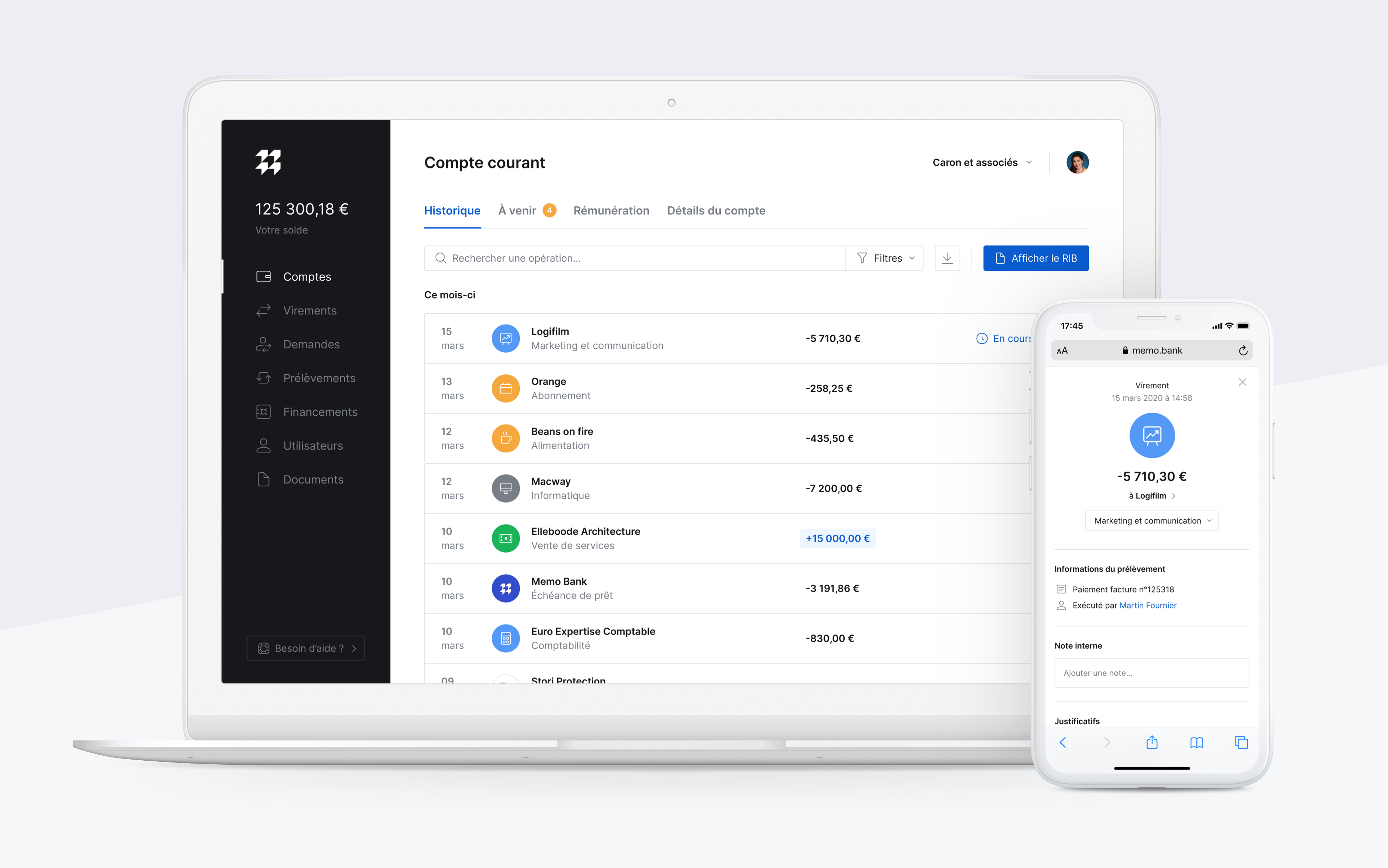
Memo Bank details its offering for its business bank accounts

French startup Memo Bank has unveiled three different plans for its new customers. The company is building a business bank for small and medium companies that generate between €2 million and €50 million in annual turnover.

Earlier this year, Memo Bank obtained licenses from the French regulator (ACPR) and the European Central Bank to become a credit institution. It can provide all the services you’d expect from a business bank, from current accounts to credit lines.

On paper, Memo Bank’s current accounts look a lot like a software-as-a-service product. There are three different plans. For €49 per month, you get one user account and each additional account costs €10 per month. You get 20 transactions in and out per month, each additional transaction costs €0.40 per transaction.

For €149 per month, you can create as many user accounts as you want and you get 200 transactions per month. Once again, additional transactions cost €0.40 per transaction.

And if you handle a lot of transactions, you get unlimited transactions for €399 per month. The mid-tier plan also lets you access an authorized overdraft.

Interestingly, companies on the top two tiers will earn interests on their deposits — 0.15% up to €100,000 and 0.30% up to €200,000 for the top two plans respectively. Memo Bank isn’t mentioning checks or payment cards for now.

Image Credits: Memo Bank

The startup is also saying that its web platform should work better than your average banking site. The search feature works as expected, you can issue grouped transfers to pay your employees and you can set up an approval workflow for big transactions.

More importantly, Memo Bank is open for business to issue loans. Companies can apply to get a €20,000 to €200,000 loan and pay back over 1 to 7 years. With this product, the startup is competing with online lending platforms, such as October.

Post by startupsnows.blogspot.com