Monday, August 31, 2020

Cosmose, a platform that analyzes foot traffic in physical stores, gets $15 million Series A

Cosmose, a platform that tracks foot traffic in brick-and-mortar stores to help companies predict customer behavior, announced today it has raised a $15 million Series A. The round was by Tiga Investments, with participation from returning investors OTB Ventures and TDJ Pitango, who co-led Cosmose’s seed round last year. The company said its valuation is now more than $100 million.

The Series A will be used for product development and geographic expansion, starting with Southeast Asian markets this year, followed by the Middle East and India. Chief executive officer Miron Mironiuk, who founded Cosmose in 2014, said its goal is to break even and generate profit by 2021.

Cosmose has offices in Shanghai, Hong Kong, New York and Warsaw, where is software engineering team is based. Most of the stores its tech is currently use in are in China and Japan, and its clients include companies like Walmart, Marriott, Samsung, and LVMH.

As companies try to recover from the impact of COVID-19, Mironiuk said Cosmose’s platform has helped clients make decisions about when to reopen stores and what kind of inventory to stock, and how to increase revenue. For example, ‘some shops wanted to connect with customers who used to shop in their physical locations and encourage them to buy online,” he said. “Hotels in Japan were focused on promoting their in-house restaurants to local residents to make up for the lost revenue.” The company is also working with Boston Consulting Group on a report called “COVID-19 offline retail recovery traffic in China” for publication next week.

Mironiuk said that a PwC audit of the platform’s accuracy completed in December 2019 confirmed its ability to track customers within 1.6 meters of their location in a store, and that its data ecosystem now comprises of more than one billion smartphones and 360,000 stores. Cosmose’s plan is to grow that to two billion smartphones and 10 million stores by 2022.

The company offers three main products: Cosmose Analytics, which tracks customers’ movements inside brick-and-mortar stores; Cosmose AI, a data analytics and prediction platform to help retailers create marketing campaigns and increase sales; and Cosmose Media, for targeting online ads.

Cosmose does not require hardware installation, which means no regular maintenance is required after Cosmose maps a store, and helps it differentiate from rivals.

There are other companies that also analyze foot traffic in brick-and-mortar stores, including RetailNext and ShopperTrak, but being tracked might alarm customers who are concerned about their privacy. Mironiuk said all of the smartphone data Cosmose AI gathers is anonymized, so the company doesn’t know who shoppers are. The platform uses alphanumeric IDs called OMNIcookies, does not collect personal data like phone MAC addresses, mobile numbers, or email addresses, and follows data privacy laws in each of the countries it operates in. It also allows shoppers to opt-out of tracking.

In a press statement about the investment, Raymond Zage, the CEO and founder of Tiga Investments, said “I was attracted by the strong results Cosmose is already achieving for some of the world’s recognizable brands, while simultaneously ensuring user privacy is protected. Cosmose team is saving stores while enhancing consumer experience.”

Post by startupsnows.blogspot.com

Virtual Mobility startup pitch night applications open

TechCrunch is on the hunt to feature 10 early-stage mobility startups at our virtual TC Sessions: Mobility 2020 pitch night. The pitch-off event, originally set for May, will now be held October 5th — the evening before Mobility 2020. 

The top five companies from pitch night will take the stage at the main event with industry heavy hitters like  Boris Sofman of Waymo, Nancy Sun of Ike and Trucks VC’s Reilly Brennan. Now we are shining a light on game changing startups — hardware and software breaking the mobility mold. From battery advancements to mapping, fuel processing to micromobility, TechCrunch wants the next generation of mobility’s brightest on stage. The process is simple:

ApplyTechCrunch editorial will review every application and demo video submitted. Companies will be reviewed based on innovation, scope of impact, uniqueness of product idea and potential for exit — IPO or acquisition. Selected companies will get to pitch onstage, receive two complimentary event tickets, an hour training with the Startup Battlefield Editor and a spot in CrunchMatch (TC’s meeting matching program).

Pitch Part I. The top 10 startups from around the world will be selected to pitch live to the TC audience on the virtual stage. After a private pitch coaching session, founders will have one minute to pitch, followed by a Q&A with our expert panel of investor and industry expert judges.

Pitch Part II. The top five companies from pitch night will get a prime slot to pitch and demo their product on the main stage at Mobility 2020 in front of thousands of TC viewers — press, industry leaders and VCs.

The deadline to apply is September 15th. Selections will occur on a rolling basis so get your application in ASAP!

Post by startupsnows.blogspot.com

Reliable Robotics is bringing remote piloting to small cargo planes

Nearly one year ago, a Cessna 172 Skyhawk stealthily made aviation history when it landed at a small airport in Northern California, marking the completion of the first successful remote-piloted flight of a passenger airplane in the United States.

The company behind this milestone in commercial aviation history is Reliable Robotics, a startup founded in 2017 by former SpaceX and Tesla engineers who previously brought autopilot to the electric vehicle auto driving masses and made the Dragon rocket soar.

The company has raised $33.5 million in venture funding from investors including Lightspeed Venture Partners, Eclipse Ventures, Pathbreaker Ventures and Teamworthy Ventures, and is now making its pitch to potential customers in the logistics and shipping industry.

Robert Rose, the co-founder of Reliable Robotics, comes from a family of flyers. Both of this grandfathers flew in World War Two, and he has done stints as a pilot himself. In fact, the company’s origins stem from Rose’s attempts to get back in the cockpit and behind the yoke.

“Flying’s hard,” Rose said. “It requires a lot of cognitive ability.”

But a lot of that cognitive ability are tasks that Rose, with his experience designing Tesla’s autopilot system and the flight systems for both the Falcon and Dragon spacecraft, knew could be automated. Helping Rose to automate these tasks is Juerg Frefel, the company co-founder, vice president of engineering and the former leader of the team behind the computing platform for the Falcon 9 and Dragon spacecrafts.

Reliable’s systems aren’t fully automated, there’s still a pilot behind the scenes, but that pilot is monitoring systems and controlling the plane remotely, rather than sitting in the cockpit.

Reliable started its experiments with retrofitting existing planes with autonomous systems in much the same way that Tesla began its journey into manufacturing, by using existing frames for aircraft rather than designing its own.

Control systems inside a Cessna retrofitted by Reliable Robotics. Image Credit: Reliable Robotics

“We spent the first portion of our flight test program focused on the C172. We thoroughly tested every aspect of our system in simulation and conducted rigorous safety checks before operating the aircraft without a pilot on board and are now proud to share what we’ve been working on,” said Rose, in a statement.

The company started with the Cessna 172 Skyhawk but graduated to the larger Cessna 208 Caravan. The Caravan, which is designed as a passenger plane, is also used by logistics companies like FedEx for shipping. In June, the company demonstrated a fully remote landing for the Caravan over the San Jose approach path — a particularly heavily trafficked route.

“There’s never been a privately funded program that’s ever done anything like that before,” said Rose.

Enabling remote piloting and automating certain aspects of flight has tremendous potential to drive down costs and improve efficiencies in an industry that’s struggling with multiple stresses.

“Automated aircraft are going to fundamentally shift the entire airline business, and Reliable Robotics is well positioned to be a key player in this new market,” said David Neeleman, a founder of several commercial airlines, including JetBlue (and an investor in Reliable Robotics).

The company’s autonomous platform can be applied to any fixed-wing aircraft, but Reliable’s co-founder and chief executive doesn’t expect to be selling components. Instead, Reliable Robotics will retrofit and operate aircraft as a service for its customers, Rose said.

“Initially, by necessity, we’re going to have to operate this as a service,” said Rose. “The certification of systems for air. If you want to operate in the airspace you have to certify your maintenance plan, your procedures… the entire business needs to be certified by the FAA… If for the first time someone operates an aircraft with no pilot on board that entire business is going to have to be certified. At least for the first several years we see this being operated as a service.”

Reliable conducted its first retrofit and flight on a Cessna Caravan owned by FedEx, which operates around 235 planes in its fleet, according to Rose. Several other shipping companies also use the Caravan for air logistics.

“There’s a communication component, a ground network, a control center for operating the thing. It’s entirely a vertically integrated enterprise,” Rose said. “Integrated hardware that allows us to control flight systems and get telemetry and data [and that’s] integrated into a custom computer that can process this and fly the aircraft and integrated into a ground network so a pilot in our control center can oversee the operations of the plane.” 

Rose said the pitch to customers is increasing pilot utilization. “How could the economics change if [pilots] could teleport from one aircraft to the next after they’re done flying?” Rose said. “Our system enables you to more efficiently utilize the pilot and more efficiently utilize the aircraft.” 

Closeup of a Reliable Robotics’ control system. Image Credit: Reliable Robotics


Post by startupsnows.blogspot.com

Decrypted: Tesla’s ransomware near miss, Palantir’s S-1 risk factors

Another busy week in cybersecurity.

In case you missed it: A widely used messaging app used by over a million protesters has several major security flaws; a little-known loophole has let the DMV sell driver’s licenses and Social Security records to private investigators; and the U.S. government is suing to reclaim over $2.5 million in cryptocurrency stolen by North Korean hackers from two major exchanges.

But this week we are focusing on how a Tesla employee foiled a ransomware attack, and, ahead of Palantir’s debut on the stock market, how much of a risk factor is the company’s public image?


THE BIG PICTURE

Russian charged with attempted Tesla ransomware attack

$1 million. That’s how much a Tesla employee would have netted if they accepted a bribe from a Russian operative to install malware on Tesla’s Gigafactory network in Nevada. Instead, the employee told the FBI and the Russian was arrested.

The Justice Department charged the 27-year-old Russian, Egor Igorevich, weeks later as he tried to flee the United States. According to the indictment, his plan was to ask the employee to deliberately deploy ransomware on the Gigafactory’s network, grinding the network to a halt for a ransom of several million dollars. The would-be insider threat is likely the first of its kind, one ransomware expert told Wired, as financially driven hackers continue to up their game.

Tesla founder Elon Musk tweeted earlier this week confirming that Tesla was the target of the failed attack.

The attack, if carried out, could have been devastating. The indictment said that the malware was designed to extract data from the network before locking its files. This data-stealing ransomware is an increasing trend. These hacker groups not only encrypt a victim’s files but also exfiltrate the data to their servers. The hackers typically threaten to publish the victim’s files if the ransom isn’t paid.

Post by startupsnows.blogspot.com

Dorian raises $3.1M for its no-code, interactive storytelling platform

With Dorian, co-founder and CEO Julia Palatovska said she’s hoping to empower fiction writers and other storytellers to create their own games.

The startup is announcing that it has raised $3.15 million in seed funding led by March Capital Partners, with participation from VGames, Konvoy Ventures, London Venture Partners, Michael Chow (co-creator of the Twitch series “Artificial”), Andover Ventures and talent management company Night Media.

Palatskova previously worked in gaming as the head of business development at G5 Entertainment, and she said she’d also become entranced by narrative games and interactive fiction. And while there are existing interactive fiction platforms, she saw “an opportunity that I felt was missing,” particularly in the fact that those platforms are “entirely single player, with no opportunity to play and collaborate with other people.”

So she gave me a quick tour of the Dorian platform, showing me how, without coding, a writer can essentially design characters and backgrounds by choosing from a variety of visual assets (and they’ll eventually be able to upload assets of their own), while using a flowchart-style interface to allow the writer to connect different scenes in the story and create player choices. And as Palatskova noted, you can also collaborate on a story in real-time with other writers.

“In terms of writer productivity, I would say there is almost no difference between creating interactive fiction on our engine and just writing fiction,” she said.

Dorian Gunmen Scene

Image Credits: Dorian

From what I could see, the resulting games look similar to what you’d find on platforms like Pocket Gems’ Episode, where there aren’t a lot of technical bells and whistles, so the story, dialogue and character choices move to the forefront.

When I brought up the open-source game creation software Twine, Palatskova said Twine is “just a tool.”

“We want to be more like Roblox, both the tools and the distribution,” she said.

In other words, writers use Dorian to create interactive stories, but they also publish those stories using the Dorian app. (The writer still owns the resulting intellectual property.) Palatskova noted that Dorian also provides detailed analytics on how readers are responding, which is helpful not just for creating stories, but also for monetizing via premium story choices.

In fact, Dorian says that in early tests involving around 50,000 players, writers were able to improve monetization by 70% after only one or two iterations. And Palatskova noted that with Dorian’s games — unlike an interactive film such as “Black Mirror: Bandersnatch” —”It’s fast and easy to test multiple branches.”

Dorian is currently invite-only, but the plan is to launch more broadly later this year. Palatskova is recruiting writers with and without gaming experience, but she also expects plenty of successful contributions to come from complete novices. She wants Dorian to be “a completely open platform, like Roblox or Twitch for writers.”

“Dorian’s success in creating an interactive platform that values storytelling while prioritizing monetization for its writers is a game-changer,” said March Capital’s Gregory Milken in a statement. “Julia and her team are creating a community that is primed to capture the attention of today’s influential but underrepresented audiences of diverse content creators.”

Post by startupsnows.blogspot.com

In a post-NDA world, does transparency help founders identify conflicts of interest?

Once upon a time, fintech founders could pitch 10 investors before closing a round in a relatively hushed way. Entrepreneurs could even ask VCs to sign nondisclosure agreements (NDAs) to keep their information confidential. Today, everyone is a fintech investor and no one signs NDAs.

This changed dynamic puts founders in a difficult position.

Nabeel Alamgir, CEO and founder of Lunchbox, struggled to raise his first institutional check for his restaurant tech startup. After searching for more than a year, Alamgir found an investor who understood his vision. Better yet, the investor had connections to restaurants in New York City that Alamgir wanted to land. So, Alamgir shared everything about Lunchbox, from the financials, to the product integration road map and go-to-market strategy.

After a month of due diligence, the investor ghosted Alamgir. Four months later, that same investor’s portfolio company launched a product mimicking Lunchbox.

“I did not do due diligence on them as they were doing on me,” he said. “And I forgot all my rules. Most rules go out the window as cash is running out.”

Alamgir’s experience is a classic case of back-channeling, a sometimes unfortunate yet uncommon occurrence for founders in Silicon Valley. It’s not a secret that investors share intel with each other as a competitive advantage; but as venture capital grows as an asset class and more investors break into the industry, the way information disseminates will become even more elusive and broad.

Alamgir advises early-stage founders who are looking to raise their first check to “contain excitement.”

Post by startupsnows.blogspot.com

There’s a growing movement where startup founders look to exit to community

Traditional roadmaps for startups center around this idea of the exit. Oftentimes, the ideal exit in the minds of startups and venture capitalists goes one of two ways: IPO or acquisition by another company.

But there are other ways for startups to exit that could potentially bring more value to a larger variety of stakeholders. Exit to Community (E2C), a collaborative working project led by the University of Colorado Boulder’s Media Enterprise Design Lab and Zebras Unite, explores ways to help startups transition investor-owned to community ownership, which could include users, customers, workers or some combination of all stakeholders. Today, the group released a digital and physical zine designed to serve as an introduction to Exit to Community.

“The purpose of the zine is to provide an initial roadmap to all of the aspects of the conversation that need to happen so we can save founders pain in recognizing and validating they’re in the wrong fit and we need to co-create what does fit,” Zebras Unite co-founder and zine co-author Mara Zepeda told TechCrunch. “It’s not a silver bullet. It’s not like there’s this other perfect thing that everyone needs to do. I describe it as running a Cambrian explosion of experiments in order to figure out what this future is. It’s not just one thing. That’s how what we’re doing is really different. Sometimes there are these niche products or movements that pop up and say, “this is the answer. There isn’t one answer for this moment.” 

These alternative exit models also have the potential to to open the door for founders in other markets, E2C co-organizer Nathan Schneider told TechCrunch. He pointed to tiphub, a company focused on Africa and the African Diaspora, that had been looking for alternative ways to support founders given there isn’t a huge mergers and acquisitions market in Africa.

“Because of the infrastructure that exists in the financial market, we don’t have the same set of realities that a very active VC industry does in Europe or the U.S.,” tiphub Partner Chika Umeadi told TechCrunch. “There’s just not as much private equity activity or M&A activity. We believe we have a strong hypothesis for how we can manufacture companies quickly, but we still need to build the other side of the market. There are companies that are valuable, but we now have to think about alternative methods of exiting.”

Already, there are a handful of examples out there of what exiting to community can look like. Buffer, a social media management platform, bought out its investors in 2018 because it became “clear that Buffer had become less of a fit for VC funding,” Buffer CEO and co-founder Joel Gascoigne wrote in a blog post at the time.

Then, in 2019, SEO and Conductor bought back its content marketing company from WeWork. Now, the company is majority employee-owned.

“It was a dream that we always had that we would own the company and we gave a huge amount of ownership to all the people and now the company is almost entirely employee-owned,” Conductor CEO Seth Besmertnik told me earlier this year. “And now we have everything we want to go and make our mission a reality.”

Outside of the tech industry, E2C points to Organically Grown Company, an organic produce distributor based in Oregon that transitioned from an employee- and grocer-owned operation into a community-owned one.

“These types of glimpses suggest that it’s possible,”Schneider said.

For investors, while IPOs and acquisitions can elicit high returns, not all of the startups in their portfolios will be candidates.

“Their current exit options limit what kind of returns and outcomes they can see for their portfolio companies,” Schneider said. “If a startup ends up not being a candidate for an IPO or acquisition, E2C can still help them get their money back, or get a decent return. There’s also a class of investors trying to thread the needle of financial return with social return, and are looking for models that can help facilitate that.”

Beyond the zine, the next step is to crate a peer learning cohort of founders who are exploring some of these options. Down the road, the hope is to create standard documents for startups that make it easy for founders to pursue these alternative paths.

Post by startupsnows.blogspot.com

RealPage acquires real estate IoT startup Stratis

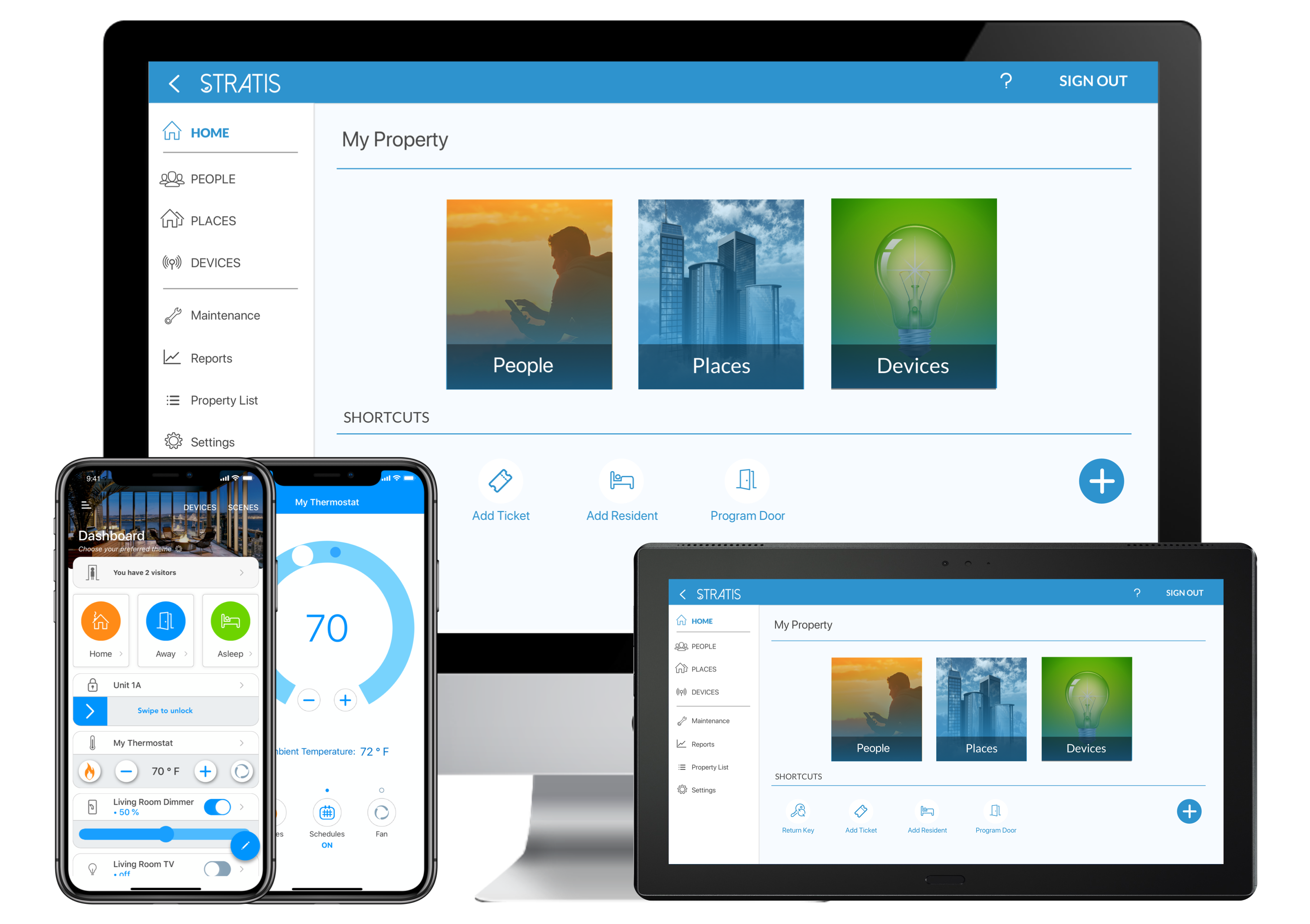
RealPage, a publicly traded full-service property management technology firm with over 12,200 clients worldwide, today announced that it has acquired Stratis IoT,  a startup that provides IoT services to the real estate industry, with a focus on access and energy management tools.

“RealPage aims to become a leading provider in the burgeoning rental property automation market, and thereby create significant opportunity for operators to increase rents, improve sustainability, add operational efficiencies, reduce operating costs and enhance the customer experience for the company’s approximately 19 million units throughout the United States,” said RealPage CEO Steve Winn. “The smart building technology also provides a launching pad for expanded international operations, thanks to Stratis’ existing international presence.”

Stratis is currently installed in about 380,000 homes in the U.S., Japan, UK and several countries in Europe and Latin America. Both Stratis and RealPage target a wide range of the real estate industry, ranging from multifamily units to student housing, vacation homes and commercial real estate.

Image Credits: Stratis

Traditionally, the real estate market wasn’t always the first to adopt modern technologies. That’s quickly changing now, though, in part because of the promise of IoT, which isn’t just a boon to renters looking for modern solutions in their apartments but also represents the possibility of significant cost savings for the industry. RealPage argues that smart technology can generate a revenue lift of $55 per unit, for example, and that’s the kind of saving (and higher revenues) that will push even legacy B2B platforms to modernize.

One area where Stratis stands out is its ability to integrate with a wide variety of third-party solutions.

“Holistic building-wide access and utility management and control are integral to building optimization and the resident experience, which have become increasingly intertwined,” said Stratis IoT CEO Felicite Moorman. “RealPage and Stratis IoT combine two industry-leading, best-in-class platforms to create a powerhouse of control and single-app resident experience for multifamily, student housing, and beyond.”

The two companies did not disclose the price of the acquisition. It’s worth noting that RealPage isn’t a stranger to making acquisitions to bring its technology up to speed. A year ago, the company acquired Hipercept, for example, a firm that provided data services and data analytics to the institutional real estate market. Then, in December, it also acquired Buildium, a SaaS property management solution with over 2 million units under management. In 2019, the company said planned to spend just over $100 million on acquisitions.


Post by startupsnows.blogspot.com

Capchase raises $4.6M to deliver fast cash to SaaS companies

As a business model, SaaS has expanded to epic size. A number of major SaaS companies filed to go public last week, and there are now thousands of SaaS startups growing all around the world. That scale makes it easier for banks and financial institutions to offer tailored solutions to this market around everything from equity to debt.

We’ve talked a bit about SaaS securitization the last few weeks, a crop of new financial products that use the metrics of a SaaS company to underwrite its debt (e.g. better churn = more debt available and at better terms) as opposed to traditional benchmarks like total revenue and company age. We also did a deep dive with Kentik CEO Avi Freedman on how he approached his recent venture debt fundraise and the terms he got across his five term sheets.

Every SaaS company these days is considering its financial options and the tradeoffs between equity and debt. But sometimes, they just need cash, and cash as quickly as possible. Startups sign contracts with customers that might be paid over a year or more, but they want to access that cash now, and at the best terms possible. The product that solves this problem is known as an accounts receivable line, and you can go to many banks to get them, with all the drudgery of that process.

Or, four founders hope, you’ll head to Capchase.

Capchase is an online platform for rapidly getting cash from your accounts receivable. Startups upload key details of their customer contracts and financial history to Capchase, and the company uses its underwriting algorithms to quickly assess the quality of those contracts and extend a debt line. The startup calls itself part of the “non-dilutive revolution,” and it’s headquartered in Boston.

“We’re targeting B2B SaaS or ‘X-as-a-service’ companies with recurring revenue, and we’re targeting companies around the seed to Series B/C stage having more than $1 million of ARR and at least eight months of revenue generating history,” Miguel Fernández, CEO and co-founder, said.

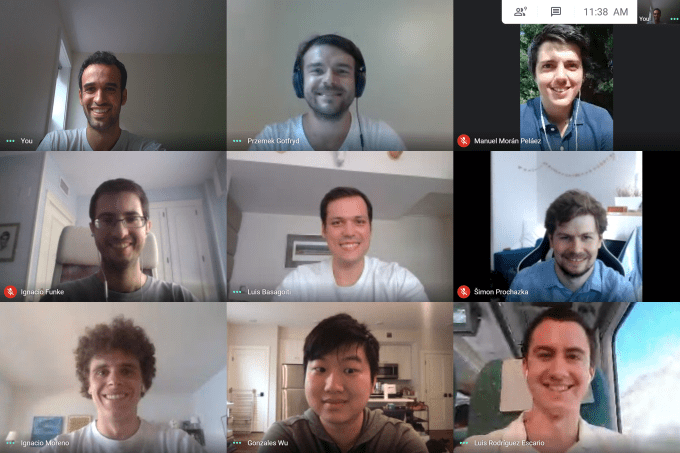
He linked up with three other founders earlier this year to launch Capchase: Luis Basagoiti, Ignacio Moreno, and Przemek Gotfryd. Fernández and Gotfryd met while at Harvard Business School where Fernández was thinking about “working capital and cash conversion cycle optimization” after his previous experiences at SaaS companies. Gotfryd had previously worked at growth investor TCV in London, where he acutely saw the challenges of raising non-dilutive cash.

Capchase’s team. Photo via Capchase.

Despite its early operational history, the company has already raised its own cash quickly. It closed on $4.6 million in VC seed funding led by Caffeinated Capital, Bling Capital, and SciFi VC, along with a number of angels.

To get cash early today, startups often resort to negotiating terms with their customers, offering discounts — sometimes massive discounts — for them to pay an entire contract’s value upfront. Fernández saw an opportunity to arbitrage the difference between interest rates and those discounts with Capchase.

From a user’s perspective, after syncing their startup’s financial data to Capchase, they will see a projection of what their runway extension will look like after selecting a debt line, and then Capchase will extend its terms after going through an underwriting process (“which takes a couple hours now, and is very rapidly decreasing to take minutes” Fernández said). In terms of traction, he said that “we’re working with around 3-4 customers right now.”

Startups are charged a discount on their total contract value, which is where Capchase makes its money. For instance, if $100,000 is going to be paid by a customer over the next twelve months, Capchase may offer $95,000 to the startup upfront, and keep the remaining $5,000 as those payments roll in. That discount fluctuates based on the startup in question and the payment risk of the underlying customer contracts.

Fernández said that venture debt is often cheaper on a pure interest rate basis, but that once additional elements of those products are added in such as warrants, the simplicity of Capchase’s product will prove competitive for founders.

Simpler, easier, and fully digital financial products are always welcome, and Capchase hopes that it will nestle itself in a suite of new financial products for SaaS founders looking to avoid dilution and extend their cash longer.

Post by startupsnows.blogspot.com

5 days left to save on early bird passes to TC Sessions: Mobility 2020

TC Sessions: Mobility 2020 kicks off in 37 days, but the countdown clock on early-bird pricing runs out in just five. Engage with the mobility community’s brightest minds, makers, visionaries and investors from around the globe on October 6-7. Buy your early-bird pass before the bird expires September 4 at 11:59 p.m. (PDT), and you’ll save $100 over full price.

Why attend TC Sessions: Mobility 2020? It offers beaucoup benefits, but let’s start here. Whether you’re launching a mobility startup or you’re an established player, you’ll gain valuable insight to help position and grow your business.

“I learned a lot from the breakout sessions. An official from the Los Angeles DOT spoke about the city’s plan to build pathways for micro mobility vehicles. Access to experts sharing that kind of information is essential for anyone launching a micro mobility startup. — Parug Demircioglu, CEO at Invemo and partner at Nito Bikes.”

“As a mobility company, we need to stay on the cutting edge of what’s happening in the space and know what others are doing. TC Sessions: Mobility helps us tap into the latest trends, like which cities are open to new services, which ones are having a harder time and what’s going on with MDS — probably the hottest topic at this point.” — Melika Jahangiri, vice president at Wunder Mobility.

Now that you’ve heard directly from your peers, let’s talk about what’s on the mobility menu. A kickass agenda for starters. Let’s take a peek.

  • Setting the Record Straight — Argo AI has gone from unknown startup to a company providing autonomous vehicle technology to Ford and VW — not to mention billions in investment from the two global automakers. Co-founder and CEO Bryan Salesky will talk about the company’s journey, what’s next and what it really takes to commercialize autonomous vehicle technology.
  • The Future of Trucking — TuSimple co-founder and CTO Xiaodi Hou and Boris Sofman, former Anki Robotics founder and CEO who now leads Waymo’s trucking unit, will discuss the business and the technical challenges of autonomous trucking.

You’ll hear interviews with top founders, technologists and investors. You’ll also hear from big players, like Lyft and Uber, and household giants like Porsche and Audi who can see the mobile writing on the wall. But we also have plenty of room for newbies and upstarts. In fact, we’ve added a pitch-off to this year’s lineup. We’ll announce more details on how early-stage mobility startup founders can apply to compete, so stay tuned.

Don’t miss out on the mobility event of the year — or miss out on serious savings. You have just five days left to beat the clock and save $100. Buy your pass to TC Sessions: Mobility 2020 before September 4 at 11:59 p.m. (PDT). Don’t let the early bird flip you the worm.

Is your company interested in sponsoring or exhibiting at TC Sessions: Mobility 2020? Contact our sponsorship sales team by filling out this form.

Post by startupsnows.blogspot.com

Frugal startups should pay attention to how JFrog’s IPO prices

In last week’s IPO wave, one company fell a bit by the wayside amongst filings from better-known companies like Asana and Palantir. JFrog, a company that TechCrunch reported helps allows developers and companies deliver application updates “in the background without disturbing the user experience” when it raised $165 million in 2018, is positioned for an exciting debut.

Why? The unicorn — the same 2018 round valued JFrog at around $1.2 billion according to PitchBook data — has a unique blend of growth, margins and profitability that should make its pricing cycle incredibly interesting.


The Exchange explores startups, markets and money. You can read it every morning on Extra Crunch, or get The Exchange newsletter every Saturday.


JFrog will give us an insight into how Wall Street will value a fast-growing, managed software company that also doesn’t lose money. It’s not something we see often, and other market hopefuls like the aforementioned Asana and Palantir are far from similar levels of profitability.

Let’s take a quick look at what JFrog would be worth if it were a more normal — read: less profitable — SaaS company, and then ask what it might be worth as a cash-generating, recently profitable concern. The numbers are pretty surprising.

JFrog

If you want more on the basics of JFrog’s business and why developers and companies care about the company, head here. We’re only doing numbers today.

Back to the basics as a refresher from early last week, here’s what you need to know about JFrog’s business:

  • Revenue grew from $63.5 million in 2018 to $104.7 million in 2019 and from $46.1 million to $69.2 million from the first half of 2019 to the first half of 2020. Those gains of 65% and 60.1%, respectively, put JFrog on a comfortable growth pace for a company doing nine-figure revenues.
  • JFrog has lost less money as it has grown. From $1.00 per share in 2018 to $0.20 per share in 2019, and from $0.08 per-share in the first half of 2019 to just $0.02 per share in the first half of 2020.
  • JFrog’s gross margins have been 81% or better in every mutliquarter period we have record of.
  • JFrog’s operating cash flow has improved over time as well, rising from +$8.6 million in 2018 to $10 million in 2019, and from +$0.415 million in the first half of 2019 to +$5.9 million in the first half of 2020.
  • And, after some quarters of extremely limited losses, JFrog posted its first known (since Q1 2018) GAAP profitable quarter in Q2 2020, generating $1.7 million in net income off of revenues of $36.4 million in the same period.

Now ask yourself, what is that company worth?

Post by startupsnows.blogspot.com

The New Paper offers a ‘fact-first’ news digest in text message form

Tired of signing up for email newsletters? Then maybe it’s time to try out The New Paper‘s news digest, which arrives in the form of a daily text message rounding up the biggest headlines.

The Indianapolis-based startup is announcing that it’s leaving private beta testing. It raised $300,000 in pre-seed funding last year, including $80,000 from a pitch competition held by Elevate Ventures (the VC fund based by Indiana State).

Founders Michael Aft and John Necef told me that they started The New Paper with the intention of creating  email newsletters at first (something Necef has experience with, having served as head of growth at The Hustle), but they decided that text messages offered the best way to, in Aft’s words, “do daily news right.”

“Think about the volume of email you get everyday,” he continued. “It’s this stressful, noisy, environment where you get spam and e-commerce messages. Text is easy, it’s clean, it’s extremely convenient, it’s intimate.”

In fact, Necef said that “a common anecdote” they’ve heard from early subscribers is the fact that they sign up for email newsletters “with the best of intentions” but then those newsletters end up sitting unread in their inboxes. (Think of it as the digital equivalent of those piles of unread New Yorkers.)

Of course, the fact that text messaging is such a personal channel also means that readers aren’t likely to stick around unless they’re actually getting what they want. But Aft said he embraces the challenge of meeting that higher bar: “You’re never going to forget that you subscribed.”

The New Paper

Image Credits: The New Paper

In fact, The New Paper needs to provide value not just because it’s delivered via text message, but because it’s a paid product — after a weeklong free trial, it costs $5 per month. And more than 7,000 paying subscribers have already signed up.

Currently, the digest consists of six headlines, all linking to reporting from other publications, plus a link to The Daily Dash, which provides a high-level snapshot of stock market performance, the current state of the coronavirus pandemic and more.

Both Aft and Necef emphasized that The New Paper’s approach is “fact first.” Of course, there are plenty of news organizations that tout their objectivity and devotion to accuracy, but the pair seemed particularly determined to present their readers with a “common set of facts” about a story that everyone can agree on, regardless of their political leanings.

To illustrate the company’s approach, Aft pointed to the recent report on Russian election interference by the Senate Intelligence Committee. Rather than trying to make any “second order conclusions” about the report — conclusions that could be influenced by a writer or editor’s political beliefs — he said The New Paper focused on what was factually indisputable, namely that the committee had released its report.

As soon as he said that, I imagined editors past and present tearing their hair out — not because they’re liberals determined to make the Trump Administration look bad, but because the report’s findings (that Russian intelligence worked to interfere with the election, and that members of the Trump campaign were happy to accept the help) is the real news, rather than the simple fact of the report’s release.

The New Paper Daily Dash

Image Credits: The New Paper

In other words, emphasizing objectivity and facts sounds good, but it also risks leaving out crucial context or analysis. Plus, it’s become increasingly clear that facts rarely change people’s minds.

Still, despite my quibbles with the approach, I’m happy to report that I’ve been receiving the digest for the past week, and I’ve found it to be a convenient, comprehensive catch-up on the day’s news, with links that make it easy to learn more.

For now, Aft and Necef are writing the digest themselves, though they said much of the ranking and sorting is done by algorithms. Over time, they’re hoping to hire on both the technology side and the editorial side. They also plan to expand into other channels like email and voice.

Asked whether the subscription business model means that they don’t have to pursue a mass audience, Aft replied, “We think it’s so critically important to give people a common set of information. To make this a viable business model, do we need to be 100 million strong? Of course not. Is that the goal we’re targeting? Absolutely, because we are so passionate about the problem.”

Post by startupsnows.blogspot.com

Semalytix picks up €4.3M to build the world’s largest patient experience data set

Semalytix, a Bielefeld, Germany-based startup that offers pharmaceutical companies an AI-powered data tool to better understand real-world patient experiences, has raised €4.3 million in Series A funding.

Leading the round is venture capital firm btov Partners, with participation from existing investor Fly Ventures and several unnamed angels. Semalytix will use the injection of cash to expand its business development with pharma companies and the wider healthcare market.

Founded in 2015 as a spin-out of research group Semantic Computing, Semalytix pitches itself as a data and A.I. analytics startup that wants to bring more real-world evidence to the development of new drugs and treatments. Its flagship product, dubbed “Pharos”, is a patient research tool that pulls in and cleans up various unstructured public data — such as blogs, forums, social media etc. — and then applies algorithms to deliver real-time patient insights into unmet needs, treatment experience and how severely a disease impacts the lives of those who suffer from it.

“Our vision is that we help make patient insights a real Northstar KPI in drug development,” Semalytix co-founder and CEO Janik Jaskolski tells me. “Due to new regulatory initiatives (and public pressure), pharma needs to demonstrate patient-centricity in drug development, [and] include the patient perspective into decision making and produce evidence that their treatments provide value in the real world. For patients, that value usually doesn’t consist of, for example, having their blood sugar lowered by an additional 3%. Instead, they care about improving their quality of life, being able to play longer with their kids or simply having an easier time going about their everyday tasks”.

However, Jaskolski argues that such patient insights and related evidence is difficult to obtain. “If asked, a patient will often tell a different story about how a disease impacts their life and what they need to improve it, compared to what a doctor would say. Which is why we don’t analyse physician or hospital data. Instead, we are looking at already existing public data that patients share online, in their own authentic voice, all around the world”.

Semalytix’s AI claims to be able to identify, read through, and summarise millions of online patient journeys in a highly scalable way. The AI is also able to turn this data into online target populations for different diseases and covers 11 different languages. “It does so by applying WHO, FDA, and EMA inspired algorithmic research instruments to make the analysis transparent and scientifically meaningful for pharma,” adds Jaskolski.

Image Credits: Semalytix

Meanwhile, although electronic health records, patient registries, and similar data sources are already receiving much attention from startups, Jaskolski argues that the largest source of unstructured patient data that exists today is being overlooked and yet holds a lot of potential to “improve patient care, identify new therapeutic opportunities, inform clinical trial development, and even help accelerate development of novel therapies for rare conditions”.

Semalytix’s business model is a tried and tested one. The startup sells enterprise licenses for access to its platform. A company can buy a license for 12 months or more for specific diseases. “Each license enables disease specific sub-group analyses, assess populations and create cohorts based on the severity of different disease burdens, treatment experiences, and quality of life,” adds the Semalytix CEO.

“Over time, we want to include more and more diseases into the platform and provide a unique patient data stream to pharma but also to the payer and regulator side of healthcare”.

Post by startupsnows.blogspot.com

Chan Zuckerberg Initiative backs Indian education startup Eruditus in $113 million fundraise

Mumbai-based Eruditus, which works with top universities globally to offer more than 100 executive-level courses to students in over 80 nations, said on Monday it has raised $113 million in a new financing round as it looks to further scale its business to reach more learners.

The Series D financing round for the 10-year-old startup was co-led by Leeds Illuminate and Prosus Ventures. Chan Zuckerberg Initiative and existing investors Sequoia India and Ved Capital also participated in the round, which brings Eruditus’ to-date raise to more than $160 million. Eruditus is now valued at over $700 million, a person familiar with the matter said. Avendus Capital was the financial advisor to Eruditus on this transaction.

Eruditus maintains a tie-up with over 30 top-tier universities, including MIT, Harvard, Columbia, Cambridge, INSEAD, Wharton, UC Berkeley, IIT, IIM and NUS. The universities and Eruditus work to develop courses that are aimed at offering higher education to students. These courses cost anything between $5,000 to $40,000.

There’s no shortage of startups that offer similar courses to students for free or at the price of a cup of coffee. At a conference last year, Ashwin Damera, Eruditus co-founder and chief executive of Eruditus, said his startup provides a range of additional offerings, including tailored learning, and tracks the outcome of the course in a student’s life.

The startup, which has offices in six countries and employs more than 650 people, said it has enrolled 50,000 students in the past 12 months.

Eruditus is the second startup that Chan Zuckerberg Initiative has backed in India. Its first investment in the country, Byju’s, also operates in the edtech market. (In fact, it’s grown to become the most valued edtech startup in the world.)

“Eruditus serves as a critical innovation partner for top universities as they expand online course offerings in response to workforce needs and market demand,” said Vivian Wu, managing partner, Ventures, Chan Zuckerberg Initiative, in a statement. “We’re excited to support the growing partnerships between U.S. universities and those in India, China and Latin America that are making truly high-quality education accessible to a broad and diverse range of students.”

Eruditus said it will use the fresh capital to partner with more universities and expand in emerging markets. It said it also wants to invest in developing career-ready courses to help the workforce acquire the skills they need to survive in the post-pandemic world.

“Eruditus’ goals are a great match for ours — democratizing access of quality resources for a much broader audience. The value of the teachings of the great institutions has been rationed to those who can physically and monetarily access their facilities. Eruditus unlocks those assets and enables those institutions to help a whole new cohort of learners around the globe,” said Ashutosh Sharma, head of Investments for India at Prosus Ventures, which has invested in six edtech startups, including Byju’s.

Post by startupsnows.blogspot.com

Equity Monday: What if no one gets to buy TikTok?

Hello and welcome back to Equity, TechCrunch’s venture capital-focused podcast where we unpack the numbers behind the headlines.

This is Equity Monday, our weekly kickoff that tracks the latest big news, chats about the coming week, digs into some recent funding rounds and mulls over a larger theme or narrative from the private markets. You can follow the show on Twitter here, and myself here, and don’t forget to check out last Friday’s episode.

This weekend was a welcome reprieve from last week’s insane news cycle inside the world of technology and money. If you are still catching your breath from the Great IPO Wave of last Monday, we feel you. Here’s what we got into this morning:

  • The TikTok sale could be in trouble, this time due to China changing its rules on sales of tech firms that have certain algorithms. TikTok parent company Bytedance intends to comply with the rules, but what impact the news could have the sale of the social service is unclear as of yet, though the developments are not good if you were in favor of a deal.
  • American tech shares are set to rise once again after setting records last week.
  • Equity is back on YouTube, hell yeah!
  • From the weekend: Medium’s growth in both traffic (pageviews) and income (paying subscribers) is super impressive according to its latest reporting. And the publishing platform and media company is doubling-down on product to fend off upstarts like the popular Substack. Per a Bloomberg report, tech IPO fundraising could set a record in 2020. And, to ground us in a macro-economic sense, Chinese banks are being forced to take a profit hit to support other companies.
  • In the funding round domain, Semalytix raised €4.3 million in Series A funding according to TechCrunch for its pharmaceutical-AI service. And India-based Eruditus raised $113 million for its executive-focused education service. That’s a lot of money, but like we’ve been saying, edtech is hot.
  • And, finally, will there be enough horns for all these hot SaaS rounds that are getting done in a blur today? What if SaaS revenue multiples slip by 20%? Then what? When deals go so fast that due diligence suffers, the hangover can last a bit.

And that is the week’s Monday ep, thanks for sticking with through our super-busy week last week. Whew!

Equity drops every Monday at 7:00 a.m. PT and Thursday afternoon as fast as we can get it out, so subscribe to us on Apple PodcastsOvercastSpotify and all the casts.

Post by startupsnows.blogspot.com

Fashion brand SockSoho is using data science in a bid to become the “Uniqlo of India”

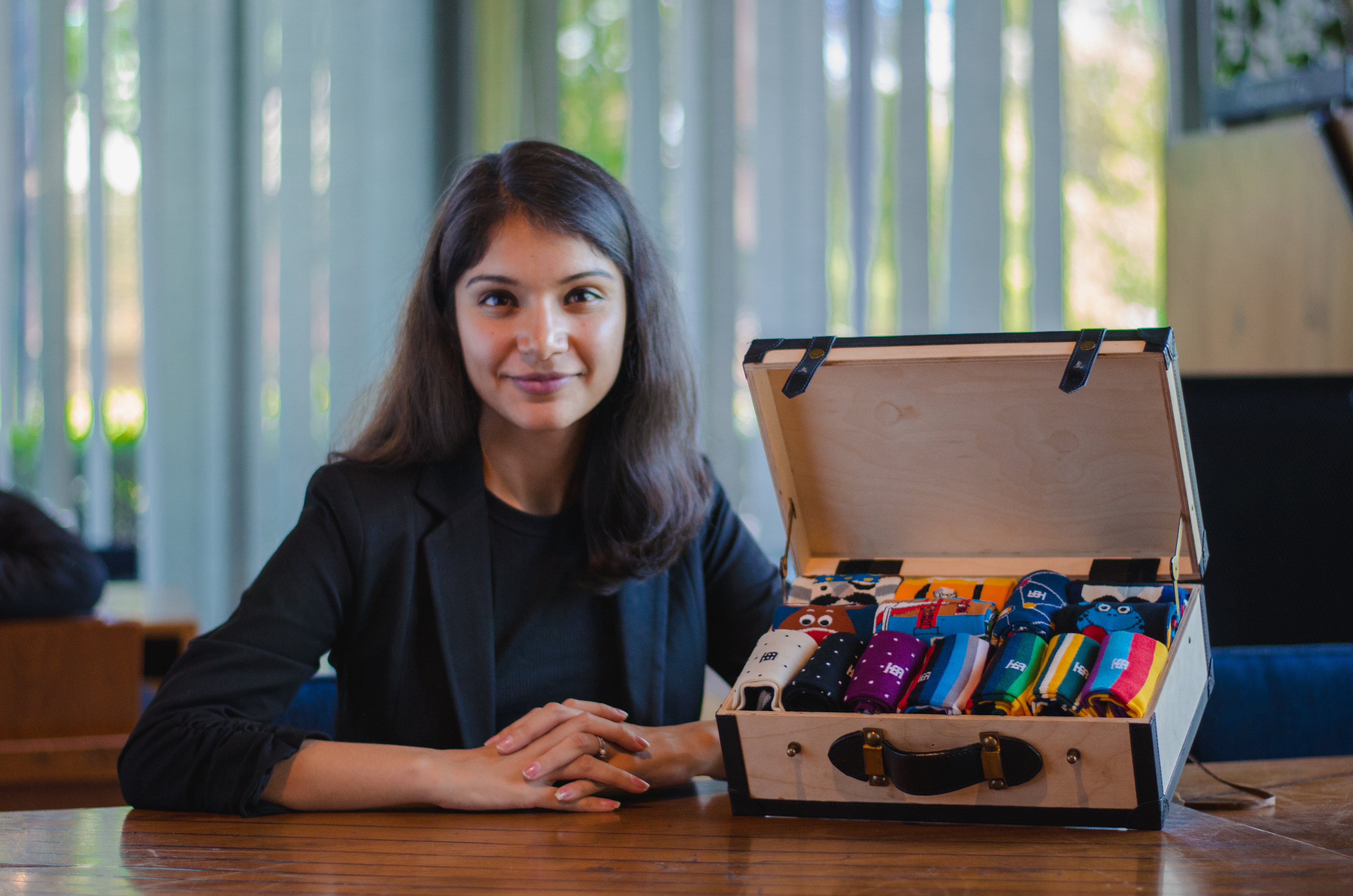
SockSoho co-founder Pritika Mehta with some of the company's socks

SockSoho co-founder Pritika Mehta with some of the company’s socks

SockSoho is a direct-to-consumer brand that aspires to become the “Uniqlo of India.” The company launched sales ten months ago, starting with men’s socks, and recently completed Y Combinator’s Summer 2020 program. Founded by Pritika Mehta, a data scientist who has worked at companies including TripAdvisor, and growth marketer Simarpreet Singh, SockSoho now has more than 30,000 customers, and plans to launch into new menswear verticals soon.

Before launching SockSoho, Mehta and Singh worked together on MindBatteries, a technology and content IP provider whose corporate clients have included The Times of India, The Economic Times, Mercedes, Infosys, the World Economic Forum and Uber.

The two are relying on several factors for SockSoho’s growth: India’s position as one of the largest and fastest-growing e-commerce companies in the world and the company’s in-house technology, which will include proprietary chatbots and AI-based recommendation engines as it scales.

SockSoho launched with a multi-platform distribution strategy, selling on its on site as well as ecommerce platforms. But its main driver is WhatsApp, the most popular messaging app in India with over 400 million users. About 70% of the SockSoho’s sales happen through WhatsApp, and it also uses the messenger for marketing and A/B product testing.

Eric Migicovsky, the Y Combinator partner who invested in SockSoho, told TechCrunch in an email that SockSoho “looks like a fashion brand on the surface but at the backend they operate like a tech company. They’re A/B testing every aspect of the product and ecommerce path, not something every fashion brand does.”

“I think they’re winning strategy here is WhatsApp,” he added. “They have figured out how to acquire and service customers exclusively through the platform.”

One of SockSoho's gift boxes

One of SockSoho’s gift boxes

Before starting SockSoho, Mehta earned a Master’s in computer science from the University of Buffalo, focusing on artificial intelligence. Then she spent several years in the United States, working at tech companies including TripAdvisor. But she continued keeping an eye on her home country.

“When I saw the growth happening in the Indian market, it looked phenomenal because the population is huge and data was becoming really cheap. There was a huge increase in people shopping online,” she told TechCrunch. “That is when I thought, what the hell am I doing in the U.S. when all the action is happening in India?”

Most online fashion brands in India focus on women, so Metha and Singh decided to go into menswear. They say there are about 200 million men living in cities in India, representing a potential $8 billion market. Before doing consumer research, the two wrote down a list of 80 items they could launch with. Socks won because they are easy to fit and ship, and have high margins and low rates of return.

Before launching new socks, SockSoho does its version of A/B testing through WhatsApp by sending design ideas to customers and gauging their interest in pre-orders before placing manufacturing orders.

Data analytics is key to reducing the cost of marketing and customer acquisition, a challenge for many direct-to-consumer companies.

“We are basically gathering data points to understand customer behavior and spending patterns, and those insights help us refine every single thing that we are building, from our designs to marketing and inventory planning, and even expanding into future verticals,” said Mehta.

Analyzing data has already revealed a couple surprises. For example, SockSoho expected almost all of its customers to be men, but about 30% of total purchases are made by women buying gifts. SockSoho’s founders also assumed that most of its buyers would live in major cities like Delhi, Mumbai and Bangalore, but its data revealed that smaller cities were major growth drivers. “All these insights came purely from data,” said Singh.

Over the last six months, 15% of SockSoho’s customers have made repeat purchases, and sales grew during India’s COVID-19 lockdown, which started in March.

“COVID has accelerated the shift of people to online shopping,” said Singh. “Like my dad, he never shopped online, but during COVID he’s even buying his toothpaste online. It’s a tectonic shift.”

But many traditional retail brands haven’t nailed the online shopping experience yet, Mehta added.

“With ecommerce, it’s not just about selling the product,” she said.

To keep customers engaged, SockSoho relies on WhatsApp to share new products and customer photos. But that level of personal engagement will become more challenging as the brand grows.

This is where the proprietary technology SockSoho is developing comes into play. This includes AI-based chatbots that can handle simple queries, like exchanges. For example, a customer who receives the wrong item will be able to upload a photo and get a replacement shipped to them. More complicated issues will be be flagged for human customer representatives.

“We are building this proprietary software inside the company, which can actually replicate the human experience. We are collecting all the data, all the interactions that are happening currently with customers to understand the language, the data and the kind of experience they like,” said Mehta.

SockSoho is also developing its own AI-based recommendation engine, that will show customers products they are likely to be interested in based on their browsing and shopping habits. The startup isn’t revealing yet what verticals it will expand into next, but it is already doing A/B testing for its next product lines.

“Once we have built our tech stack, our whole supply chain and nailed down the socks, it will be very easy for us to go into any other vertical and eventually become the Uniqlo of India,” said Singh.

Post by startupsnows.blogspot.com

Sunday, August 30, 2020

10 Berlin-based VCs discuss how COVID-19 has changed the landscape

A breeding ground for European entrepreneurs, Berlin has a knack for producing a lot of new startups: the city attracts top international, diverse talent, and it is packed with investors, events and accelerators. Also important: it’s a more affordable place to live and work when compared to many other cities in the region.

Berlin ranked 10th place in the 2019 Global Ecosystem Report, trailing behind only two other European cities: London and Paris. It’s home to unicorns such as N26, Zalando, HelloFresh and pioneers of the scene such as SoundCloud.

Top VCs include Earlybird, Point Nine, Project A, Rocket Internet, Holtzbrinck Ventures and accelerators such as Axel Springer Plug and Play Accelerator, hub:raum and The Family.

To get a sense of how the novel coronavirus has changed the landscape, we asked ten investors to give us an insight into their thinking during these pivotal times:

Jeannette zu Fürstenberg, La Famiglia

What trends are you most excited about investing in, generally?
Generally, we believe in a future in which we can leverage technology to free up humans from repetitive and tedious work and to empower them to shift their focus to what they consider more meaningful and impactful: that is creative and interpersonal activities. Thus, we are excited about founders working towards that future and finding answers across multiple industries, such as manufacturing or logistics, across all working-classes, and across different eras – before, during and after COVID.

What’s your latest, most exciting investment?
One of the recent additions of our new fund is Luminovo, a Munich-based company that develops a solution in the electronics industry to reduce the time and resources needed to go from an idea to a market-ready circuit board.

Are there startups that you wish you would see in the industry but don’t? What are some overlooked opportunities right now?
So far, we have only scratched the surface of the kind of efficiency gains that can potentially be achieved – particularly in industries that were considered to be boring and sluggish in the past, such as insurance or logistics. Even small improvements driven by technology can have a massive direct impact on P&L.

What are you looking for in your next investment, in general?
In general, we love to back visionary founders in the seed-stage that tap into giant industries with a high potential for digitization across Europe and the US.

Which areas are either oversaturated or would be too hard to compete in at this point for a new startup? What other types of products/services are you wary or concerned about?
COVID has sprung a myriad of companies in the communication and collaboration space into existence. While we believe in a future in which products and processes will be inherently remote-first, we will see a consolidation of that space that only allows for an oligopolistic market structure similar to how there is only one Zoom and Google Meet in the video communication space today.

How much are you focused on investing in your local ecosystem versus other startup hubs (or everywhere) in general? More than 50%? Less?
We have always considered ourselves as one of the few funds in Germany with a significant investment footprint both in Europe and the US. COVID has emphasized that we are able to invest entirely remotely and hence we will continue and even increase our activities across multiple hubs, such as Munich, Paris, or London.

Which industries in your city and region seem well-positioned to thrive, or not long-term? What are companies you are excited about (your portfolio or not), which founders?
Germany’s economy relies on wealthy traditional companies sitting on top of capital to be unlocked which new entrants can make use of. This has been true before 2020, and COVID will only demand more and accelerated innovation across these traditional industries ranging from automotive, manufacturing, to the chemical industry.

How should investors in other cities think about the overall investment climate and opportunities in your city?
Berlin and other German cities have consistently proven to develop and grow new leaders across multiple categories such as banking (N26), mobility (Flixbus and Lilium), or data analytics (Celonis). This is certainly driven by a mix of talents coming out of world-class educational institutions, the relative low cost of living in tech hubs, and large local incumbents with massive capital to invest and spend.

Do you expect to see a surge in more founders coming from geographies outside major cities in the years to come, with startup hubs losing people due to the pandemic and lingering concerns, plus the attraction of remote work?
While COVID has accelerated remote-first products and processes, we still believe that people will flock back to startup hubs such as Berlin or Munich, especially given the relatively low cost of living compared to other tech hubs like San Francisco. Nevertheless, we will continue to see an increasing number of companies scattered across multiple time zones building products that are inherently remote first, regardless where the general work environment will shift into.

Which industry segments that you invest in look weaker or more exposed to potential shifts in consumer and business behavior because of COVID-19? What are the opportunities startups may be able to tap into during these unprecedented times?
We are lucky in that our investment focus has been on sector verticals such as Logistics, Supply chain, manufacturing or the future of work, which have all captured significant tailwind from Covid.

How has COVID-19 impacted your investment strategy? What are the biggest worries of the founders in your portfolio? What is your advice to startups in your portfolio right now?
While our investment strategy on a high level will not change, we are putting longer sales cycles into consideration as potential customers of our portfolio companies now are focusing on capital efficiency which also holds true for our founders. Thus, we advise them to focus on extending the runway both by increasing capital efficiency as well as taking on additional funding.

Are you seeing “green shoots” regarding revenue growth, retention or other momentum in your portfolio as they adapt to the pandemic?
As our economy is still in the midst of dealing with the effects of COVID, it is too early to tell, but we definitely see positive indications driven by efforts of portfolio companies that could adapt quickly and shipped features catered to the current needs. One example is Personio, which extended their HR offerings with features that solve the need of customers who shifted to short-time work.

What is a moment that has given you hope in the last month or so? This can be professional, personal or a mix of the two.
What gave me hope was the cohesion of the German economy that fought together for solutions and support during these difficult times. One positive example was the German Startup Association that helped achieve additional governmental financial aid for German SMEs.

Any other thoughts you want to share with TechCrunch readers?
Similar to how the past financial crisis allowed companies such as Stripe or Shopify to become ubiquitous parts of our daily life, these unprecedented times now will also give birth to new forms and shapes in which new ideas will grow into large businesses and we are excited to partner up with founders willing to take a bet on that future.

Jorge Fonturbel, Target Global

Post by startupsnows.blogspot.com