Friday, January 31, 2020

Legacy, a sperm testing and freezing service, just raised $3.5 million to send the message to men: get checked

Legacy, a male fertility startup, has just raised a fresh, $3.5 million in funding from Bill Maris’s San Diego-based venture firm, Section 32, along with Y Combinator and Bain Capital Ventures, which led a $1.5 million seed round for the Boston startup last year.

We talked earlier today with Legacy’s founder and CEO Khaled Kteily about his now two-year-old, five-person startup and its big ambitions to become the world’s preeminent male fertility center. Our biggest question was how Legacy and similar startups convince men — who are generally less concerned with their fertility than women — that they need the company’s at-home testing kits and services in the first place.

“They should be worried about [their fertility],” said Kteily, a former healthcare and life sciences consultant with a master’s degree in public policy from the Harvard Kennedy School. “Sperm counts have gone down 50 to 60% over the last 40 years.” More from our chat with Legacy, a former TechCrunch Battlefield winner, follows; it has been edited lightly for length.

TC: Why start this company?

KK: I didn’t grow up wanting to be the king of sperm [laughs]. But I had a pretty bad accident — a second-degree burn on my legs after having four hot Starbucks teas spill on my lap in a car — and between that and a colleague at the Kennedy Center who’d been diagnosed with cancer and whose doctor suggested he freeze his sperm ahead of his radiation treatments, it just clicked for me that maybe I should also save my sperm. When I went into Cambridge to do this, the place was right next to the restaurant Dumpling House and it was just very awkward and expensive and I thought, there must be a better way of doing this.

TC: How do you get started on something like this?

KK: This was before Ro and Hims began taking off, but people were increasingly comfortable doing things from their own homes, so I started doing research around the idea. I joined the American Society of Reproductive Medicine. I started taking continuing education classes about sperm…

TC: Women are under so much pressure from the time they turn 30 to monitor their fertility. Aside from extreme circumstances, as with your friend, do men really think about testing their sperm? 

KK: Men should be worried about it, and they should be taking responsibility for it. What a lot of folks don’t know is for every one in seven couples that are actively trying to get pregnant, the man is equally responsible [for their fertility struggles]. Women are taught about their fertility but men aren’t, yet the quality of their sperm is degrading over the years. Sperm counts have gone down by 50 to 60% over the last 40 years, too.

TC: Wait, what? Why?

KK: [Likely culprits are] chemicals in plastics, chemicals in what we eat eat and drink, changes in lifestyle; we move less and eat more, and sperm health relates to overall health. I also think mobile phones are causing it. I will caveat this by saying there’s been mixed research, but I’m convinced that cell phones are the new smoking in that it wasn’t clear that smoking was as dangerous as it is when the research was being conducted by companies that benefited by [perpetuating cigarette use]. There’s also a generational decline in sperm quality [to consider]; it poses increased risk to the mother but also the child, as the risk of gestational diabetes goes up, as well as the rate of autism and other congenital conditions.

TC: You’re selling directly to consumers. Are you also working with companies to incorporate your tests in their overall wellness offerings?

KK: We’re investing heavily in business-to-business and expect that to be a huge acquisition channel for us. We can’t share any names yet, but we just signed a big company last week and have a few more in the works. These are mostly Bay Area companies right now; it’s an area where our experience as a YC alum was valuable because of the founders who’ve gone through and now run large companies of their own.

TC: When you’re talking with investors, how do you describe the market size? 

KK: There are four million couples that are facing fertility challenges and in all cases, we believe the man should be tested. So do [their significant others]. Almost half of purchases [of our kits] are by a female partner. We also see men in the military freezing their sperm before being deployed, same-sex couples who plan to use a surrogate at some point and transgender patients who are looking at a life-changing [moment] and want to preserve their fertility before they start the process. But we see this as something that every man might do as they go off to college, and investors see that bigger picture.

TC: How much do the kits and storage cost?

KK: The kit costs $195 up front, and if they choose to store their sperm, $145 a year. We offer different packages. You can also spend $1,995 for two deposits and 10 years of storage.

TC: Is one or two samples effective? According to the Mayo Clinic, sperm counts fluctuate meaningfully from one sample to the next, so they suggest semen analysis tests over a period of time to ensure accurate results.

KK: We encourage our clients to make multiple deposits. The scores will be variable, but they’ll gather around an average.

TC: But they are charged for these deposits separately?

KK: Yes.

TC: And what are you looking for?

KK: Volume, count, concentration, motility and morphology [meaning the shape of the sperm].

TC: Who, exactly, is doing the analysis and handling the storage?

KK: We partner with Andrology Labs in Chicago on analysis; it’s one of the top fertility labs in the country. For storage, we partner with a couple of cryo-storage providers in different geographies. We divide the samples into four, then store them in two different tanks within each of two locations. We want to make sure we’re never in a position where [the samples are accidentally destroyed, as has happened at clinics elsewhere].

TC: I can imagine fears about these samples being mishandled. How can you assure customers this won’t happen?

KK: Trust and legitimacy are core factors and a huge area of focus for us. We’re CPPA and HIPAA compliant. All [related data] is encrypted and anonymized and every customer receives a unique ID [which is a series of digits so that even the storage facilities don’t know whose sperm they are handling]. We have extreme redundancies and processes in place to ensure that we’re handling [samples] in the most scientifically rigorous way possible, as well as ensuring the safety and privacy of each [specimen].

TC: How long can sperm be frozen?

KK: Indefinitely.

TC: How will you use all the data you’ll be collecting?

KK: I could see us entering into partnerships with research institutions. What we won’t do is sell it like 23andMe.
Post by startupsnows.blogspot.com

Customer feedback is a development opportunity

Online commerce accounted for nearly $518 billion in revenue in the United States alone last year. The growing number of online marketplaces like Amazon and eBay will command 40% of the global retail market in 2020. As the number of digital offerings — not only marketplaces but also online storefronts and company websites — available to consumers continues to grow, the primary challenge for any online platform lies in setting itself apart.

The central question for how to accomplish this: Where does differentiation matter most?

A customer’s ability to easily (and accurately) find a specific product or service with minimal barriers helps ensure they feel satisfied and confident with their choice of purchase. This ultimately becomes the differentiator that sets an online platform apart. It’s about coupling a stellar product with an exceptional experience. Often, that takes the form of simple, searchable access to a wide variety of products and services. Sometimes, it’s about surfacing a brand that meets an individual consumer’s needs or price point. In both cases, platforms are in a position to help customers avoid having to chase down a product or service through multiple clicks while offering a better way of comparing apples to apples.

To be successful, a company should adopt a consumer-first philosophy that informs its product ideation and development process. A successful consumer-first development resides in a company’s ability to expediently deliver fresh features that customers actually respond to, rather than prioritize the update that seems most profitable. The best way to inform both elements is to consistently collect and learn from customer feedback in a timely way — and sometimes, this will mean making decisions for the benefit of consumers versus what is in the best interest of companies.

Post by startupsnows.blogspot.com

You need a minimum viable company, not a minimum viable product

Hi, I’m Ann.

I was one of the first investors in Lyft, Refinery29 and Xamarin. I’ve been on the Midas List for the past three years and was recently named on The New York Times’ list of The Top 20 Venture Capitalists. In 2008, I co-founded Floodgate, one of the first seed-stage VC funds in Silicon Valley. Unlike most funds, we invest exclusively in seed, making us experts in finding product-market fit and building a minimum viable company. Seed is fundamentally different from later stages, so we’ve made it more than a specialty: It’s all we do. Each of our partners sees thousands of companies every year before electing to invest in only the top three or four.

For the past 11 years, I’ve invested at the inception phase of startups. We’ve seen startups go wildly right (Lyft, Refinery29, Twitch, Xamarin) and wildly wrong. When I reflect on the failures, the root cause inevitably stems from misconceptions around the nature of product-market fit.

True product-market fit is a minimum viable company

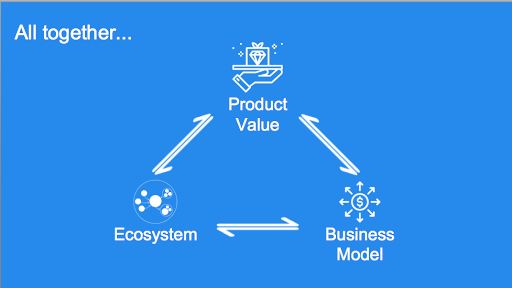
Before attempting to scale your minimum viable product, you should focus on cultivating your minimum viable company. Nail down your value proposition, find your place in the broader ecosystem and craft a business model that adds up. In other words, true product-market fit is actually the magical moment when three elements click together:

To have built a minimum viable company, these three elements must work in concert together:

  • People must value your product enough to be willing to pay for it. This value also determines how you package your product to the world (freemium versus free to pay versus enterprise sales).
  • Your business model and pricing must fit your ecosystem. They must also generate enough sales volume and revenue to sustain your business.
  • Your product’s value must satisfy the needs of the ecosystem and the ecosystem needs to accept your product.

Many entrepreneurs conceptualize product-market fit as the point where some subset of customers love their product’s features. This conceptualization is dangerous. Many failing companies have features that customers loved. Some even have multiple beloved features! Great features constitute only one-half of one-third of the whole puzzle. To have created a minimum viable company, a company needs all three of these elements — value propositions, business model and ecosystem — working in concert. 

So founders take heed…

Moving into “growth mode” while missing any of these elements is building your company on an unsound foundation.

Founders who tune out the latest tweet cycle on “the secrets to raising Series A” and focus instead on the intricacies of their own business will find that product-market fit is a predictable, achievable phenomenon. On the other hand, founders who prematurely focus on growth without knowing the basic ingredients of their minimum viable company often fuel an addictive and destructive cycle around their business’ fake growth, acquiring non-optimal users that contribute to their company’s destruction.

Read an extended version of this article on Extra Crunch.

Post by startupsnows.blogspot.com

You need a minimum viable company, not a minimum viable product

Hi, I’m Ann.

I was one of the first investors in Lyft, Refinery29 and Xamarin. I’ve been on the Midas List for the past three years and was recently named on The New York Times’ list of The Top 20 Venture Capitalists. In 2008, I co-founded Floodgate, one of the first seed-stage VC funds in Silicon Valley. Unlike most funds, we invest exclusively in seed, making us experts in finding product-market fit and building a minimum viable company. Seed is fundamentally different from later stages, so we’ve made it more than a specialty: It’s all we do. Each of our partners sees thousands of companies every year before electing to invest in only the top three or four.

For the past 11 years, I’ve invested at the inception phase of startups. We’ve seen startups go wildly right (Lyft, Refinery29, Twitch, Xamarin) and wildly wrong. When I reflect on the failures, the root cause inevitably stems from misconceptions around the nature of product-market fit.

The magic of product-market fit

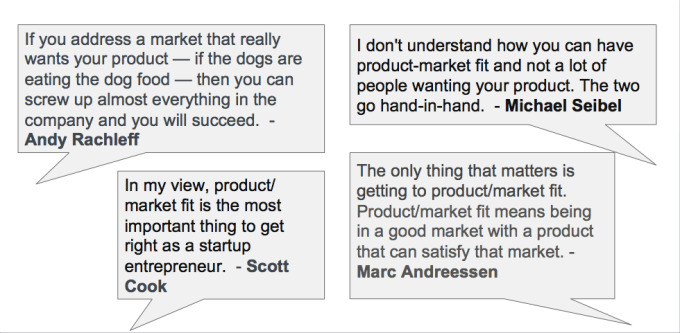
Most successful entrepreneurs and VCs agree that product-market fit is the defining quality of an early-stage startup. Getting to product-market fit allows you to succeed even if you aren’t optimized on other fronts.

Most entrepreneurs conceptualize product-market fit as the point where some subset of customers love their product’s features. At Floodgate, we forensically analyzed companies that died and concluded this conceptualization is wrong. Many failing companies had features that customers loved. Some of these companies even had multiple beloved features! We discovered that having customers love the product is merely a part of product-market fit, not the entire thing. This raises the question: What were they lacking?

Post by startupsnows.blogspot.com

Unicorn fever as One Medical’s IPO pops 40% after conservative pricing

Shares of One Medical are worth $19.50 this morning after the venture-backed unicorn priced its IPO at $14 per share last night. The company opened at $18 before rising further, according to Yahoo Finance data. At its current price, One Medical is worth about 40% more than its IPO price, a strong debut for the company.

The result is a boon for One Medical, which raised $532.1 million during its time as a private company. At $14 per share, the company was worth $1.71 billion. At 19.50, One Medical is worth $2.38 billion, a winning result for a company said to be worth around $1.5 billion as a private company.

For investors The Carlyle Group, J.P. Morgan, Redmile Group, GV and Benchmark (among others), the debut is a success, pricing their stakes in the company higher once again. For other unicorns, the news is even better. One Medical, a company with gross margins under the 50% mark, deeply minority recurring revenue and 30% revenue growth in 2019 at best is now worth about 8.5x its trailing revenues.

That is about as good a signal as one could imagine for venture-backed companies that aren’t in as good shape as Slack or Zoom were letting them know that now is the time to go public.

Unicorn directions

It’s possible to read One Medical’s new revenue multiple in a few ways. You can be positive, saying that its valuation and resulting metrics are signs of investor optimism for the medical service company. Or you could go negative and assume that its pricing looks like a case of the market being more excited about a brand than a set of accounting results.

Post by startupsnows.blogspot.com

Last day for early-bird tickets to TC Sessions: Robotics + AI 2020

Today’s your last day to score early-bird pricing on tickets to TC Sessions: Robotics + AI 2020, which takes place on March 3. If you want to keep $150 in your wallet, beat the deadline and buy your ticket here before the clock strikes 11:59 p.m. (PT) tonight!

Our one-day conference dedicated to robotics and AI — the good, the bad and the challenging — features interviews, panel discussions, Q&As, workshops and demos. Join roughly 1,500 experts, visionaries, creators, founders, investors, researchers and engineers. Rub elbows, network and engage with current and aspiring leaders, as well as students poised to drive future innovation.

We have a stellar line up, and just because we’re biased doesn’t mean we’re wrong. I mean come on — assistive robots, ethics and AI, the state of VC investment and robot demos. And that’s just for starters. Here are a couple of specific examples, and you can peruse the full agenda right here.

  • Cultivating Intelligence in Agricultural Robots: The benefits of robotics in agriculture are undeniable, yet at the same time only getting started. Lewis Anderson (Traptic) and Sebastien Boyer (Farmwise) will compare notes on the rigors of developing industrial-grade robots that both pick crops and weed fields respectively. Pyka’s Michael Norcia will discuss taking flight over those fields with an autonomous crop-spraying drone.
  • Building the Robots that Build: Join Daniel Blank (Toggle), Tessa Lau (Dusty Robotics) and Noah Ready-Campbell (Built Robotics) as they discuss whether robots can help us build structures faster, smarter and cheaper. Built Robotics makes a self-driving excavator. Toggle is developing a new fabrication of rebar for reinforced concrete and Dusty Robotics builds robot-powered tools. We’ll talk with the founders to learn how and when robots will become a part of the construction crew.

And in case you haven’t heard, we’ve added Pitch Night, a mini pitch-off, into the mix this year. We’re accepting applications until tomorrow, February 1. This is no time for fence-sitting! Apply to compete in Pitch Night now. TechCrunch editors will review the applications and choose 10 startups to pitch at a private event the night before the conference. A panel of VC judges will select five teams as finalists. Those founders will pitch again the next day — live from the Main Stage. It’s awesome exposure that could take your startup to the next level.

If you love robots, you need to be at TC Sessions: Robotics + AI 2020 on March 3. And there’s no point paying more than necessary. Today’s the last day to buy an early-bird ticket. Buy yours before the deadline expires at 11:59 p.m. (PT) and save $150.

Is your company interested in sponsoring or exhibiting at TC Sessions: Robotics & AI 2020? Contact our sponsorship sales team by filling out this form.

Post by startupsnows.blogspot.com

Moda Operandi, an online marketplace for high-end fashion, raises $100M led by NEA and Apax

Moda Operandi, an online marketplace for luxury fashion, accessories and home decor, is today announcing a high-priced event of its own: it’s raised $100 million, a mix of equity and debt that it will use to invest in its platform and technology as well as to continue growing business overall, which was founded in 2010 and today offers products from some 1,000 brands and designers and ships to 125 countries.

“For the past eight years, Moda has disrupted the way people shop for luxury fashion,” said Moda Operandi CEO Ganesh Srivats in a statement. “This investment will enable us to build on that innovation, investing further in the client and designer experience and connecting more of the world’s best fashion to more people.”

The financing is being co-led by NEA and Apax Partners, both previous investors in Moda Operandi, with participation also from the Santo Domingo Family (connected to Lauren Santo Domingo, who co-founded the company with Aslaug Magnusdottir), Comerica Bank, TriplePoint Capital and other unnamed investors.

The company’s valuation is not being disclosed but in its last round, in 2017, Moda Operandi had a post-money valuation of $650 million, according to data from PitchBook. It has raised $345 million to date.

High-end fashion might not be the first thing that comes to mind when you think about online shopping, but it has actually been a ripe market for e-commerce industry.

While those in the know (and in the money) might attend catwalk shows, and bijou boutiques in swish locales are likely to be around for many years to come, there is a massive population of people who have the income and inclination to shop for luxury fashion, but might not be in the right place, or have the time, to do so.

For these shoppers, websites, mobile apps — and most recently new channels like Instagram and messaging services — have become a key route to browsing and buying, leading to the rise of huge businesses like Farfetch, Net-a-Porter and more.

That trend has helped to buffer Moda Operandi up to now, but it’s also the one that will be interesting to watch down the line.

We’ve written about the rise of direct-to-consumer brands and how that has played out specifically in the world of fashion, which in turn becomes a new group of competitors to aggregating marketplaces like Moda Operandi.

Similarly, the growing trend of targeting consumers wherever they happen to be also represents a rival business model, with some fashion retailers now foregoing websites altogether in favor of using third-party messaging apps to reach their target customers. Will Moda Operandi change with the times to do more of this kind of selling, too? Like fashion, what’s in today might be out tomorrow, so even the best channels are moving targets.

In any case, Moda Operandi has most definitely shown that it’s prepared to evolve and upset the status quo. The company got its start in 2010 in part out of an aha-moment from Santo Domingo, a socialite, former model and former editor at Vogue.

As someone who had worked for years in the luxury fashion industry, fully immersed as a consumer to boot, she knew that only a small, rarefied group of people ever got full access to a designer’s runway collection.

Moda Operandi was her solution — a platform to broaden that out, giving access to a full trunkshows (as the runway collections are called) to a wider selection of possible buyers and improving revenues for designers and brands in the process, since they no longer had to rely just on more traditional channels, namely buyers for retailers. The site had some catches — for example, as we pointed out at the time, you could shop a runway look, but still had to wait months for the piece to actually arrive with you, since those items would have yet to be made; but it caught on with a loyal following.

Over the years, the site’s basic remit has expanded, covering not only runway collections but also extending into jewellery, accessories and home decor. (We asked what size the business is today, and whether Moda Operandi can share any details on how that has changed over time, but a spokesperson said the company would not be sharing these or other financial details today.)

In any case, it’s remained a compelling enough business to have brought in a hefty round of growth funding from its previous backers.

“We continue to be impressed with the power of Moda’s brand and its positioning in the luxury market,” said Dan O’Keefe, managing partner of Apax Digital, in a statement. “Moda has been enhancing its technology capabilities as a world leading platform for fashion discovery and is led by a world-class team. We look forward to continuing to support their expansion.”

“Moda Operandi has really disrupted the traditional ecommerce model, using technology to give people unprecedented access to fashion,” added Tony Florence, general partner and head of technology investing at NEA, in a statement. “It was a really big idea when we led the Series A, and today Ganesh and the team are executing on that data-enabled retail model at scale. We are thrilled to continue supporting the company in this latest round.”

Post by startupsnows.blogspot.com

How to blow through capital at an incredible rate

Hello and welcome back to Equity, TechCrunch’s venture capital-focused podcast, where we unpack the numbers behind the headlines.

It was yet another jam-packed week full of big news, IPO happenings, and venture activity. As always we’ve done our best to deliver the gist on what’s been going on. We had Alex Wilhelm and Danny Crichton on hand to handle it all, which went medium-good. In other Equity news, we’re back with guests over the next few weeks, so if you miss us having a venture capitalist along for the ride, fear not, their return is just around the corner.

Up top this week was Jon Shieber’s report that Kleiner Perkins has rapidly deployed its most recent fund, a $600 million vehicle. While the news felt surprising, digging back through our archives we were reminded that the firm had indicated it might put its capital to work quickly. Still, as Danny pointed out, it’s rare that venture capitalists have to go our raising from LPs on an annual basis.

After that, we turned to some funding rounds that held our attention, including the Free Agency round that is working to bring talent management to the technology industry similar to the sports and entertainment worlds.

The concept makes some sense as compensation packages for top talent in the industry can extend into the seven-figures (Free Agency takes a 5-10% cut of an employee’s income using the increasingly popular income-share agreements). Also this round felt a bit like a reminder that the labor market is tight at the moment.

We then moved on to Josh Constine’s story about “Ring for enterprise” startup Verkada, which raised a massive $80 million round at a $1.6 billion valuation. That’s eye popping, since the extremely small dilution implied with those numbers (5%) is very rare in the venture world.

After that we turned to a few rounds that Alex has had his eye on, namely the somewhat-recent Insurify round, the pretty-recent Gabi round, and the most-recent Policygenius. All told they sum to $150 million, which made us ask the question, why are venture capitalists so into insurance marketplace startups?

Finally, we touched on the latest from the intra-SoftBank delivery war between DoorDash and Uber Eats, including who is impacted, and what it means for future consolidation in the on-demand world. Or more precisely, why hasn’t there been more?

Finally, don’t forget that IPO season is upon us. Are you caught up?

Equity drops every Friday at 6:00 am PT, so subscribe to us on Apple PodcastsOvercastSpotify and all the casts.

Post by startupsnows.blogspot.com

How Bykea is winning Pakistan’s ride-hailing and delivery market

Increasingly, the streets of Karachi and Lahore are being flooded with men riding bikes and wearing green T-shirts, a writer friend recently told me. In a sense, these men represent the emergence of Pakistan’s tech startups.

India now has more than 25,000 startups and raised a record $14.5 billion last year, according to government figures. But not all Asian countries are as large as India or have such a thriving startup ecosystem. Long overdue, things are beginning to change in bordering Pakistan.

Bykea, a three-year-old ride-hailing and delivery service, today has more than 500,000 bikes registered on its platform. It operates in some of Pakistan’s most populated cities, such as Karachi, Lahore and Islamabad, Muneeb Maayr, Bykea founder and CEO, told TechCrunch.

Maayr is one of the most recognized startup founders in Pakistan, and previously worked for Rocket Internet, helping the giant run fashion e-commerce platform Daraz in the country. While leading Daraz, he expanded the platform to cater to categories beyond fashion; Daraz was later sold to Alibaba.

Post by startupsnows.blogspot.com

Thursday, January 30, 2020

Publisher engagement startup Insticator bets on commenting with Squawk-It acquisition

Insticator, a startup helping publishers add elements like polls, quizzes and suggested story widgets to their content, has made its first acquisition — a commenting platform called Squawk-It.

Insticator CEO Zack Dugow said his platform benefits online publishers by keeping audiences engaged and bringing in new ad revenue (which is split between Insticator and the publisher). And he sees commenting as a natural next step towards his goal to become “the main monetization and community engagement solution for publishers.”

While “don’t read the comments” remains one of the most reliable pieces of advice you’ll get online, Dugow said Squawk-It (it was formerly known as Solid Opinion) stands out from other commenting platforms because of its reliance on “100 percent human moderation,” with moderators working in three shifts to to monitor partner sites 24 hours each day.

“Anybody can game an algorithm,” he said.

And when I brought up the concern that so much of the discussion has moved out of the comments section and onto social media, Dugow responded that “merging social commenting” so that it feels like everything is part of the same conversation is “in our roadmap.”

Like other Insticator products, Squawk-It comments (which you can see below the article here) are monetized through advertising. But Dugow noted that the ads run above the comments, rather interrupting or distracting from the comments themselves.

The financial terms of the acquisition were not disclosed. Dugow said the entire 13-person Squawk-It team (headquartered in New York but with an engineering team in Kiev) has joined Insticator, and that the product has already been rebranded as Insticator Comments.

Post by startupsnows.blogspot.com

Mammoth Biosciences aims to be Illumina for the gene editing generation

In 1998, the startup company Illumina launched a revolution in the life sciences industry by developing technology to slash the costs of identifying and mapping genetic material.

Now, a little over 20 years later, Mammoth Biosciences is hoping to do the same thing for gene editing tools.

The company, co-founded by Jennifer Doudna, who did some of the pioneering work to discover the gene editing enzyme known as CRISPR, has just raised $45 million as it looks to bring to market products that can be used not only for disease detection, but are more precise editing tools for genetic material.

Rather than get bogged down in the patent dispute that raged over the provenance and ownership of applications for the original CRISPR enzyme — the Cas9 discovered by Doudna and developed for clinical applications at the Broad Institute — Mammoth has joined a number of startups in identifying new enzymes with a broader array of properties.

“From the very beginning of the company we’ve only worked with novel new enzymes to create these diagnostic products and the new novel diagnostic and editing,” says Trevor Martin, Mammoth Biosciences co-founder and chief executive.

Chiefly, the company is touting its Cas14 enzyme, which the company says opens up new possibilities for programmable biology thanks to its small size, diverse targeting ability and high fidelity — meaning that there are no unforeseen side effects to edits made using the enzyme (something that has arisen with Cas9 applications).

“There’s not one protein that’s going to be the best at everything,” says Martin. “For any particular product that you’re building, at Mammoth, we have the broadest toolbox.”

The Cas14 enzyme can be used to make gene edits in-vivo, meaning in live organisms, instead of ex-vivo, or outside of an organism. The in-vivo use-case could accelerate the time it takes to conduct experiments or develop treatments.

“Twenty years from now, when the umpteenth drug gets approved using Crispr and some nuclease named Cas132013, people are going to look back on this patent battle and think, ‘what a godawful waste of money,’ ” Jacob Sherkow a patent law scholar at New York Law School told Wired back in 2018.

Already, Horizon Discovery, a Cambridge, U.K.-based gene editing technology developer, is using the new tools developed by Mammoth Bioscience to create new CRISPR tools for Chinese Hamster Ovary cell line editing.

That partnership is an example of how Mammoth is thinking about the commercialization of the new Cas14 enzyme line and its role in biological engineering.

“You will need a full toolbox of CRISPR proteins,” says Martin. “That will allow you to interact with biology in the same way that we interact with software and computers. “From first principles, companies will programmatically modify biology to cure a disease or decrease risk for a disease. That’s going to be really kind of a turning point.”

To achieve its vision, Mammoth has managed to nab top talent from the life sciences industry, including Peter Nell, a co-founder of Casebia (a joint venture between Bayer and CRISPR Therapeutics), who came on board as chief business officer, and Ted Tisch, a former executive at Synthego and Bio-Rad, who joined the company as chief operating officer.

The company also nabbed $45 million of funding, including investment firms Mayfield, NFX, Verily (the Alphabet subsidiary) and Brook Byers, which was led by Decheng Capital — bringing the company to more than $70 million in funding.

“There are a dozen or so products that are in clinical development with CRISPR,” says Ursheet Parikh, a partner with Mayfield. “Maybe that number would go up by five or 10 without Mammoth, but it will go up by one or two orders of magnitude with Mammoth.”

To Parikh, Mammoth is the best positioned of the CRISPR development tools, because the company is building a whole platform that customers can license and use to develop products using gene editing.

The thinking, according to Parikh, is as follows, “if this technology can power lots of applications, let’s basically ensure that lots of these applications can come to market and as that happens I get my app store cut.”

“It’s an Illumina-like business,” Parikh says. “Just as anybody who is innovating with genomics needs an Illumina sequencer because they want to be able to do the sequencing… if someone wants to do editing… This gives them the access to do the right sequencing.”

Post by startupsnows.blogspot.com

Haus raises $4.5 million to replace your wine club membership

Millennials are tired of being drunk, but are locked into a culture that puts alcohol at the center of professional events and outside-of-work gatherings. Twenty-somethings in New York and San Francisco don’t want to spend $17 on a gin and tonic at a compulsory happy hour. That’s why Haus, a new direct-to-consumer aperitif startup, is debuting its membership program.

Co-founders Helena Price Hambrecht and Woody Hambrecht, who are married, have also secured $4.5 million in seed funding to fuel their bid for a more laid back and less alcohol-centric way to party, starting with a 15% ABV (alcohol by volume) citrus and flower-flavored aperitif. For comparison, most hard liquors are between 35 and 45% alcohol. Wine averages at 11.6%. 

Members across the U.S. can now sign up for a monthly shipment of either six bottles per month for $144, two bottles per month for $63 or one bottle per month for $35. Unlike most wine clubs, it’s free to join. Haus will also begin a wholesale initiative with bars and restaurants in New York, San Francisco, Portland, Seattle and Denver.

The genesis for Haus was the founders’ idea to create a transparent alcohol brand, or a “Glossier for alcohol,” notes Helena, a Silicon Valley branding veteran. Woody, an experienced winemaker, identified a loophole that allows distributors to ship alcohol direct-to-consumer if the product is made mostly from grapes and is under 24% alcohol. Not only could a beverage be distributed straight to buyers, but it can be done with transparency, including ingredients and nutrition facts. This will allow Haus to collect user data that big alcohol companies just don’t have.

“Antiquated liquor laws have stunted innovation in the spirits space since prohibition, despite the fact that today’s drinkers are desperate for something different,” says Price Hambrecht. “Selling directly to the drinker means we can build relationships with our customers, iterate quickly based on their feedback and ultimately create the products they want.” So, Haus was born. 

Co-founders and co-CEOs Helena Price Hambrecht and Woody Hambrecht.

Haus saw fundraising as a chance to grow not only an early community of stakeholders, but customers. Helena equates their fundraising process to more of a crowdfunding approach than a traditional VC round, with over 10 funds and 100 individual investors contributing. Raising capital meant crowdsourcing a community of people who believed in what they were building and were willing to seed it into their own networks. Some angels included Casey Neistat, former CEO and chairman of Campari Gerry Ruvo, Away co-founder Jen Rubio, Superhuman founder Rahul Vohra and Yelp co-founder Russell Simmons.

Contributing funds include Combine, Haystack Ventures, Homebrew, Shrug Capital, Resolute Venture Partners, Coatue, Dream Machine and Work Life Ventures, among others. 

Subscriptions work when customers form habits. Haus plans to retain its community around its trendy party beverage with discounts and events, bolstered by editorial content in the future. What the founders are really pitching, however, is a lifestyle change.

In “The Art of the Gathering,” Priya Parker argues that in our modern society, we’ve lost our ability to finesse purposeful events. We end up gathering in ways that don’t actually serve us, and we aren’t connecting in the ways we ought to. Whether it’s a boring dinner party that isn’t focused on the guests, or a dreaded happy hour after a long work day. 

It has yet to be determined if aperitifs could win over wine and liquor lovers at a macro scale. But Haus thinks that with a trendy product and hyper-engaged community, they can leverage this loophole to change the way we gather. Starting with how we drink.

Post by startupsnows.blogspot.com

CloudTrucks raises $6.1 million to help truckers run their businesses

After selling autonomous driving startup Scotty Labs to DoorDash just five months ago, entrepreneur Tobenna Arodiogbu is back with a new startup. This time, he’s focused solely on truck drivers and their businesses. CloudTrucks, which aims to help truck drivers earn more money, has closed a $6.1 million round led by Craft Ventures with participation from Khosla Ventures, Kindred Ventures and Abstract Ventures.

Described as a “business in a box,” CloudTrucks is designed to make it easier for truck owners and operators to run their businesses. Through software and data science, CloudTrucks aims to reduce operating costs for truck drivers and improve revenue, cash-flow and costs.

In the U.S., about 91% of fleets are small businesses, operating six or fewer trucks, according to the American Trucking Associations. Last year, almost 800 trucking businesses went bankrupt in the U.S. Analysts attribute that to a rise in insurance costs and excess supply, which drove shipping rates down. Additionally, operators are tasked with managing safety programs, invoicing and other paperwork. This is where CloudTrucks comes in.

“CloudTrucks focuses on the owner-operator and small trucking companies because they are the lifeblood of the industry and facing the largest pressures with fast-rising insurance rates, predatory factoring options and a quickly changing landscape,” Arodiogbu told TechCrunch.

Already, CloudTrucks has a small number of early customers to fine-tune the platform. The startup is accepting new customers on a case-by-case basis.

Prior to CloudTrucks, Arodiogbu co-founded Scotty Labs to enable humans to virtually control cars and trucks. The idea was to assist drivers in long-haul trips. Before DoorDash’s acquisition of the startup, Scotty Labs had raised $6 million in funding. Now, Arodiogbu serves as an advisor to DoorDash.

“Tobenna is a proven entrepreneur and product thinker with a clear vision of the problem CloudTrucks intends to solve,” Craft co-founder and general partner David Sacks said in a statement to TechCrunch. “Trucking is at the heart of the American economy and yet technology still plays a very small role. We are excited to support the entire CloudTrucks team as they build the platform that will increase revenue and efficiency for thousands of owner-operator truck drivers.”

Post by startupsnows.blogspot.com

IPO pricing for One Medical and Casper will set the tone for 2020’s unicorn debuts

Hello and welcome back to our regular morning look at private companies, public markets and the gray space in between.

As One Medical looks to become the first venture-backed company to price its IPO in 2020 this afternoon and Casper aims to price its own shares next Wednesday, the market is gearing up for a pair of tests.

If you listen to the Nasdaq and the NYSE, IPO volume in 2020 will prove vibrant. A surprise, perhaps, in the wake of the WeWork meltdown that many had expected might reduce IPO cadence. One Medical and Casper, though, are charging ahead, meaning that their debuts will help set the tone for the 2020 IPO market.

If they struggle with weak pricing and slow initial trading, their disappointing offerings could slow the IPO market. If they price well and are welcomed by the street, however, the opposite.

Let’s take a look at how many IPOs are coming, what One Medical and Casper are hoping for and what their results might mean for unicorn liquidity. Don’t forget that we’re still living in the midst of a unicorn liquidity crisis — there are hundreds of private companies worth $1 billion or more around the world that need an exist, and the market is creating them faster than it can get them out the door. If IPOs stumble in 2020, lots just won’t make it out before the market turns.

An IPO crowd

Yesterday, CNBC reported notes from Nasdaq CEO Adena Friedman and NYSE President Stacey Cunningham, each speaking about their expected IPO cadence in 2020. Friedman said there are “lot of companies looking to tap the public markets in the first half,” implying a strong flow of potential debuts.

Post by startupsnows.blogspot.com

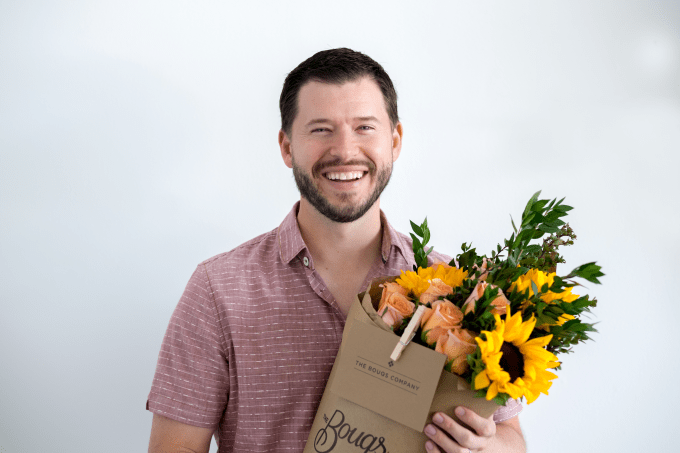
With $30 million in fresh funds, The Bouqs plans to plant its flower delivery business in Japan

The Bouqs plans to take a slice of Japan’s $6 billion flower market this year with a $30 million strategic growth round from Japanese enterprise business investor Yamasa. While The Bouqs still must compete with bigger contenders like 1-800-Flowers and FTD in the U.S., it will now have to take on incumbents like Ayoma Flower Market and FloraJapan, both of which also offer same-day delivery throughout the land of the rising sun.

So why Japan? According to The Bouqs founder and CEO John Tabis, his company had been looking to expand internationally for awhile and Japan seemed to fit well within that plan.

The Bouqs CEO and founder John Tabis

The Bouqs CEO and founder John Tabis

And as far as bigger competition in any country, Tabis is undeterred, telling TechCrunch there’s plenty of opportunities in the flower delivery business if you know where to look. “There’ve been four or five other startups that tried something similar — some of them no longer exist,” Tabis said. “But the thing that’s worked for us, the first is the way that we’ve sourced is unique and it’s really the foundation of our brand.”

The Bouqs sprung up in a wave of Silicon Valley funded flower delivery startups like BloomThat, Farm Girl and  Urban Stems, all promising Pinterest-worthy bouquets at the click of a button. But what set it apart was its farm-direct supply chain, cutting out costs from middlemen and delivering flowers that last longer.

This particular round now puts The Bouqs up top as far as total funding raised among its flower delivery startup peers, bringing in $74 million in total funding to date, with competitor Urban Stems at a close second with $27 million in funding, according to Crunchbase.

Tabis also tells TechCrunch the new funds will also further the company’s development into brick-and-mortar stores and that it’s jumping into the wedding biz. As anyone who’s ever planned a wedding will tell you, it’s an industry ripe for disruption — with brides and grooms spending about 8% of the budget on the flowers alone.

One other renewed focus for the company will be its subscription business, keeping customers set up with a fresh bunch of flowers once the old bouquet is ready for tossing. “It’s sort of the linchpin of our business that’s grown very nicely…expanding both our revenue and profitability,” Tabis told TechCrunch.

The SVP of Yamasa, Norikazu Sano, also mentioned further expansion into Asia for the company in a company press release so we could see the Bouqs in more international areas over time, if all goes right in Japan.

“This financing will enable us to fully realize our vision to create a global network of top quality farms paired with a category-defining local floral brand enabled by proprietary supply chain technology and vertically-integrated sourcing capabilities. We’re so excited for this next phase of the business, and all of the opportunities that lie ahead,” Tabis said.

Post by startupsnows.blogspot.com

Medloop secures €6M from Kamet Ventures and AXA for self-service patient app

Medloop, which allows patients to manage healthcare needs and providers, has secured €6 million from Kamet Ventures and AXA.

The cash will be used to enhance its product offering and continue expansion across Germany and the U.K. Medloop is also developing an evidence-based medical rule engine embedded on the Electronic Medical Record (EMR) of patients.

Medloop offers patients what it calls “intuitive” self-service features in an app that enables them to navigate their own healthcare, including online appointment bookings, electronic medical results and prescription refills, as well as chatting in-app with healthcare providers.

Founded in 2018 by Berlin-based entrepreneur Shishir Singhee, some medical practices in Germany use the Medloop doctor system to run their entire practice, using it to give an overview of their patient population.

Singhee, said: “Healthcare today has become increasingly impersonalized as ever-growing patient registers have made it challenging for doctors to treat patients in a bespoke way. Medloop strives to bridge this critical gap, by employing technology to empower patients and help doctors deliver proactive and holistic care.“

Stephane Guinet, CEO of Kamet Ventures, said: “It is no secret how overstretched doctors are in terms of the time and care they can offer each patient. Medloop’s offering is a novel solution to this challenge and we are very excited to be part of Medloop’s growth story given how critical its offering is to the U.K. market and beyond.”

Medloop achieved compatibility with EMIS last summer, enabling its entry into the U.K. market.

In Germany, its main competitors are the incumbents that were built in the early 1990s, such as Medatix and Medistar. In the U.K. it is up against patient management tools such as QMasters.

Post by startupsnows.blogspot.com

One day left for early-bird tickets to TC Sessions: Robotics + AI 2020

No one ever wants to pay more, and that’s as true for well-financed companies as it is for early-stage startup founders on a shoe-string budget. So if you love robots and machine learning, why spend more on your ticket to TC Sessions: Robotics + AI 2020? Prices go up on January 31, which means you have just one day left to buy an early-bird ticket. You’ll save a tidy $150 in the process. Sweet!

On March 3, roughly 1,500 attendees will spend the day delving into the future of robots, the AI that drives them and the people at the forefront. We’re talking some of the top makers, visionaries, founders, investors and engineers. Join your community for live interviews, panel discussions, demos, workshops, audience/speaker Q&As and world-class networking.

We’ve posted the day’s agenda, and we’ll add a few more surprises in the coming weeks. Here’s a quick peek at just some of the engaging speakers and presentations you’ll enjoy.

  • Lending a Helping Robotic Hand: As populations age, caregivers in many countries are turning to robots for assistance. Vivian Chu, cofounder and CEO of Diligent Robotics, and Mike Dooley, cofounder and CEO of Labrador Systems, will join us to discuss the role technology can play in helping care for and assist those in need.
  • Fostering the Next Generation of Robotics Startups: Robotics and AI are the future of many or most industries, but the barrier of entry is still difficult to surmount for many startups. Joshua Wilson, co-founder and CEO of Freedom Robotics, joins us to talk about how these companies are helping ease the first steps into the wider world of automation.

In a classic “but wait, there’s more” moment, our Pitch Night finalists will present live on the Main Stage. Don’t know what we’re talking about? Read more about Pitch Night here, and hey — we’re accepting applications until February 1. Don’t wait — toss your hat into the ring. It’s free, and you’ll have a chance to introduce your early-stage startup to a group of heavy-hitting influencers. What’s not to love?

TC Sessions: Robotics + AI 2020 takes place on March 3. You have plenty of time to plan the day, but your opportunity to save $150 runs out in one short day. Prices go up on January 31buy your early-bird ticket today.

Is your company interested in sponsoring or exhibiting at TC Sessions: Robotics & AI 2020? Contact our sponsorship sales team by filling out this form.

Post by startupsnows.blogspot.com

SoftBank wants its on-demand portfolio to stop losing so much money

SoftBank wants its competing portfolio companies to stop losing so much money and, in some cases, to merge.

That’s the news out from the Financial Times today, which reported that Uber and DoorDash discussed merging last year. The talks didn’t wind up in a deal.

The two companies, each heavily backed by SoftBank and its formerly active Vision Fund, compete in the food delivery space at great expense. Uber’s Eats business turned $392 million in adjusted net revenue in Q3 2019 into $316 million adjusted loss. That ocean of red ink actually makes DoorDash’s reported, projected $450 million 2019 operating loss look modest.

Perhaps by bringing the two companies together they would lose less money, and thus be in a better place to either return to their original IPO valuation or defend their existing private valuation.

Uber has famously struggled after its IPO to retain value, shedding worth during its public offering and since its debut. DoorDash, relatedly, was said to be in the market recently but unable to close a new, large funding round. And as the two companies compete a combination makes sense. Even more so when you consider their shared shareholder.

Other chaos

Uber and DoorDash aren’t the only examples of SoftBank-backed companies beating each other up with bricks of Vision Fund cash.

According to a report today in the Wall Street Journal, a fight in Latin America between several SoftBank-backed companies is raging:

Uber is under siege in Latin America amid a bruising price war where its ostensible rivals are Rappi and China’s Didi Chuxing Technology Co. But here’s the twist. All the combatants have as their biggest owner the same tech investor, Japan’s SoftBank Group Corp., which has injected a total of $20 billion into the three.

In the pre-unicorn era, you’ll recall the old venture maxim that no single group should invest in competing players. After all, why pay for one portfolio company to beat on another startup that you already helped finance? SoftBank, with its own investments and the Vision Fund, ignored that rule, and now it’s financing a fustercluck across the various American continents.

Which is why it might want DoorDash and Uber to link up. It might lessen one headache. Then SoftBank could work on figuring out how to keep Uber and Didi from beating each other up on rides in other markets, while disentangling Uber Eats and Rappi from a delivery scrap in yet more.

Perhaps SoftBank wants all the players to merge into a single, mega-delivery and ride corp. That would never pass regulatory oversight, of course, but at least it would centralize the losses and cash burn into a single income statement.

Think of the time it would save!

Post by startupsnows.blogspot.com

SpaceX cautions on launch regulation that outpaces innovation

During the Federal Aviation Administration (FAA)’s 23rd annual Commercial Space Transportation Conference in Washington, D.C., one panel focused on the changing regulatory environment when it comes to private launch activities, and how those are integrated into existing rules and practices for managing commercial air transportation. Panelist Caryn Schenewerk, SpaceX senior counsel and senior director of space flight policy, emphasized that while the company always does the utmost to ensure safety in everything it does, the company also wants to focus on the actual state of the industry today and what it needs to grow as various partners work to establish new rules for the growing commercial launch sector.

“When aviation started, the Wright brothers weren’t flying over major populated cities,” Schenewerk pointed out. “They were outside Paris in an unpopulated field, and they were at Kitty Hawk on unpopulated beaches. And they were in Ohio in unpopulated areas.”

Schenewerk was directly addressing comments made by other panelists, and specifically ALPA Aviation Safety Chair Steve Jangelis, that suggested the emerging commercial launch industries may be looking far ahead to when they’re launching from spaceports located near populated areas, and launching with much more frequency than they are today. In general Jangelis was advocating for laying the groundwork now for high levels of cooperation and integration between aviation traffic management and rocket launch operators.

Schenewerk was reluctant to concede any kind of direct equivalency between the commercial air transportation industry and the space launch sector, given their relative dissimilarity.

She noted that in terms of sheer volume, there’s a massive difference, with roughly 40 to 50 launches set for 2020 compared to millions of flights for commercial air. Airlines also use essentially the same small handful of airframes from suppliers like Boeing and Airbus, while each launch company has their own, very different vehicle with different conditions for launch and flight. Overall, she suggested then that anticipating some potential future state where the industries were more similar could result in stifling progress toward that ultimate goal.

“I hope we get to that million launches at some point, but when we are at that point, it’s going to be because we worked our way up the safety trajectory in a way that allows us to operate that way,” Schenewerk said. “Today, SpaceX can’t fly from a spaceport in the middle of the country, because we won’t get through the safety approval. We literally will not be licensed by the FAA to operate from that site, because we will then be flying over large populations of people – and we aren’t at that level of reliability and safety in this industry to fly over large populations of people with these kinds of rockets. Could we get there someday? Yeah, we can get there someday when we’ve had a million flights, and a million prove-outs of our capability, when we have such repeatability that we’re in that level.”

Ultimately, Schenewerk’s comments and Jangelis’ responses illustrate that there are still a lot of places where younger companies and emerging technologies like reusable rocket launches are conflicting with the views of more established industries and players operating in some shared spaces.

FAA Administrator Steve Dickson also addressed the agency’s ongoing work to establish launch rules, which were released as a draft last year and which Dickson said will likely be finalized sometime this fall, once the FAA has incorporated industry comments and feedback.

“Let’s think about that big vision, that big day when lots of things are happening,” Schenewerk said. “But let’s also not yell at our kid for not being able to fly an airplane when they can barely walk – and I think that’s where we are right now: We’re still figuring out how to walk and run in this industry.”

Post by startupsnows.blogspot.com

How acquirers look at your company

There comes a time for many founders when they are ready to pass the baton of running their business to someone else. It’s a rare founder who wants to go from zero to running and scaling a large, long-term company. When that time comes — you may have expectations on what you would like to exit for, or have read stories about other company valuations — I thought it might be useful to share some of the other side’s viewpoint. So, here are some of the criteria we use at Scaleworks when evaluating a new opportunity.

Rule 1: Don’t lose money

The cliche is “rule number two: read rule number one.” Make sure any acquisition you consider is at a fair price and that you have identified some low-hanging fruit opportunities for improvement that you are confident in your ability to execute on.

What does a fair price mean?

For us, it means a price we have confidence we can either pay back over time from cash flow, or sell the business on a profit multiple for at least the same price we bought it for.

Post by startupsnows.blogspot.com

The don’ts of debt for fast-growing startups

I work every day with company founders who are grappling with the challenges of driving business growth while keeping their finances on an even keel. One topic we often discuss is how to take advantage of debt to drive business growth — without it turning into a problem.

In my experience, debt can serve as a valuable piece of a company’s capital structure. The key is to use debt for the right purposes and to understand the implications of doing so. For example, short-term loans (one to two-year terms) are useful for financing receivables and inventory to help manage cash flow. These working capital facilities have attractive interest rates (often in the 5% range) and are well understood by the lending community.

By contrast, mezzanine loans (usually three to five-year terms) are better suited to provide the flexibility and runway needed to prove out certain initiatives prior to securing an equity investment or a liquidity event. These loans tend to have limited covenants, are not secured by specific working capital assets and are junior to the working capital loans. Given their higher-risk profile, they are more expensive than short-term loans, with lenders typically targeting a return of 15% to 20%, split between a current pay interest rate of 10%+ and expected stock appreciation from the receipt of warrant coverage.

Regardless of the type of debt a company takes on, there are certain principles to consider to keep the debt from threatening the success of the business. Should you decide to take on debt, understand the implications and consider the following five rules:

Post by startupsnows.blogspot.com

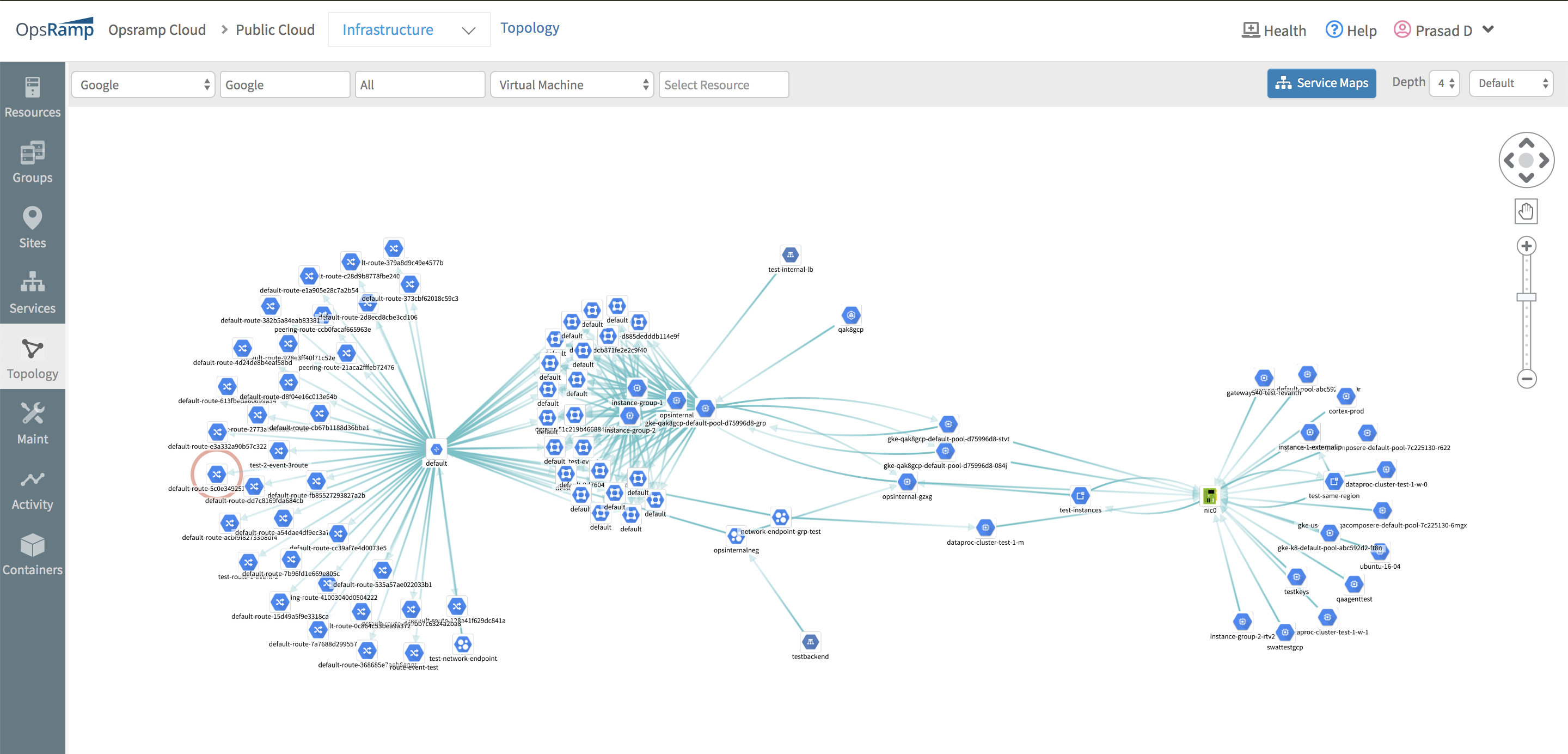
OpsRamp raises $37.5M for its hybrid IT operations platform

OpsRamp, a service that helps IT teams discover, monitor, manage and — maybe most importantly — automate their hybrid environments, today announced that it has closed a $37.5 million funding round led by Morgan Stanley Expansion Capital, with participation from existing investor Sapphire Ventures and new investor Hewlett Packard Enterprise.

OpsRamp last raised funding in 2017, when Sapphire led its $20 million Series A round.

At the core of OpsRamp’s services is its AIOps platform. Using machine learning and other techniques, this service aims to help IT teams manage increasingly complex infrastructure deployments, provide intelligent alerting, and eventually automate more of their tasks. The company’s overall product portfolio also includes tools for cloud monitoring and incident management.

The company says its annual recurrent revenue increased by 300 percent in 2019 (though we obviously don’t know what number it started 2019 with). In total, OpsRamp says it now has 1,400 customers on its platform and alliances with AWS, ServiceNow, Google Cloud Platform and Microsoft Azure.

OpsRamp co-founder and CEO Varma Kunaparaju

According to OpsRamp co-founder and CEO Varma Kunaparaju, most of the company’s customers are mid to large enterprises. “These IT teams have large, complex, hybrid IT environments and need help to simplify and consolidate an incredibly fragmented, distributed and overwhelming technology and infrastructure stack,” he said. “The company is also seeing success in the ability of our partners to help us reach global enterprises and Fortune 5000 customers.”

Kunaparaju told me that the company plans to use the new funding to expand its go-to-market efforts and product offerings. “The company will be using the money in a few different areas, including expanding our go-to-market motion and new pursuits in EMEA and APAC, in addition to expanding our North American presence,” he said. “We’ll also be doubling-down on product development on a variety of fronts.”

Given that hybrid clouds only increase the workload for IT organizations and introduce additional tools, it’s maybe no surprise that investors are now interested in companies that offer services that rein in this complexity. If anything, we’ll likely see more deals like this one in the coming months.

“As more of our customers transition to hybrid infrastructure, we find the OpsRamp platform to be a differentiated IT operations management offering that aligns well with the core strategies of HPE,” said Paul Glaser, Vice President and Head of Hewlett Packard Pathfinder. “With OpsRamp’s product vision and customer traction, we felt it was the right time to invest in the growth and scale of their business.”

Post by startupsnows.blogspot.com