Thursday, January 31, 2019

Joseph Gordon-Levitt’s artist-collaboration platform HitRecord raises $6.4M

In the early 2000s, actor Joseph Gordon-Levitt was frustrated with the roles he was being offered. Instead of starring in critically acclaimed indies, he was typecast as “the funny kid on TV” due to roles like Tommy from “3rd Rock from the Sun.”

So like anyone who matured alongside the internet, he created a website where he could ideate, produce and share his work. More than 10 years later, he wants to turn that pet project, called HitRecord, into a full-fledged technology company.

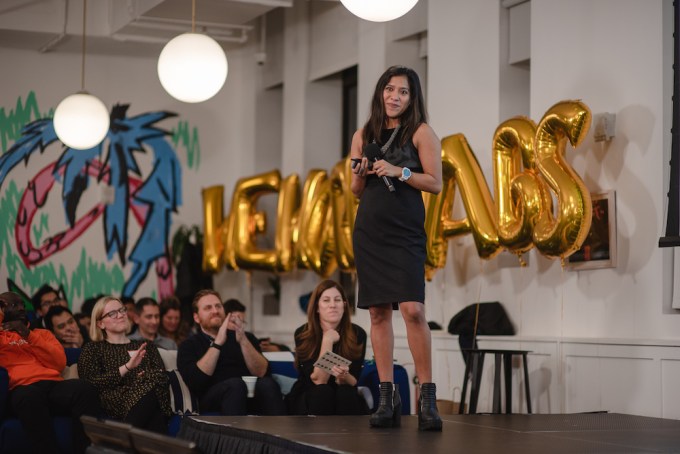
Onstage at Upfront Venture’s annual summit outside of Los Angeles, Gordon-Levitt announced a $6.4 million Series A funding to do just that. Javelin Venture Partners has led the round, with participation from Crosslink Capital, Advancit Capital, YouTube co-founder Steve Chen, Twitch co-founder Kevin Lin and MasterClass co-founder David Rogier.

Gordon-Levitt, known for starring in “Inception,” “Snowden” and, my personal favorite, “10 Things I Hate About You,” tells TechCrunch that HitRecord has a team of 24 employees, with himself at the helm as chief executive officer, co-founder Jared Geller serving as president and co-founder Marke Johnson as creative director. The trio plan to use the investment to transform HitRecord from a traditional production company to a new collaborative media platform.

The company provides an online portal for artists to work together on projects, “building off of each other’s contributions, to create things [they] couldn’t have made on [their] own.” If projects created within the HitRecord community are sold, the creators are paid based on their original contributions. Since 2010, HitRecord has paid its community roughly $3 million.

HitRecord hasn’t accepted outside capital, until now. Initially, Gordon-Levitt used his own cash to push the company forward, and for the last five years, the startup has been cash-flow positive. I sat down with Gordon-Levitt to learn more about what he’s been working on and why he decided to pursue venture capital dollars. The following conversation has been lightly edited for length.

TC: How do you explain HitRecord in one sentence?

JGL: It’s a collaborative media platform where people make all kinds of creative things together. I guess that’s one sentence, but if I can keep going… As opposed to places where people post things that they’ve made on their own, this is a place where people collaborate, right? So they submit their ideas onto the platform and then they find people who want to collaborate with them and then they’re able to make money if the projects [find] a buyer.

We’ve done all kinds of monetized productions, but I certainly wouldn’t include money in the third or fifth or even 10th sentence of why people come to HitRecord.

TC: HitRecord launched a decade ago… what inspired you to create it?

JGL: I started HitRecord as this little hobby message board with my brother and it grew very slowly. It came out of a time in my life when I wanted to be an actor and I wanted to be in sort of like more serious Sundance movies and everyone was like, ‘oh, but you’re the funny kid on TV’ and you know, it was really painful for me. I sort of said, okay, you know what, I can’t just wait around for someone to give me a part. I want to make my own things. And I started making my own. I started making videos and songs and stories and stuff. And my brother helped me set up a website that we called HitRecord. We didn’t spend any money; we had no intention of making any money. It was just a fun thing we were doing.

TC: And now you want to expand it into a full-fledged tech platform. But… you’re cash-flow positive and you’ve built a solid community of avid users, why take venture money?

JGL: You know, it started as just a hobby that I was doing for fun. We launched it as a production company as a way to do more ambitious, creative things and do it with everybody. But if you talk to our users, what people really enjoy is having that experience of being creative and being creative with other people because I think honestly, being creative is really hard alone. Venture money will not only allow us to do even cooler productions, but it’ll also allow this whole other world and more people to participate.

TC: Now that you’re venture-funded, how do you plan on making money for your investors?

JGL: So historically, the way we’ve made money was as a production company, and the collaborative efforts of our community and our staff make money because we turn something into a TV show, or we license it to a brand or we do any number of things that we’ve done that has generated revenue. [HitRecord partnered with Ubisoft earlier this year to allow artists and musicians to contribute their own content to be used in its game, for example.] So moving forward, as we grow into a collaborative platform, the idea is that it’s not just our staff that’s leading these projects and letting people collaboratively finish them. The idea is anybody could come to start their own thing and there will be better tools to self-organize and find your collaborators.

TC: And how do you better monetize once you’ve expanded your user base?

JGL: I think, look, we were not ready to talk about exactly how we would make money that way. I think we have a number of ideas. There are ways that the internet gets monetized these days that I think incentivize the wrong things like attention for myself and I don’t want to enter into a business model that incentivizes that kind of behavior.

Actor Joseph Gordon-Levitt attends the 2014 Creative Arts Emmy Awards at the Nokia Theatre L.A. Live on August 16, 2014 in Los Angeles, California. (Photo by Tommaso Boddi/WireImage).

TC: What was the process of raising venture capital like? Did being Joseph Gordon-Levitt make it a little less terrible?

JGL: I think, honestly, it was a double-edged sword. I think there was justified skepticism and people would assume that oh, I’m an actor so I can’t start a company and I faced a certain amount of that skepticism. I don’t blame anybody for having that. The assumption is that there’s not any substance behind the company or the idea, that it’s all sizzle and no steak.

But we’re also not really a startup, per se. It’s not like I was going into these offices and saying, like, I have an idea. It’s like, here’s what we’ve done for the last 10 years and we’ve been cash flow positive five years. We know how to run a business. It’s just we’ve been running a production company business, now we want to run something that’s more like a technology business.

TC: What’s your long-term vision for HitRecord?

JGL: My ultimate goal is for my acting career and HitRecord to kind of become one in the same thing. I would love to be, you know, developing a movie not for a Hollywood studio, but like in this new collaborative way for HitRecord. I mean, we won an Emmy for our TV show. We’re about to release this special that we’re doing with Logic, the rapper, and he used the platform to lead a collaboration and make a song and a music video and we documented the process and that special is going to come out on YouTube. What I really want is to be able to put an app in Logic’s hand where he goes like, oh, I understand this and is able to use it instantly. We don’t have that app yet. This is why we raised capital.

Post by startupsnows.blogspot.com

Kleiner Perkins gets back to early stage with its $600M 18th fund

“KP used be a small team doing hands-on company building. We’re moving away from being this institution with multiple products and really just focusing on early stage venture capital” Kleiner Perkins partner Ilya Fushman tells me. 47 years after its founding, the storied venture fund is going “back to the future” with today’s announcement of a 18th fund — a $600 million fund for seed, Series A, and Series B financings. It’s investing across consumer, enterprise, hard tech, and fintech, looking for high-potential teams to help mold into unicorns.

Kleiner Perkins partner Ilya Fushman

“We went out to market to LPs. We got a lot of interest. We we were significantly oversubscribed” Fushman says of the firm’s raise.

Kleiner Perkins was recently rocked by the departure of legendary investor Mary Meeker. She brought along Kleiner partners Mood Rowghani, Noah Knauf, and Juliet de Baubigny and they’re reportedly raising a $1.25 billion growth fund called Bond. Fushman explained that with Kleiner refocusing on early stage, their funds will be well differentiated. “They’re going to focus on very late stage growth” while he described Kleiner fund 18 as a place where partners can “collaborate and create” alongside new startups.

Other trends Kleiner is seeking to invest in include better distributed work tools, infrastructure for technology businesses, shifts in the urban and economic landscape, and security and identity tools to protect the software-enabled future. Recent early stage investments from the firm have included wellness product subscription service FabFitFun, tax and insurance safety net Catch, and food stamps app Propel.

With the explosion of early stage funds, competition for the best deals is cut throat. Kleiner will have to trade on its reputation, the expertise of its founders, and its extensive connections to lure in founders. If entrepreneurs think Kleiner can fund their mid-stage rounds like some seed funds can’t, or hook them up with potential acquirers whether things go peachy or pear-shaped, they’ll open their cap table.

Post by startupsnows.blogspot.com

Houzz resets user passwords after data breach

Houzz, a $4 billion-valued home improvement startup that recently laid off 10 percent of its staff, has admitted a data breach.

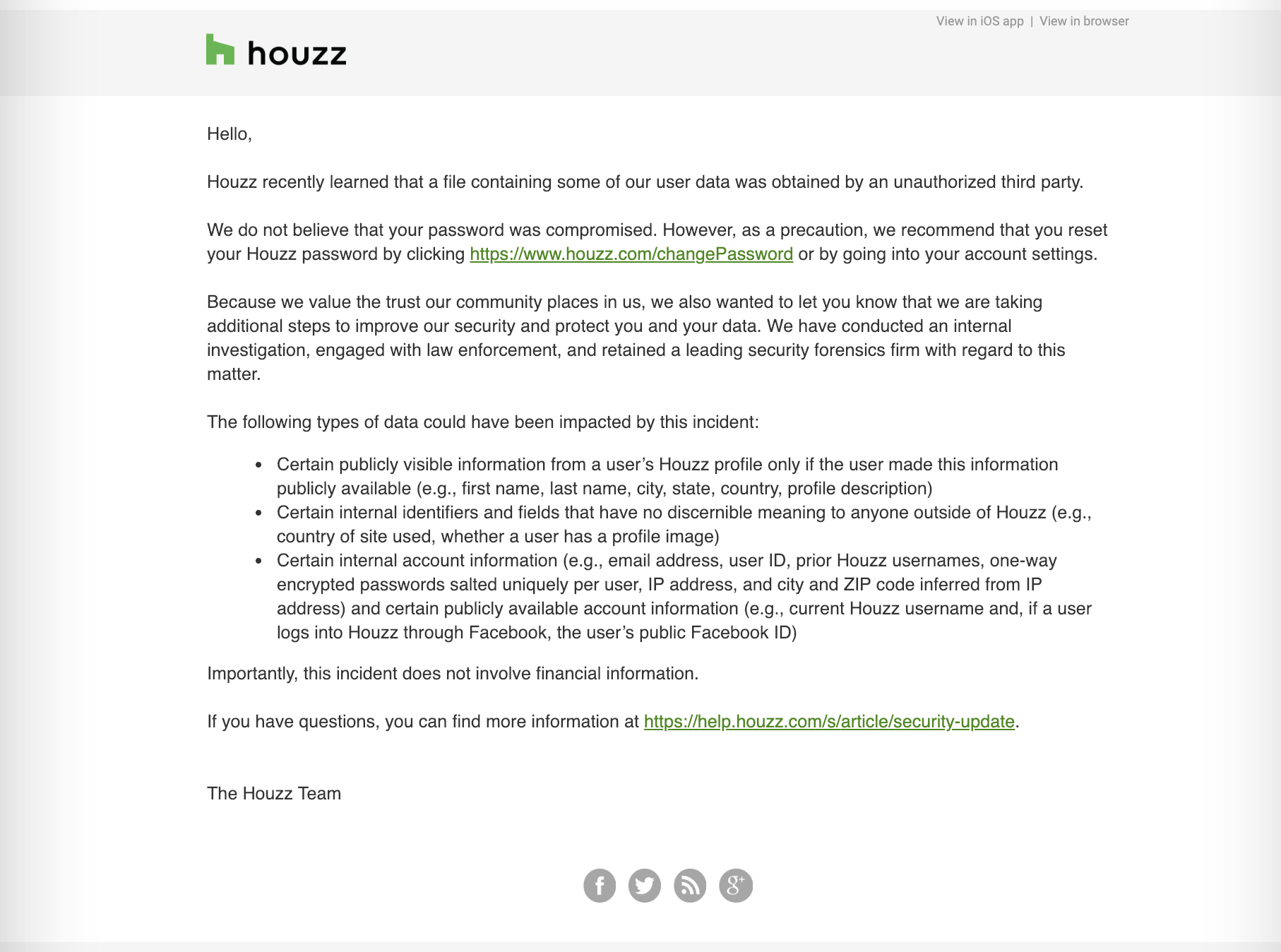
A reader contacted TechCrunch on Thursday with a copy of an email sent by the company. It doesn’t say much — such as when the breach happened, what was stolen, or if a hacker to blame or if it was a data exposure that the company could’ve prevented.

Houzz spokesperson Gabriela Hebert would not comment beyond an FAQ posted on the company’s website, citing an ongoing investigation.

In that FAQ, the company said it “recently learned that a file containing some of our user data was obtained by an unauthorized third party.” It added: “We immediately launched an investigation and engaged with a leading forensics firm to assist in our investigation, containment, and remediation efforts.”

The company said it was notifiying all of its users who may have been affected.

An email from a Houzz user. (Image: supplied)

Houzz said some publicly visible information from a user’s Houzz profile, such as name, citiy, state, country and profile description, along with internal identifiers and fields “that have no discernible meaning to anyone outside of Houzz,” such as the region and location of the user and if they have a profile image, for example, the company said.

The company also said that usernames and scrambled passwords were also taken.

Houzz said that the passwords were scrambled and salted using a one-way hashing algorithm, but did not provide specifics on what kind of hashing algorithm was used. Some algorithms, like MD5, are old and outdated but still in use, while newer hashing algorithms — like bcrypt — are stronger and can be more difficult to crack, depending on the number of rounds the passwords go through.

Regardless, the company recommended users change their passwords.

No financial information was taken, according to the FAQ.

The company was last year among many mocked for sending out emails to users alerting them of mandatory changes to their privacy policies ahead of the 2018-introduced EU General Data Protection Regulation (GDPR) law, saying it “value[s]” its customers privacy. “Their opening lines offer a glimpse of the way legal policy and user experience are colliding under the new regulations,” said Fast Company.

But it’s not clear if the company will face penalties — up to four percent of its global revenue — as a result of the regulation, only that the company “notified EU authorities within the statutory period,” said the spokesperson.

Another day, another breach.

Post by startupsnows.blogspot.com

Step targets teens and parents with a no-fees mobile bank account and Visa card

A new mobile banking startup called Step wants to help bring teenagers and other young adults into the cashless era. Today, cash is used less often, as more consumers shop online and send money to one another through payment apps like Venmo. But teenagers in particular are still heavily burdened with cash — even though they, too, want to spend their money on things that require a payment card, like Amazon.com purchases or mobile gaming, for example.

That’s where Step comes in.

The company aims to address the needs of what it believes is an underserved market in mobile banking — the 75 million children and young adults under the age of 21 in the U.S., who are still being forced to use cash.

This market isn’t the “unbanked,” it’s the “pre-banked,” explains Step CEO CJ MacDonald, whose previous startup, mobile gift card platform Gyft, sold to First Data several years ago.

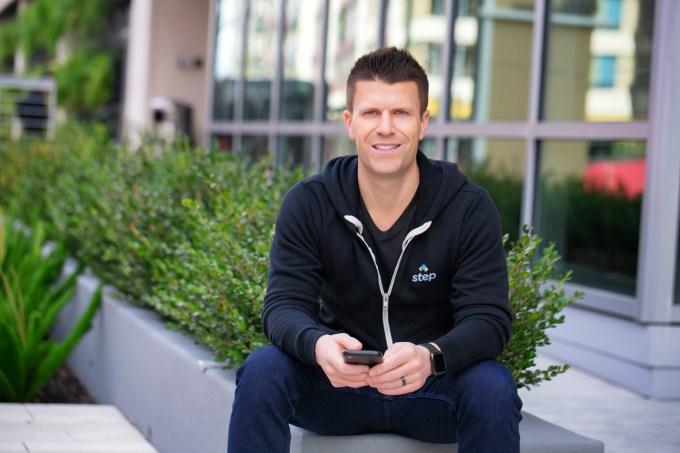
Above: Step CEO, CJ MacDonald

“We’re building an all-in-one banking solution that primarily focuses on teens and parents,” he says. “We want it to be a teen’s first bank account. We want to be a teen’s first spending card. And we want to teach financial literacy and responsibility firsthand.”

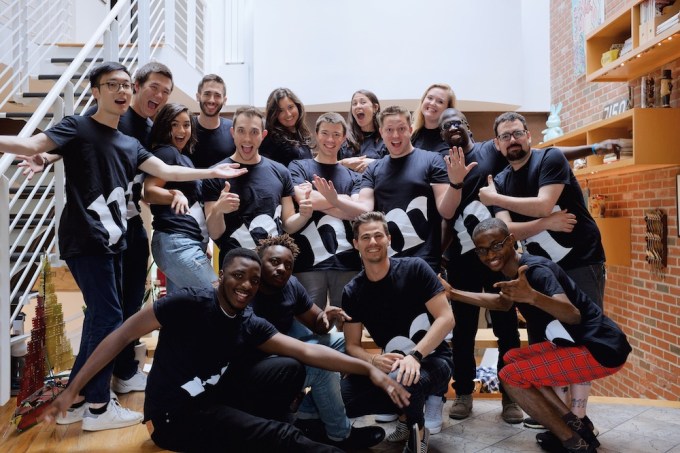
MacDonald, along with CTO Alexey Kalinichenko, previously of Square and financial services startup Token, founded Step in May 2018. The 10-person team also includes several prior Gyft employees.

Last summer, Step closed on $3.8 million in seed funding from Sesame Ventures, Crosslink Capital and Collaborative Fund. Crosslink general partner Eric Chin sits on the board.

While there are a number of mobile banking apps out there today — like Chime, Monzo, Simple, Revolut and others — Step will specifically target teens, 13 and up, and other young adults with its marketing. Teens under 18 still need parents’ approval to sign up, of course. But the goal is to encourage the teens to bring the idea to their parents — not the other way around.

Step’s focus on this younger demographic puts it in a different space, where there are fewer competitors. Its more direct rivals are not the bigger mobile banks, but rather startups like teen debit card and bank app Current, or the parent-managed debit card for kids from Greenlight.
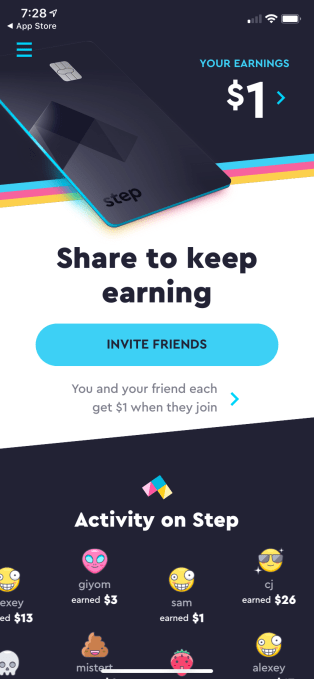
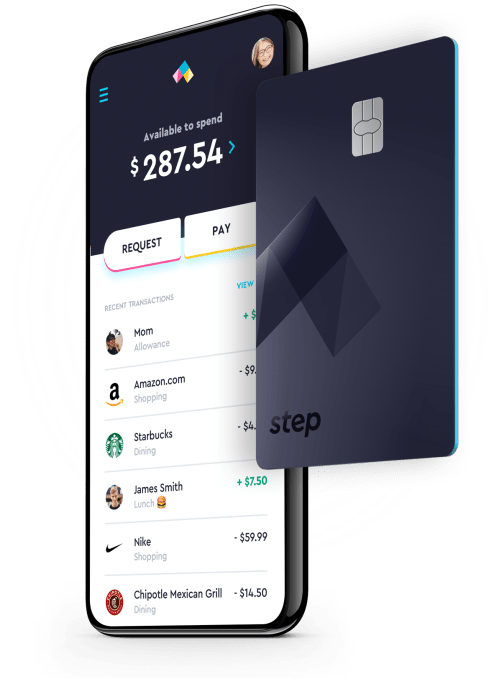
The mobile banking service Step provides will also aim to be more comprehensive than just a debit card. It will offer a combination of checking, savings and a Visa card that works as both credit and debit.

The card includes Visa’s Zero Liability Protection on all purchases from unauthorized use, and allows parents to set spending limits.

Parents will also be able to connect their own bank accounts to Step to instantly transfer in funds, which can then be distributed to kids’ accounts for things like allowances and chores, or other everyday spending needs. Step’s bank account itself is backed by Evolve Bank, so it’s FDIC-insured up to $250,000.

Unlike Current, which charges a subscription to use its service, Step aims to be a fee-free bank for consumers. Users don’t have to pay for their account, and there are no fees for things like overdrafts. Instead, Step’s plan is to generate revenue through traditional means — like interchange fees and by way of lending practices, once it has established a deposit base.

The company pays a 2.5 percent interest rate on deposits, offers a round-up savings feature and a range of budgeting tools and supports free instant transfers between Step accounts. It also provides access to a network of 35,000 ATMs with no fees.

Beyond simply facilitating mobile banking, Step’s bigger goal is to teach teens to become financially responsible.

“Schools do not teach kids about money. A lot of families don’t talk about money. And it’s a crucial life skill that’s not really addressed properly when people are growing up,” says MacDonald, who says he was lacking in life skills in this area, even as a young college grad.

“There were ‘Money 101’ skills that I had not learned — that no one had talked to me about. Things like building credit, how many credit cards you should have, debt to income ratio,” he continues. “A lot of people get released into the real world without experience [in those areas],” he says.

Long-term, after solving the needs associated with everyday banking transactions, Step wants to layer on other products and services — like tools that allow a family to save together for college, for example.

The company is launching the banking service under an invite-only system to scale up.

Today, it’s opening a waitlist and referral program. When you invite a friend, you each receive one dollar. Access will then be rolled out on a first-come, first-serve basis this spring. Users can join Step through the website, iOS or Android application.

Post by startupsnows.blogspot.com

Dadi brings in $2M to democratize sperm storage

The founders of Dadi — pronounced daddy — think men are in need of a wake-up call.

“Men [have] a biological clock just like women, which is something that people don’t talk about,” Dadi co-founder and chief executive officer Tom Smith told TechCrunch. “Infertility isn’t a women’s issue; It’s both a men’s and women’s issue.”

Smith believes Dadi, the provider of a temperature-controlled at-home fertility test and sperm collection kit, will encourage men to contribute to family planning conversations and become more aware of their reproductive health. The startup is officially launching its kit and long-term sperm storage service today with nearly $2 million in venture capital funding from London-based seed fund firstminute capital and New York-based Third Kind Venture Capital.

“Our mission is to normalize the conversation around male fertility and reproductive health, and empower men with knowledge of fertility so they can have that conversation with their family,” Smith said.

Here’s how it works: Dadi customers order a kit online, masturbate and collect their sperm within the comfort of their own homes, drop it off with FedEx and wait for a full fertility report, which comes with a microscopic video of the each man’s actual sperm. To survive the trip to the startup’s laboratory — the New England Cryogenic Center — the Dadi-designed container injects preservatives, which are nested in the lid of the cup, into the sperm sample.

Headquartered in Brooklyn, Dadi’s service is FDA-licensed in all 50 states and costs a total of $198, including a test and one-year of sperm storage.

Dadi’s co-founding team includes Mackey Saturday, a graphic designer who created Instagram’s logo, and Gordon von Steiner, a former creative director in the fashion industry. The team has prioritized design and messaging of the product, in addition to security, privacy and high medical standards.

“We aren’t trying to sell hair pills, we are actually interacting with customers at a very vulnerable part of their life,” Smith said. “We feel like our value set, approach and thoughtfulness really differentiate us from anyone else in the space.”

One in 6 U.S. couples struggles with fertility, with male factor infertility a cause of 30 percent of those cases, per ReproductiveFacts.org. Startups want to improve these statistics, targeting an industry that’s trapped in the 1980s.

“We are in the direct-to-consumer era,” Smith said. “We reached peak app a couple years ago and I think a lot of the innovation that’s happening in the space comes down to individualized services.”

Dadi joins a cadre of privately-funded male fertility or men’s health businesses. Hims, the provider of direct-to-consumer erectile dysfunction (ED) and hair loss medication, leads the pact. The 2-year-old business entered the unicorn club last week with a $100 million investment. Ro, formerly known only as Roman, sells ED medication online, too, and has raised a total of $91 million. Legacy, which freezes men’s sperm, recently won TechCrunch’s very own Startup Battlefield competition in Berlin. And Manual, an educational portal and treatment platform for men’s issues, raised a £5 million seed round earlier this month from Felix Capital, Cherry Ventures and Cassius Capital.

It’s clear that VCs have woken up to the opportunity to disrupt fertility with tech-enabled solutions to age-old issues and now, entrepreneurs passionate about helping men broach sensitive topics, from infertility to erectile dysfunction to hair loss and more, are able to gain ground.

Here’s to more funding for women’s health businesses, which are in dire need of innovation, too.

Post by startupsnows.blogspot.com

Sencrop is a data platform to help farmers manage their lands

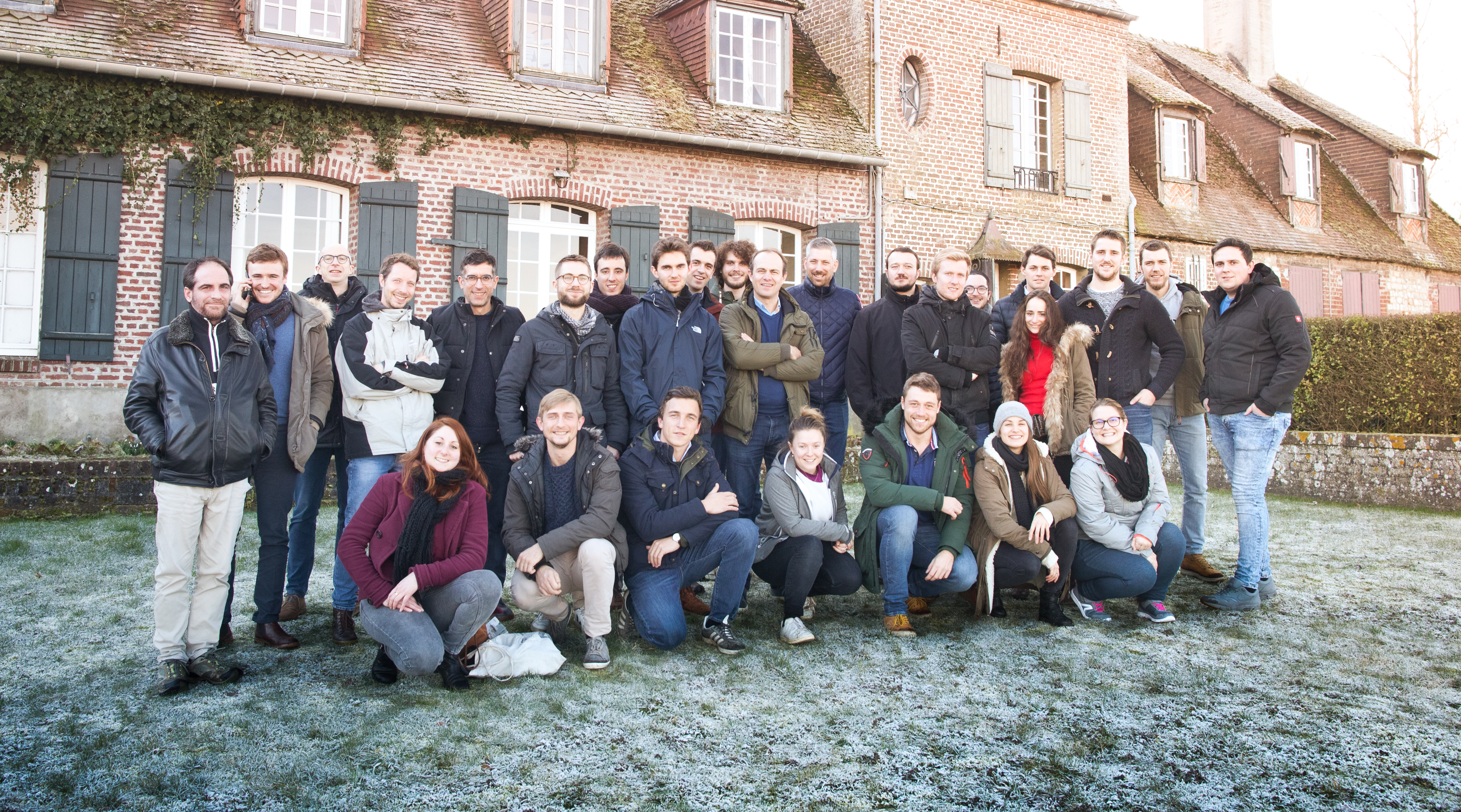
Meet Sencrop a French startup that wants to empower farmers using sensors, a data platform and a service marketplace. The company recently raised a $10 million funding round.

The Series A round was led by Bpifrance with NCI Waterstart, Nord Capital and The Yield Lab also participating. Existing investors Demeter and Breega Capital also reinvested.

If you’re a farmer and are getting started when it comes to leveraging data, Sencrop wants to be a one-stop shop for all your digital needs. The company sells connected stations that can measure temperature, humidity, rainfall, windspeed, etc.

Each station costs between $340 and $570 (between €300 and €500) and you can have as many as you want. You can install the station yourself — it’s as easy as planting a post.

After that, you pay a subscription to access the platform. It costs around $170 to $340 per year (€150 to €300). In addition to live readings of your sensors, Sencrop can help you predict the next steps.

“On the other side of the platform, there are people broadcasting services to farmers,” co-founder and CEO Michael Bruniaux told me. “For instance, we can predict a disease and the farmer knows whether they need a product or not to prevent the disease.”

You can imagine a full-fledged marketplace in the future. For instance, it could be a good way to subscribe to an insurance product, order seeds or contact companies and cooperatives corporations willing to buy your output.

5,000 farmers, winemakers and arborists are already using the platform to monitor their farms. Most of them are currently based in Europe.

Sencrop is slowly building a community of farmers by combining all data points together. For instance, if other people living not far from you are also using Sencrop, you’ll get better forecasts and insights on what to expect.

The company first started with potato crops, vineyards and cereals. But now, you can find all kinds of profiles on Sencrop. Some farmers have a tiny piece of land of less than 100 acres while others have gigantic farms.

With today’s funding round, Sencrop wants to scale the community and expand to new markets.

Post by startupsnows.blogspot.com

Wednesday, January 30, 2019

Meet the 20 startups in this year’s GCT Startup-in-Residence program

At the end of last year, Grand Central Tech announced plans to work with the Milstein real estate family to transform a midtown Manhttan high-rise into a tech hub called Company. And startups remain an important part of the mix — in fact, Company is unveiling a list of 20 startups participating in this year’s GCT Startup-in-Residence program.

What does Startup-in-Residence mean? Well, Company CEO Matthew Harrigan said the program will continue to offer what it’s always offered — desk space, as well as access to events and amenities, for a select group of early-stage entrepreneurs. And participants don’t have to give up equity or pay rent.

The deal might seem too good to be true, but Harrigan argued that the startups make Company more appealing to its enterprise tenants: “We are retrofitting this building to look and feel and operate like a brand new building … but the one amenity that cannot be simply rolled out is people.”

He also said the program is only taking up 15,000 square feet of the building’s 150,000 square foot total.

“It sounds like an exceptionally generous offering and it isn’t,” he said. “It sounds like it doesn’t make a ton of business sense but that’s actually wrong … Fifteen thousand square feet of space to great early-stage founders helps establish a truly remarkable program and campus in New York City. Those are resources are well spent.”

In the past, we’ve written about Grand Central Tech as an accelerator program, but Harrigan said, “We weren’t and aren’t an accelerator” — it just used “the nomenclature that’s known.” Now the program is taking on a more fitting name, though it sounds like the operations won’t be changing too dramatically.

“We typically have very sophisticated founding teams, giving them an ideal environment in which to work,” Harrigan said. “By and large, our companies are left to their own devices — we don’t presume to create a curriculum or some series of programming. It’s a somewhat passive approach, but we make sure all people in the community are linked up with each other.”

Also worth noting: This year’s class consists of 40 percent women founders and CEOs, and it covers industries like energy, mental health, e-commerce, biotech, adtech and food.

Here’s a list of the companies, with descriptions provided by Company (and edited by me for clarity and length). We’ve also written about a number of them before, so I’m including links to past coverage when possible.

    • Octave​ ​is a full-stack mental health provider, purpose-built to capitalize on evolving consumer habits and a new wave of interest in the space.
    • Vowel ​is a multi-user enterprise voice platform operating in stealth. The company enables businesses to analyze, manage and drive actionable insights from audio data generated in the workplace/meetings.
    • Nara Organics​ ​is a natural baby food company that is manufacturing the first biodynamic infant formula in the US.
    • Twine Labs​ ​is a workforce analytics platform that’s creating a single source of truth on employee data across various disaggregated internal corporate databases. Data is then benchmarked against industry standards to help Chief People Officers gain vital, previously unavailable perspective.
    • Taskade​ ​is a new workplace collaboration platform that enables more efficient team management and product workflows.
    • Oova​ is a biomedical technology company for women’s health that uses smart connected devices to actively monitor hormone levels and help manage women’s fertility health. The company is a spinout of Mt. Sinai.
    • Summer​ ​is a next-generation student loan management and repayment platform providing users with a comprehensive view of their debt and targeted recommendations on how to alleviate it which evolve based on their current life circumstances.
    • Chartable​ ​is creating a new enterprise adtech and analytics platform for audio. It’s aiming to do something similar to what DoubleClick, AppAnnie, Flurry and others did when apps were first introduced.
    • Particle Health​ ​is creating a new medical record data company, leveraging blockchain technology to enable a single health record tying together previously disparate information from a patient’s various doctors, and yielding valuable data insights in the process.
    • Project OTC ​is a holistic new consumer brand targeting outdated over-the-counter brands and products such as antacids, Vitamin-C/immunity support and headache relief. The company is operating in stealth.

Moved team

  • Moved​ ​is building a new concierge layer on top of the disorganized, disaggregated moving services supply chain. A user calls Moved, shares details and is given a concierge who manages the move and coordinates across all the various service providers, including the landlord or real estate owner.
  • Hydra​ ​is a ​new network of membership-based wellness spaces in metropolitan areas that complements the growth of small format fitness classes and provides its members areas to refresh, regroup and recharge.
  • GoodTalk​ ​is a new consumer app meant to distill and amplify one of primary aspects of social platforms. For example, five experts on a given topic can form a chat thread, which other users of the app can view but not comment on.
  • Otis​ is building a new investment platform to enable distributed ownership in fine art and collectibles.
  • Snackable​ ​uses natural language processing to intelligently digest podcasts into “snackable” 30-60 second moments to enable easier social sharing of podcast content — something which has plagued the burgeoning podcast space.
  • Lolli allows users to receive Bitcoin for their online purchases

  • Lolli​ ​is building a new ecommerce platform that allows customers to accumulate Bitcoin rewards through simple brand and retail purchases by capturing the rebate/coupon value already broadly distributed throughout ecommerce.
  • RaisedByUs​ ​is a nonprofit workplace social good program for companies that already includes Casper, Squarespace, Shutterstock, Seatgeek, Sailthru, Birchbox, MongoDB, DigitalOcean among others. RaisedByUs helps teams do meaningful, team-building, vetted volunteer work easily.
  • Nesterly​ ​i​s a home sharing platform that is working to bring affordable housing to the next generation by allowing senior homeowners to easily rent out their extra space.
  • Bokksu​ ​is a subscription-based food company that curates exclusive artisan snacks in local markets and uses video and written storytelling to detail origin stories through an immersive customer experience.
Post by startupsnows.blogspot.com

FabFitFun raises $80 million for its growing lifestyle brand

Nine years after launching its online magazine, and three years after diversifying into the subscription box business, FabFitFun has raised $80 million in a growth round of funding, led by Kleiner Perkins, with participation from its previous investors Upfront Ventures and NEA. 

The Los Angeles-based company has steadily expanded its retail and lifestyle empire through subscription boxes, video… and even an augmented reality app.

Last year the company crossed $200 million in revenue and managed to net more than 1 million subscribers for the service.

In a statement the company said the new financing would be used to expand FabFitFun membership offerings and consolidate its position as a marketing partner and platform for brands.

As a result of the investment, Kleiner Perkins general partners Mood Rowghani and Mary Meeker will join as board member and observer, respectively.

It’s been a long ride for co-founders Daniel and Michael Broukhim and Katie Rosen Kitchens. From a newsletter and blog to the subscription box to the launch of live programming last year.

For brands, the pitch is a new way to find customers and engage with them. The seasonally curated boxes and special exclusive co-branded box opportunities with Los Angeles’ pool of influencers results in hundreds of millions of targeted impressions, according to the company.

“FabFitFun has emerged into an exciting and entirely new distribution channel that brings retail to the platforms where consumers are most engaged,” said Mood Rowghani, a general partner at Kleiner Perkins, in a statement. “The company’s personalized connection with its community allows brands to better understand and interact with consumers – establishing a long-term relationship rather than simply a transaction.”

Post by startupsnows.blogspot.com

Rebooted startup program WeWork Labs celebrates its one-year anniversary

It’s been just about a year since the relaunch of WeWork Labs, an accelerator-type program operating under the WeWork umbrella. Since then, it’s grown to 37 locations in 22 cities. And it’s truly international, operating in 12 countries, including Brazil, China, Germany and India.

These Labs offices are often — but not always — housed within a larger WeWork space, and, like an accelerator, they offer mentorship and programming. However, WeWork doesn’t take any equity; instead, it simply makes money by charging rent. (In New York, a desk costs between $450 and $550 a month, but the price varies by location.)

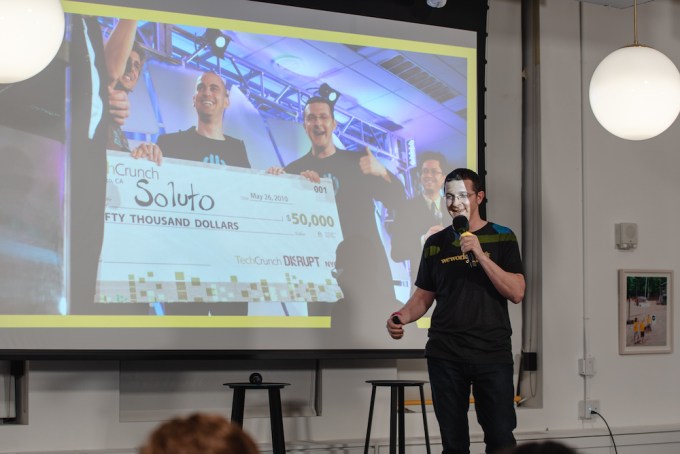
I spoke to Roee Adler, the program’s global head, about how the program has evolved over the past year. Adler actually has a long history with startups — in fact, his company Soluto won the very first Startup Battlefield at TechCrunch Disrupt. He’s held a number of positions at WeWork, including chief product officer, and he said that as his role was evolving, he found himself asking, “What is the next startup we can build inside WeWork?”

The answer: “We decided to reevaluate our level of commitment and investment with the earliest of stages for startups.”

WeWork actually had a startup program called WeWork Labs back in 2011, but it languished in the years since. Adler relaunched the program with its first New York space in January of last year, and he’s been opening locations at a furious pace since then.

Roee Adler

Roee Adler

Each Labs office is supervised by a Labs Manager, who Adler said is usually “a former entrepreneur whose life’s mission is to manage startups.” For example, before Mor Barak joined the program last year to launch Labs in Tel Aviv, she was the general manager of Israel’s oldest accelerator program, The Junction.

“I got to a point where I felt like I finally found what I loved to do, which is to work with startups and to support startups and understand how our connections and our network can help them move forward,” Barak said. “And then I wanted to take that and do that on a bigger scale, as part of a company that can reach new geographies and bring forward local entrepreneurs.”

As a Labs Manager, Barak said her main role is to “be that that business connector for the startups,” which means meeting with the entrepreneurs on a weekly basis to understand their needs and challenges. At the same time, she emphasized that Labs is a global program: “As a Labs Manager in Tel Aviv, I can quite easily connect to my colleagues around the world find the people that I need to get to in order to help the startup.”

Adler made a similar point about sharing resources between the different locations.

“A lecture that is at our Najing Xi Lu Road space in Shanghai will get captured, summarized, translated and become available to all of the entrepreneurs around the world,” he said. “Does that mean every piece of information is relevant for everyone? No. But truthfully, who knows?”

Adriana Vazquez of Lilu

Adriana Vazquez of Lilu

To celebrate the one-year anniversary, WeWork Labs held a pitch competition at the company’s New York City headquarters last week, with $250,000 in funding distributed among the winners. The $150,000 grand prize went to Lilu, a startup making a compression bra that helps mothers pump milk. (It’s another Startup Battlefield alum.)

CEO and co-founder Adriana Vazquez told me that Lilu has been working out of the WeWork Labs in Dumbo since August. Vazquez has participated in other accelerator programs and worked out of other coworking spaces, and she said Labs is different from either — it allows you to “get the community of an accelerator without the prescribed schedule,” and it offers a very different feeling from a coworking space.

“There is that understanding and respect everyone’s really busy and has fires to put out,” she said. “We had a brief stay at another coworking space with creatives and small businesses, and there wasn’t that camaraderie, where you see someone that’s working on a weekend and you know you’re not here because they want to hang out on a Friday. It’s almost an unspoken understanding: Yeah, I know what you’re going through.”

As for what Adler has planned for Labs’ second year, he said he wants to do more work connecting startups with larger corporations: “WeWork has really become the only natural nexus in the world where you can have a three-month-old startup entrepreneur bumping shoulders with a senior vice president of Microsoft going to get coffee from the same machine and engaging in a conversation about the future.”

WeWork Labs Dumbo

WeWork Labs Dumbo

And of course, he plans to open more offices, with the goal of reaching 100 locations by the end of 2019.

“The three of us are sitting in Manhattan right now, one of the wealthiest cities in the world … but it’s not about here,” Adler said said. “It’s about the people who aren’t sitting in the big tech hubs or bubbles. That is exciting.”

Post by startupsnows.blogspot.com

Cosmic JS wants to simplify web development, so you can focus on content

If you are a web developer, you know how complex many of the traditional web content management systems have been. One of the big problems has been managing the underlying infrastructure for the system. Cosmic JS, a member of the Winter 2019 Y Combinator class, wants to simplify that by taking care of the infrastructure part for you, while providing a flexible front end for content creators.

“Our customers benefit from using Cosmic because they can avoid the pain of building and maintaining their own CMS infrastructure. For a monthly service fee, we provide a seamless infrastructure for them, and it allows them to focus on what really matters, building great products and user experiences,” Cosmic JS CEO and co-founder Tony Spiro told TechCrunch.

As with so many YC companies, this one started with a pain point the founders were feeling in their jobs developing websites in an agency setting in 2014. Spiro was building the websites and CMO and co-founder Carson Gibbons was servicing accounts, and they saw a problem with the infrastructure piece.

“We found that there was a huge bottleneck just installing and maintaining our own backend infrastructure management. So around that time, I began building out Cosmic on the side. I thought it would be great if there was just a web dashboard and an API to deliver content as a service. And so that’s how it all got started,” Spiro explained. By removing infrastructure management from the equation, Cosmic was freeing developers to concentrate solely on the customer-facing bits.

Cosmic JS content edit view. Screenshot: Cosmic JS

Spiro and Gibbons left their jobs to concentrate on Cosmic full time after the release of the initial version in 2016. They aim the product at web development teams with between 5 and 100 members. The product has three main user types: developers, site managers and content producers. So far, it has attracted 250 customers in 100 countries.

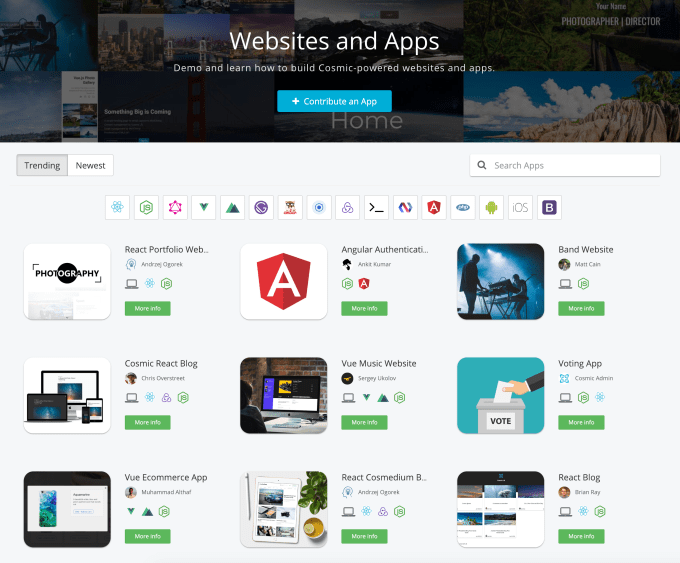
While it’s not open source, it does rely on community members to build extensions and apps. “We have hundreds of apps (ready-made websites and applications) and extensions built by our community,” Spiro said. These tools enable Cosmic to connect to best of breed services and tools like photos, videos or search without having to create them from scratch.

Cosmic JS website templates and apps. Screenshot: Cosmic JS

Spiro says that they joined Y Combinator at the behest of their advisors and investors and it has been a formative experience. “We applied and got in, and and now we’re surrounded by just some of the most impressive and intelligent people in technology.” Spiro said.

So far Cosmic JS includes the two co-founders with some contractors and freelancers helping out along with the extended development community. The company has received some funding, but the founders weren’t ready to share the amount just yet.

Their goal is to continue building the paid user base, and increase community participation through outreach and events.

Post by startupsnows.blogspot.com

Amex blocks Curve as the fintech startup vows to fight “anti-competitive” decision

Well, that was short-lived: Just 36 hours after Curve, the London fintech that lets you consolidate all of your bank cards into a single Curve card, re-instated support for Amex, the feature has once again been unceremoniously blocked by American Express. This time, however, the context feels very different from 2016 when the startup was barely off the ground, with Curve telling customers in an email this morning that it intends to “fight Amex’s decision with our full might”.

Going up against the deep pockets and dominant market position of American Express will undoubtedly be a “David and Goliath” battle, although, unlike two years ago, Curve is now backed by an array of investors that includes Connect Ventures and Santander. Arguably, the startup will have U.K. and EU payments and competition regulations on its side, too, although it is hard to predict with certainly if the U.K. regulators will use their full teeth in a situation like this and how they will interpret those existing U.K. and EU regulations.

Curve’s position, however, is clear: In the same email to customers, the company has called the move “anti-competitive” and says the move is “entirely disproportionate and discriminatory” to Curve. “U.K. payment regulations clearly state that Curve should be allowed to access the Amex payment network on a level-playing field with every other fee-paying and legitimate merchant,” write the startup.

However, American Express disputes this, telling TechCrunch it doesn’t have regulatory obligations to work “with Curve or any individual merchants”.

Meanwhile, the credit card giant has been busy briefing journalists that it ended its merchant contract with Curve for business reasons, following what looked like a successful beta test with a small number of joint customers. Perhaps the trial was too successful, with American Express telling me Curve customers were using Amex added to Curve in ways that were different to its regular customers, which, one could argue, is the whole point. To truly innovate, you have to offer something new. Something truly new, has to be different.

With that said, the method with which Curve was accessing the Amex network is a well-established one. Technically, Curve had signed a “merchant” contract with American Express, just like any other merchant and many existing e-wallet products, such as PayPal or YoYo Wallet, which, notably, haven’t been blocked. As part of the trial period, the fintech had also made changes to its own product to accommodate Amex, requiring customers to top up their Curve card in advance if they wanted to spend from their Curve-Amex wallet.

In other words, this was definitely not a “don’t ask for permission, ask for forgiveness” situation on Curve’s part. The two companies had been working together for months, and in talks for even longer, to get Curve back on the Amex network. A merchant contract had been signed. What changed at the 11th hour is unclear, although we can be sure this one has a long way to play out just yet.

American Express provided TechCrunch with the following statement:

We participated in a limited Curve beta test in which we explored enabling Card Members to load funds onto an e-wallet using their Amex Card in the Curve app. A very small number of Amex Card Members participated in the test. Based on the results, we communicated to Curve that we would not participate in the further roll out of Curve because of concerns related to the overall American Express Card Member experience. Subsequently we terminated our contract with them.

And here’s the full email sent out by Curve to customers, myself included:

Dear Steve,

We are extremely sorry that the top-up functionality of your Amex wallet is currently disabled.

Like thousands of other UK merchants, Curve has a valid merchant agreement to accept Amex payments into its e-wallet. However, on Tuesday evening, Amex decided to terminate this agreement and block all Amex transactions to Curve with immediate effect.

Amex has given no good or fair reason for their decision and we believe it is entirely disproportionate and discriminatory to Curve and all our (joint) customers. UK payment regulations clearly state that Curve should be allowed to access the Amex payment network on a level-playing field with every other fee-paying and legitimate merchant.

Rest assured that you can still spend the funds that you have already topped up to your existing Amex Wallets. If you have contacted us for support, we apologise for the delay in response and will endeavour to do so as soon as possible. We will update you as soon as we have any further information.

With your interests in mind, and our mission to deliver a truly innovative product, we intend to fight Amex’s decision with our full might. We believe financial freedom is the future and we are prepared to fight for yours.

Team Curve

Post by startupsnows.blogspot.com

Wanna Kicks, a new AR app from Wannaby, lets you virtually “try on” your next pair of kicks

Wannaby, a startup out of Belarus that is building “AR commerce” experiences, has launched a beta of its latest app, which aims to make it easier to find the perfect sneakers.

Dubbed “Wanna Kicks,” the iOS app uses augmented reality to let you “try on” various pairs of sneakers. You simply choose a pair of kicks from the list of 3D models, point your camera at your feet and — bingo — you’re now virtually wearing your chosen footwear.

The effect is pretty instant and tracks reasonably well as you move and rotate your feet or change camera angle. You can even try walking and the AR app will follow your footsteps. It doesn’t work quite as well standing in front of a mirror, which would be more useful, but that is something Wanna Kicks’ makers say they are working on.

Ultimate, however, Wannaby believes its technology can help both customers and retailers. The premise is simple: the better idea you have of how a pair of sneakers will look when you’re actually wearing them, the more likely you are to make the right purchase and the less likely you are to return an item. Online retailers spend a lot of their margins trying to get customers to convert, and arguably even more servicing returns.

“Our mission is to break online shopping barriers,” Wannaby CEO and ex-Googler Sergey Arkhangelskiy tells me. “We believe that AR try-on can help customers to shop online and will wash away the difference between online and offline shopping. We see two major problems in the shoe market. Online conversions are quite low, and returns are quite high, in comparison to traditional ‘brick-and-mortar’ shopping. The ability to try sneakers with your phone before buying online should shift conversions, engagement, and returns”.

Arkhangelskiy argues that AR is also a great marketing tool. Unsurprisingly, Wanna Kicks lets you save a photo of your feed clad in new virtual sneakers, which you can then share on social media. Video sharing is in the pipeline, too.

“Many shoe brands are presenting their new releases both online and offline,” he says. “Lots of customers are eager to know more about new sneaker releases, and AR is a great new way for people to experience sneakers that are new to the market or are about to get to the market. Essentially, this is the main idea behind Wanna Kicks: allowing users to choose and decide whether they like a shoe or not without visiting a physical store”.

Under the hood, Wannaby says it uses sophisticated “3D geometry algorithms” together with neural networks to identify the position of the shoe in space. It’s these algorithms that the startup says are its secret sauce and the company’s main innovation. To onboard sneakers into the app, Wannaby utilises its own studio to create bespoke 3D models.

“We’ve built Wanna Kicks for Gen Z and millennials who are interested in buying sneakers and eager to know whether they will fit their style or not,” adds Arkhangelskiy. “The AR and AI community will love our launch as well — we’ve accomplished a really difficult task in computer vision and rendering”.

Meanwhile, Wannaby is backed by Bulba Ventures, and Haxus. The startup has raised $2 million in seed funding to date.

Post by startupsnows.blogspot.com

Altice to acquire majority stake in OTT startup Molotov

Telecom company Altice is about to close a significant investment in French startup Molotov — the two companies have entered into exclusive negotiations. While terms of the deal are undisclosed, Altice should end up with a majority stake in Molotov for hundreds of millions of euros.

This is an interesting move as it greatly increases the reach of Molotov and opens up some new opportunities when it comes to internationalization, content and more.

Molotov is an over-the-top streaming platform in France. You can find all major TV channels, stream live content and watch replays for free. There are optional subscriptions to unlock more features, such as cloud recordings and premium channels.

The service is available on all major platforms — desktop, mobile, tablet, Apple TV, Android TV, Amazon Fire TV, smart TVs from Samsung, LG, Panasonic, etc. It is one of the most popular apps on tvOS and Android TV, always at the top of the stores with Netflix and myCanal.

When I last covered Molotov, the company told me that it has 7 million users in France. Every day, 1.2 million users watch something on Molotov. They stream a total of 1.1 million hours of content. As you can see, those Molotov sessions can be quite long.

Altice currently operates in France under the name SFR, Israel, Portugal, Dominican Republic and the U.S. following the acquisition of Cablevision. Like many telecom companies, Altice and its founder Patrick Drahi also has invested in content and media.

The company owns NextRadioTV (BFM TV, BFM Business, BFM Paris, RMC Story and RMC Découverte). It operates premium sports channels as the company currently has the distribution rights of the Premier League in France. It owns different newspapers and magazines, such as Libération and L’Express.

Interestingly, Altice has also acquired video adtech company Teads. You could already imagine new monetization opportunities for Molotov and Teads.

As Altice has already negotiated distribution rights with every TV network in France for its own set-top boxes, you can imagine a better offering on Molotov in the coming months. For instance, you could imagine being able to subscribe to Canal+ or BeIN Sports from Molotov.

Molotov had raised around $35 million from Idinvest (Benoist Grossmann), Sky, TDF, Cherry Tree Invest and others. While the service will remain available to everyone even if you’re an Orange subscriber for instance, SFR customers will get an extended version of Molotov for free. Altice will keep the name Molotov.

Molotov co-founder and CEO Jean-David Blanc will remain at the head of Molotov. With this open approach, Altice doesn’t just want to integrate the service into its offering. Molotov will remain an independent service and grow independently from Altice’s telecom operations.

Post by startupsnows.blogspot.com

Tuesday, January 29, 2019

Pinterest puts an IPO on its pinboard, hiring Goldman Sachs and JPMorgan to lead an offering this year

Pinterest, the 11-year-old, San Francisco-based site known for the photos its users post about everything from wedding to beauty to art world trends, has hired Goldman Sachs and JPMorgan Chase as lead underwriters for an IPO that it’s planning to stage later this year. Reuters reported the news and TechCrunch sources have since confirmed the development.

A Pinterest spokesperson separately declined to “comment on rumors and speculation,” when reached this afternoon.

Pinterest has raised roughly $1.5 billion over the years and was valued at $12 billion by its private investors during its last fundraising round in 2017. Notably, its backers include Goldman Sachs Investment Partners, among many other investment firms, both early and later-stage, like Valiant Capital Partners, Wellington Management, Andreessen Horowitz and Bessemer Venture Partners.

The company’s revenue last year was $700 million, more than double what the company generated in revenue in 2017. It has 250 million monthly active users, compared with the 200 million monthly active users who were on the platform as of mid 2017.

Whether Pinterest has ever been profitable, we couldn’t learn this afternoon. But the company employs 1,600 people across 13 cities globally, including Chicago, London, Paris, São Paulo, Berlin, and Tokyo, and 50 percent of its users now live outside the U.S., with the international market its fastest-growing segment. Perhaps unsurprisingly, more than 80 percent of people access the service via its mobile app.

Assessing how Pinterest’s shares might be received by public market shareholders has become a favorite parlor game for Silicon Valley denizens. In a recent report, the outlet The Information posited that Pinterest’s offering could suffer because it’s a social media company that’s frequently lumped together with companies like Facebook and Twitter that have repeatedly raised concerns about users’ privacy and having been facing a nearly year-long backlash as a result.

It’s worth noting, though, that Pinterest is far afield from what most users think of as social media and more akin to a visual search and discovery platform, with people looking for ideas and inspiration rather than to reach other people.

“I’m a bull,” venture capitalist Venky Ganesan of Menlo Ventures told us recently on a TechCrunch podcast. Partly why, Ganesan explained, is that “there are no Russian trolls” on Pinterest. More, he’d said, “I haven’t seen Pinterest sell [users’] data. They’re using data to [figure out] advertising on Pinterest; they aren’t brokering [that information] to others.”

Pinterest, which could reportedly raise up to $1.5 billion in its IPO, is also entirely dependent on advertising, which is often the easiest expense for companies to slash when an economy begins to cool, as may be happening here in the U.S. Here, too, however, Pinterest could prove more durable than some of its competitors. While brand-image driven advertising often gets cut when budgets tighten, direct response advertising often does even better in down markets, as companies seek out clearer returns on their investment, and much of Pinterest’s revenue is driven by direct response advertising. Users see, they click, and they buy. As Ganesan offered during that same sit-down with TC, Pinterest might actually be “playing into the healthiest part of the economy. I’ve gotta tell you, I’ve got three daughters at home, and they spend a lot of time on Pinterest, and they buy stuff.” (Ganesan isn’t an investor in the company; neither is the broader Menlo Ventures team.)

Pinterest could reportedly seek to raise up to $1.5 billion in an offering, according to past media reports. Whether it targets more or less, we’re likely to learn soon, but an IPO has been expected for some time, in part because the company is now getting up there in years as startups go, in part because of its continued growth, and in part because of some new hires that seemed to suggest the company has been gearing up to become publicly traded.

In November, for example, Pinterest brought aboard its first-ever chief marketing officer in Andréa Mallard, who joined the company from Athleta, Gap’s activewear brand, and now oversees its global marketing and creative teams. Roughly a year ago, Pinterest also recruited its first COO, hiring  Francoise Brougher, who was previously a  business lead at Square and a VP of SMB global sales and operations at Google before that.

In fact, unlike many of today’s buzziest companies, Pinterest seems to have retained almost all of the executives who work at the company with one notable exception, In late 2017, it parted ways with its then president, Tim Kendall, who’d been with Pinterest for more than five years at the time and who left to start his own health wellness company called Moment.

Post by startupsnows.blogspot.com

Knotch raises $25M to help marketers collect data about their content

Knotch announced yesterday that it has raised $25 million in Series B funding.

The round was led by New Enterprise Associates, with NEA’s Hilarie Koplow-McAdams joining the Knotch board of directors. Rob Norman, the former chief digital officer of ad giant GroupM, is also joining the board.

“Brands have a desire to understand the effectiveness of their digital content across all channels, a gap that hadn’t been filled before Knotch,” Koplow-McAdams said in a statement. “Our conviction around the Knotch platform and team is driven by their impressive traction and comprehensive product offerings. We’re thrilled to partner with Knotch as they continue their growth trajectory, providing transformative marketing intelligence at scale.”

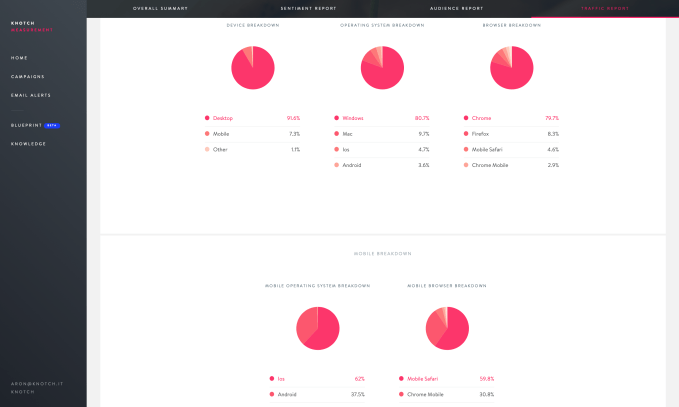
When we first wrote about Knotch back in 2012, it was a consumer product where people could share their opinions using a color scale. It might seem like a stretch go from that to marketing and data company, but in fact Knotch still collects data using its color-based feedback system — now, it’s using that system to ask consumers about their response to sponsored content.

In addition, Knotch offers a competitive intelligence product, as well as Blueprint, which helps marketers find the best publishers for their sponsored content.

Knotch screen shot

“As [brands are building] their own content hubs and recognizing content as a really key piece of their marketing stack, as they’re turning to this space, there’s not a lot of great options for them to turn to and say, ‘Here’s a way to know in advance which creative themes and topics and formats [are going to resonate]. Here’s how we optimize this content, here’s a way to benchmark what you’re doing,” founder and CEO Anda Gansca told me.

And it sounds like Gansca’s vision goes beyond sponsored content.

“In this convoluted landscape, you need a partner that is going to be your Switzerland of data, who’s aligned with you, collecting transparent digital performance data across paid and own channels,” she said.

Knotch has now raised a total of $34 million. Customers include JP Morgan Chase, AT&T, Ally Bank, Ford, Calvin Klein and Salesforce.

Post by startupsnows.blogspot.com

Darkstore raises $7.5 million Series A round for its same-day fulfillment center

Darkstore, a technology-driven fulfillment solution for companies like Nike and others, has raised a $7.5 million Series A round. With the additional funding in hand, Darkstore plans to expand its fulfillment center into more categories.

Currently, Darkstore fulfills products for brands in the areas of footwear, home and consumer electronics. With the funding, Darkstore will expand into lifestyle, health and beauty and athletic leisure, Darkstore founder and CEO Lee Hnetinka told TechCrunch over the phone.

“There are other categories where we get inbound and turn it down,” Hnetinka said. Down the road, Hnetinka said he envisions additional categories, including groceries and perishables.

Darkstore works by exploiting excess capacity in storage facilities, malls and bodegas and enables them to be fulfillment centers with just a smartphone. The idea is that brands without local inventory can store it in a Darkstore and then ship out same-day. Darkstore charges brands across three areas: fulfillment, storage and delivery.

“Up until now, Darkstore has really been behind the scenes,” Hnetinka said. “We want to continue to do that and to be a superpower to our brands. Our mission is to enable the brands to be direct to consumer and we believe we can help them do that even better by creating what we call a branded movement.”

Specifically, Darkstore envisions creating a badge for brands to place on their websites to signal that it offers same-day delivery via Darkstore. Brands currently see Darkstore as a competitive advantage, Hnetinka said, so they’re unwilling to promote its use of Darkstore, but he hopes to change that. That change would ideally help brands to increase trust with its customers, while also undoubtedly providing more visibility and therefore more business for Darkstore.

Also on the docket for 2019 is to explore a new giving initiative. Tentatively called Darkstore Giving, the idea is to make it easier for brands to reduce return-driven waste. Instead of throwing away lightly used items, Darkstore could facilitate the donation of those items to nonprofit organizations.

Darkstore first launched in 2016, counting mattress startup Tuft & Needle as one of its first customers. To date, Darkstore has raised almost $10 million in funding.

Post by startupsnows.blogspot.com

Regulatory demands for better data governance push Collibra’s valuation above $1 billion

What could Google’s parent company Alphabet, and the wealth management office of the likes of Jack Dorsey, Mark Zuckerberg and Sheryl Sandberg, understand better than the need for a service to manage all the data their companies are collecting?

As regulations in Europe begin to take effect (and European regulators show their teeth), companies like Collibra, which just raised $100 million at a valuation of more than $1 billion from new investor CapitalG (the growth equity investment fund from Alphabet) and returning backers like Iconiq (the family office of Dorsey, Zuckerberg, et al.), are only going to become more important.

Indeed, the recent $57 million fine from France’s data protection watchdog is only a taste of what could be in store for companies like Facebook and Google for non-compliance with new privacy laws. Companies like Collibra and its competitors like Alation, Adaptive Insights, Datum and Informatica are reaping the benefits of this by providing software to oversee how the data that companies are collecting is handled.

The company got its first big boost back in 2008 in the wake of the financial crisis when big banks were confronted with a whole new slew of regulations. Collibra is used to track what data is stored where and how, and to ensure that the data is being processed in ways that align with laws on the books.

Collibra’s new round is something of a victory lap for the company — which is coming off a record revenue year, according to a statement.

The company said it would use the new funding to add new products and push sales and marketing.

“Collibra is putting organizations back in control of their data, helping them comply with changing legislation, embrace emerging technologies and capture the information that will enable them to design services and solutions built for the future,” said Derek Zanutto of CapitalG. “We look forward to partnering with Collibra and marrying Google and Alphabet’s machine learning and AI expertise with Collibra’s leadership in data collaboration, workflow management and risk management.”

Collibra says it has more than 300 customers across industries like financial services, healthcare, retail and technology.

Post by startupsnows.blogspot.com

Starting with data centers, Carbon Relay is slashing energy costs and emissions using AI

Taiwanese technology giant Foxconn International is backing Carbon Relay, a Boston-based startup emerging from stealth today that’s harnessing the algorithms used by companies like Facebook and Google for artificial intelligence to curb greenhouse gas emissions in the technology industry’s own backyard — the data center.

Already, the computing demands of the technology industry are responsible for 3 percent of total energy consumption — and the addition of new technologies like Bitcoin to the mix could add another half a percent to that figure within the next few years, according to Carbon Relay’s chief executive, Matt Provo.

That’s $25 billion in spending on energy per year across the industry, Provo says.

A former Apple employee, Provo went to Harvard Business School because he knew he wanted to be an entrepreneur and start his own business — and he wanted that business to solve a meaningful problem, he said.

Variability and dynamic nature of the data center relating to thermodynamics and the makeup of a facility or building is interesting for AI because humans can’t keep up.

“We knew what we wanted to focus on,” said Provo of himself and his two co-founders. “All three of us have an environmental sciences background as well… We were fired up about building something that was true AI that has positive value… the risk associated [with climate change] is going to hit in our lifetime, we were very inspired to build a company whose technology would have an impact on that.”

Carbon Relay’s mission and founding team, including Thibaut Perol and John Platt (two Harvard graduates with doctorates in applied mathematics) was able to attract some big backers.

The company has raised $6 million from industry giants like Foxconn and Boston-based angel investors, including Dr. James Cash — a director on the boards of Walmart, Microsoft, GE and State Street; Black Duck Software founder, Douglas Levin; Karim Lakhani, a director on the Mozilla Corporation board; and Paul Deninger, a director on the board of the building operations management company, Resideo (formerly Honeywell).

Provo and his team didn’t just raise the money to tackle data centers — and Foxconn’s involvement hints at the company’s broader goals. “My vision is that commercial HVAC systems or any machinery that operates in a business would not ship without our intelligence inside of it,” says Provo.

What’s more compelling is that the company’s technology works without exposing the underlying business to significant security risks, Provo says.

“In the end all we’re doing are sending these floats… these values. These values are mathematical directions for the actions that need to be taken,” he says. 

Carbon Relay is already profitable, generating $4 million in revenue last year and on track for another year of steady growth, according to Provo.

Carbon Relay offers two products: Optimize and Predict, that gather information from existing HVAC devices and then control those systems continuously and automatically with continuous decision making.

“Each data center is unique and enormously complex, requiring its own approach to managing energy use over time,” said Cash, who’s serving as the company’s chairman. “The Carbon Relay team is comprised of people who are passionate about creating a solution that will adapt to the needs of every large data center, creating a tangible and rapid impact on the way these organizations do business.”

Post by startupsnows.blogspot.com