Wednesday, October 31, 2018

Influencer marketing startup Mavrck raises another $5.8M

Mavrck has raised another $5.8 million in funding, bringing its total raised to $13.8 million.

When the company raised its Series A back in 2015, it was focused on helping brands work with “micro-influencers” who were already using their products. Now it describes itself as an “all-in-one” influencer marketing platform, offering a number of tools to automate and measure the process.

Last month, Mavrck announced new features for Pinterest, where it’s now an official marketing partner. It also says it’s been doing more to improve measurement and detect fraud — on the fraud side, it promises to analyze a “statistically significant sample” of an Instagram account’s followers, and of the accounts that engage with their content, to determine if they’re bots.

Customers include P&G, Godiva and PepsiCo, and the company says recurring revenue has grown 400 percent year-over-year.

“Everything that we have done at Mavrck this year has been done with the intention to drive the influencer industry forward,” said co-founder and CEO Lyle Stevens in the funding announcement. “Every new capability that we’ve introduced, every partner that we’ve started working with, every influencer behavior that we’ve tracked was part of our mission to help marketers harness the power of content that people trust to drive tangible business value for their brands.”

The new funding comes from GrandBanks Capital and Kepha Partners. A spokesperson said this isn’t a Series B, but rather additional capital raised to support increased demand and channel partnerships.

Post by startupsnows.blogspot.com

The tactics behind The Athletic’s breakout success in sports subscriptions

Local newspapers may be shuttering and people may be consuming most news on social media, but don’t tell Alex Mather that a subscription news publication can’t grow like a unicorn startup. His 2-year-old sports publisher The Athletic has gained over 100,000 paid subscribers (60% under age 34) and has a 90% retention rate.

Having already raised $30 million in its short life, the company announced a new $40 million Series C yesterday, led by Founders Fund and Bedrock Capital. It reportedly values The Athletic around $200 million.

I interviewed Alex Mather (The Athletic’s CEO) and Eric Stomberg (Partner at Bedrock Capital) to understand what’s behind the breakout success and why they think this publishing startup can scale to become a multi-billion dollar company.

EP: Bedrock makes concentrated, contrarian bets. Explain how The Athletic fits that.

ES: I first met Alex and Adam in 2016 during Y Combinator. The popular view then, as it remains now, was that people just aren’t willing to pay for content online and that to win in media you have to put out a high volume of free articles on social.

The Athletic took the opposite approach. It’s a narrative violation. Everything is part of a paid subscription, with the belief that instead of writers needing to post 3-4 pieces per day, they should focus on deeper stories that add value to paid subscribers over time. That worldview resonated with us. If you can create content at scale that people are willing to pay for, that’s a powerful economic engine.

There’s so much sports coverage already out there, by professionals and amateurs alike, so why are people willing to pay for The Athletic?

AM: While there appears to be an abundance of content, most of it is aggregated, shallow content for a broad audience. We produce fewer stories and target a diehard fan. Our subscribers consistently tell us that no one else produces the same depth on a daily basis.

How did you determine the $60/year price point?

AM: We think of $60/year ($5/month) as less than the average NBA ticket. It’s a meaningful price but not prohibitive, especially when we do discounts in the first year. Like all subscription companies, whether we like it or not, we have to consider how our pricing stacks up against Netflix. For $10/month, you can subscribe to Netflix which is spending $8 billion per year in content.

Is The Athletic profitable?

AM: We expand by launching in local markets. We are in 47 thus far. The operational focus is on building a local team and becoming profitable in each local market. I can tell you that most markets are profitable in the first year–currently all of our markets over one year old are profitable and most of those over 6 months old are profitable.
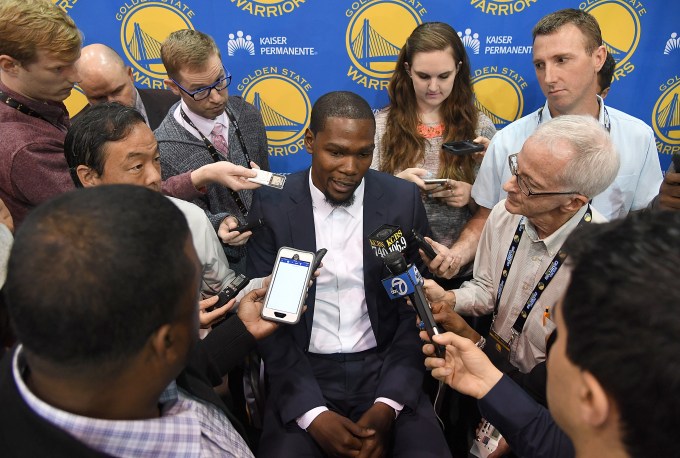
(Photo by Thearon W. Henderson/Getty Images)

Explain your growth strategy in terms of coverage: which sports did you start with and at which level (local vs national)?

AM: Direct-to-consumer businesses have to work really to earn their subscribers’ hard-earned money. We have to obsess over where we can be different. In the beginning, that was with hockey and baseball, because those have been de-prioritized by the bigger players. That shifted as we gained more subscribers: we needed to become comprehensive. We hired folks to cover the NBA, to cover the NFL, to cover soccer.

Do subscribers usually come just for one local sport or for the broader bundle?

AM: We’ve built a powerful bundle. A local newspaper has local politics, local restaurants, and then local sports. We have just the sports, but add a national perspective and a nationwide bundle. Most of our subscribers are “super bundlers,” meaning they subscribe to content from multiple cities plus at least one national product and usually a college product that’s not local. We provide all that for significantly less than competitors.

Eric — as a VC looking for multi-billion dollar exits, how are you analyzing the potential scale of a subscription publication like this? Even most people who are bullish on subscriptions believe it’s a choice of going for a niche audience and staying small.

ES: There are two things we look for in a subscription business: retention and a positive flywheel.

Retention. In any subscription business, the key question is: can they maintain their subscribers over time? Most of them don’t. Spotify does, Netflix does, and The Athletic does as well. The Athletic is off the charts, which sets it up for scale. You want to see deep engagement over a very, very long period of time — years.

A positive flywheel. The more you build your subscriber base, the more you build your revenue base. That allows you to get better content, to hire unique writers, to build greater depth. In doing so, you attract people who weren’t ready to subscribe in the early days but now you have writers they follow and content they want. Technology is important here too: as you build a bigger platform with more content, serving the right content at the right time to each user is a key advantage. When this flywheel is working it’s actually quite hard to put a ceiling on the business.

Most publishers did a so-called “pivot to video” over the last couple of years. You’re anchored in writing. Why not more video at the start?

AM: We’re obsessed with the consumer and all our research in the beginning said that people still like to read books and articles. Advertising with text may not be as good as with video, which may be why so many other companies “pivoted to video,” but we think the written word is still the best way to convey certain types of stories. It’s straightforward, it doesn’t require headphones.

There’s an incredible amount of talent out there that can produce these stories and that has been cast aside by many entities. We saw it as an opportunity to give them great jobs and bring value to our subscribers. That has paid off for us.

 

What are your plans for video or other content formats in the future?

AM: We raised this Series C with audio and video in mind. We can tell even more stories when we add in audio and video possibilities. Our goal is to serve the subscriber: some love to read, some love to listen, others prefer to watch. We look up to things like The Ringer, Andre the Giant on HBO, VICE News, Gimlet, and The Daily by the New York Times all as incredible storytelling, and we ask ourselves “how can we do sports versions of those?”.

Why focus on hiring experienced, full-time writers rather than a stable of contributors or curating from the vast pool of content by fans? Lots of amateurs pay close attention to sports.

AM: What’s really important to us is a growth mentality — that by Day 100 on our team a writer is thinking very differently. We’re providing lots of data, lots of feedback. We invest in great people who will figure this out with us over time. Also, scaling so quickly from 0 to 300 editorial staff was possible because we recruited experienced talent who know what to do already.

We do have about 400 contributors as well. These are folks who may be lawyers or accountants but are passionate about the teams they cover. We are a way for them to reach a premium audience. We can pay them really well and give them world-class editors formerly with Sports Illustrated and ESPN.

How are you acquiring your subscribers?

AM: When we expand into a new market, we gain new subscribers by hiring writers who have a following already and by word of mouth from existing subscribers. Then like any direct-to-consumer brand, we are acquiring subscribers through Google, Facebook, and Twitter.

You financially incentivize your writers based on them acquiring new subscribers through their articles or by promoting The Athletic with their followers online. That is very uncommon in publishing. Explain that strategy.

AM: It ties back to our focus on building for the long term and investing in talent that will grow with us. We like to assign incentives that give us the best chance of building a sustainable business and we think about compensation in that way. We give our team equity in the company and for many, we tie a portion of their comp to the performance of their team, sport, city. It’s a great way to share in the responsibility and success of the business.
At the bottom of articles, you ask readers to rate each story as “Meh”, “Solid”, or “Awesome”. I wish every publisher did this. How do you use this data? How do a writer’s scores impact them?

AM: It’s about feedback loops. Our writers gauge feedback when they share on Twitter. This is another data point. It helps paint a more complete picture. NPS alone isn’t enough of course though. We look at whether articles drive new subscribers, drive deep engagement, drive comments, etc. We don’t use pageviews, but we certainly use metrics. Usually, this results in a writer producing very different work on Day 100 than they were on Day 0.

Explain the interaction between subscribers. It’s not unique to have a comments section: there are bad comments sections, good comments sections, and comments sections that go unused. At a tactical level, how do you think about building community?

AM: My co-founder and I met at Strava, the social network for endurance athletes. I ran the product team and we were obsessed with community. We see an incredible connection between community engagement and subscriber retention. The question that drives us is how can we connect users in an authentic way, how can we connect users to our staff in an authentic way, how can we connect users to athletes in an authentic way. We’re doing a lot of experimentation here. We have a distinct opportunity because of our paywall: most of the comments on The Athletic are saying substantive things.

Post by startupsnows.blogspot.com

A look at all the companies participating in 500 Startups’ 24th accelerator program

TechCrunch has an exclusive look at the companies participating in 500 Startups‘ 24th startup accelerator batch, which kicked off last week.

Through its four-month seed program, the Silicon Valley seed fund invests $150,000 in exchange for 6 percent equity. The companies below include a mix of industries from cryptocurrency to digital health to e-commerce. 500 Startups says 40 percent of the companies have a female founder, 50 percent have a black, mixed-race or Latinx founder and 31 percent are headquartered outside the U.S.

Here’s a closer look at the 22 companies, which will demo their tech to investors on February 28:

  • Alba: A Santiago, Chile-based mobile marketplace for babysitters in emerging markets.
  • Assemble: A Los Angeles-based digital platform for automating video content production.
  • Back Office: A Palm Beach, Florida-based financial software provider focused on streamlining personal bookkeeping.
  • BlockVigil: A San Francisco-based platform for building and scaling blockchain applications.
  • Cambridgene: A Cambridge-based developer of clinical-genomic software for personalizing cancer therapy in hospitals.
  • Celer Network: A platform for building and scaling decentralized applications.
  • Crowdz: Headquartered in Sunnyvale, the blockchain-based B2B marketplace builds digitized supply chains.
  • HAMAMA: A San Francisco-based provider of microgreen kits for growing healthy food at home.
  • IOTW: A Hong Kong-based IoT-connected cryptocurrency mining platform.
  • Kura Tech: A San Francisco-based developer of augmented reality glasses with micro-display and variable focus.
  • Memoir Health: A Boston-based behavioral health startup providing physical and virtual mental wellness and substance use services.
  • MessageCube: Headquartered in Sunnyvale, the company is building an integration for people to discuss and purchase shared experiences over chat.
  • Ovation: A Provo, Utah-based online portal for restaurant reviews meant to help businesses measure customer experience.
  • PantyProp: A New York-based seller of underwear and swimwear for women to wear while menstruating.
  • Pilleve: A Winston-Salem, North Carolina-based startup using data to help care providers lower the costs associated with opioid addiction.
  • Savion: A Livermore-based aviation company bringing green, long-range private jets to the middle class.
  • SnapShyft: Headquartered in Indianapolis, the startup provides an on-demand labor marketplace focused on the food and beverage industry.
  • Thrive Agric: An Abuja, Nigeria-based crowdfunding platform for farms and farmers in Africa.
  • TripAfrique: Headquartered in Paris, the online booking platform helps travelers arrange trips to Africa.
  • UTRUST: A Zurich-based cryptocurrency payments platform that offers buyers protection, instant transactions and more.
  • Zeuss Tech: Headquartered in Palo Alto, the blockchain-based anti-money-laundering platform targets cash-intensive industries.
  • No information is available on the final company, which is in stealth mode.

Here’s a look at 500 Startups batch 23, 22 and 21.

Post by startupsnows.blogspot.com

Happy 10th birthday, Bitcoin!

Bitcoin turned 10 years old, a milestone for a technology that few have used and even fewer understand. Ultimately, the blockchain it wrought could be the biggest change to banking, finance, and politics ever or it could be a dud. The jury is still out, but let’s take a walk down memory lane and see just how the product grew from White Paper to world beater.

Post by startupsnows.blogspot.com

Scared to trade stocks? Titan algorithmically invests for you

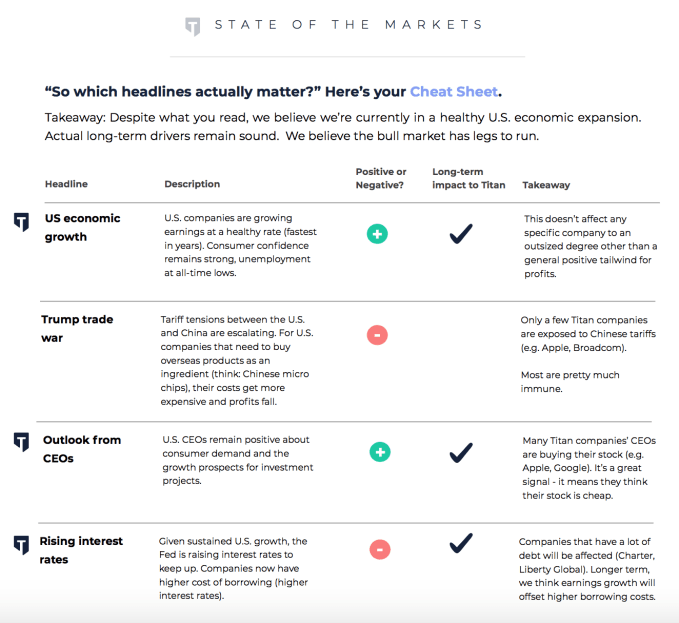
Titan could put an end to stock market FOMO. The app choose the best 20 stocks by scraping top hedge fund data, adds some shorts based on your personal risk profile, and puts your money to work. No worrying about market fluctuations or constantly rebalancing your portfolio. You don’t have do anything, but can get smarter about stocks thanks to its in-app explanations and research reports. Titan wants to be the easiest way to invest in stocks for a mobile generation who want an affordable coach to guide them through the market themselves.

“Our goal is to take things that aren’t accessible [in wealth management] and make them accessible, starting with hedge fund” says Titan co-founder Joe Percoco. That potential to democratize one of the keys to financial mobility has won Titan a $2.5 million seed round from Y Combinator’s co-founder Paul Graham, president Sam Altman, and partners including Gmail creator Paul Bucheit. The rest of the capital comes from Maverick Ventures, BoxGroup, and Liquid2 Ventures.

Titan is where investing meets virality” says Graham. “Those are two very powerful forces.” Since TechCrunch broke the news of Titan’s launch in August, it’s doubled its assets under management to $20 million and hired its first non-founder engineer.

Now it’s launching in-app educational videos so stock market dummies can get up to speed if they want to understand where there money’s going amidst a swirling see of financial news..”There are so many different headlines telling so many different narratives” Percoco tells me. “Everyone is searching for explanations in a voice they trust. An ‘ETF’ can’t talk back. Sometimes a human face is better than writing. A video can really help people make choices.” Here’s it’s two-minute video about Facebook’s Q2 earnings a few months ago, explaining why the share price crashed 25 percent:

Percoco and Clayton Gardner met on their first day of Wharton business school while their third co-founder was earning a hedge fund patent and studying computer science at Stanford. They went on to work at hedge funds and private equity firms like Goldman Sachs, but got fed up just growing the fortunes of the already rich.

So they started Titan to invent a modern, mobile version of BlackRock, the investment giant founded in the 80s. Titan uses the public disclosures of hedge funds to find consensus around the 20 best performing stocks. With as little as $1000, users can let Titan robo-manage their investments for a 1 percent fee on assets. Users provide some info on how big they want to gamble, and Titan personalizes their portfolio with more or less conservative shorts to hedge their bets.

Titan’s simplicity combined with the sense of participation could help it grow quickly. It sits between do-it-yourself options like Robinhood or E*Trade where you’re basically left to fend for yourself, and totally passive options like Wealthfront and Betterment, where you’re so divorced from your portfolio that you’re not learning. Managed hedge funds and fellow active investment vehicles like BlackRock with a human advisor can require a $100,000 minimum investment that’s too steep for millennials.

“Even the best hedge fund in the world is only going to send you a PDF every 90 days” Percoco explains. But Titan doesn’t want you nervously checking your portfolio non-stop. “Our median user checks the app once per day.” That seems like a healthy balance between awareness and sanity. It thinks its education and informative push notifications make it worth a higher required investment and fees than Wealthfront charges.


Essentially, Titan is a stock trading auto-pilot merged with a flight simulator so you improve your finance skills without having to fear a crash. Percoco tells me the sense of accomplishment that engenders is why clients say they’re telling friends about Titan. “When I invest, I look for companies that are growing quickly and making a huge positive impact on the world. Titan is one of those companies” investor Altman says. “I think they could improve the financial wellbeing of an entire generation.”

Post by startupsnows.blogspot.com

Lendix is now called October

French startup Lendix is changing its name to October. The company is using this opportunity to redesign its branding assets and refresh the design of the website for new users. The product remains the same — a lending platform connecting individual and institutional investors with small and medium companies.

From what I’ve heard, October had to change its name due to some trademark issue. But the company used this opportunity to move away from its original, pretty boring name. Lendix is a straightforward name that suggests that it’s all about lending money.

But there are so many companies with “lend” in their names that it quickly became a disadvantage — Lendopolis, Unilend, Lendosphère, LendingClub…

October is easy to understand and to write down in a casual conversation. If the company wants to branch out and start offering other financial products, it won’t be awkward.

That’s about it. I just wanted to note the change given that I’ve covered October a few times over the years.

Post by startupsnows.blogspot.com

Tuesday, October 30, 2018

Brex has partnered with WeWork, AWS and more for its new rewards program

Brex, the corporate card built for startups, unveiled its new rewards program today.

The billion-dollar company, which announced its $125 million Series C three weeks ago, has partnered with Amazon Web Services, WeWork, Instacart, Google Ads, SendGrid, Salesforce Essentials, Twilio, Zendesk, Caviar, HubSpot, Orrick, Snap, Clerky and DoorDash to give entrepreneurs the ability to accrue and spend points on services and products they use regularly.

Brex is lead by a pair of 22-year-old serial entrepreneurs who are well aware of the costs associated with building a startup. They’ve been carefully crafting Brex’s list of partners over the last year and say their cardholders will earn roughly 20 percent more rewards on Brex than from any competitor program.

“We didn’t want it to be something that everyone else was doing so we thought, what’s different about startups compared to traditional small businesses?” Brex co-founder and chief executive officer Henrique Dubugras told TechCrunch. “The biggest difference is where they spend money. Most credit card reward systems are designed for personal spend but startups spend a lot more on business.”

Companies that use Brex exclusively will receive 7x points on rideshare, 3x on restaurants, 3x on travel, 2x on recurring software and 1x on all other expenses with no cap on points earned. Brex carriers still using other corporate cards will receive just 1x points on all expenses.

Most corporate cards offer similar benefits for travel and restaurant expenses, but Brex is in a league of its own with the rideshare benefits its offering and especially with the recurring software (SalesForce, HubSpot, etc.) benefits.

San Francisco-based Brex has raised about $200 million to date from investors including Greenoaks Capital, DST Global and IVP.  At the time of its fundraise, the company told TechCrunch it planned to use its latest capital infusion to build out its rewards program, hire engineers and figure out how to grow the business’s client base beyond only tech startups.

“This is going to allow us to compete even more with Amex, Chase and the big banks,” Dubugras said.

Post by startupsnows.blogspot.com

Monzo, the U.K. challenger bank, raises £85M Series E at a £1B pre-money valuation

Monzo, the U.K. challenger bank that now boasts more than a million customers, has raised £85 million in Series E funding. The round is led by U.S. venture capital firm General Catalyst, and Accel. Existing backers Passion Capital, Goodwater, Thrive Capital, Orange Digital Ventures, and Stripe also participated.

The latest funding was at a pre-money valuation of £1 billion (~$1.27b), meaning that Monzo is now a bonafide member of the U.K. fintech unicorn club, joining recent entrant Revolut.

Meanwhile, the bank upstart is also planning to launch a large crowdfunding round later this year. Like a lot of other fintechs — and before it was fashionable — Monzo has historically opened up its fundraising to its passionate community and other armchair investors.

In a brief call earlier today with Monzo co-founder and CEO Tom Blomfield, he told me the new funding will be primarily used for increasing headcount to further develop the Monzo product line and to cover other operational costs now that the challenger bank has reached “contribution margin positive”.

In other words, on average each customer is generating more revenue than the cost of servicing their current account, which is undoubtedly evidence of how much progress Monzo has made over the last year. This includes bringing down costs, such as weaning customers off costly debit card “top ups” and imposing a cap on fee-free foreign ATM withdrawals — as well as starting to generate meaningful revenue.

On where that revenue is now coming from, Blomfield cited lending in the form of Monzo’s overdraft product, interest it earns on deposits (currently Monzo doesn’t share that interest with customers, even if it is very small in percentage terms), and interchange fees (the money Monzo makes any time you spend on your Monzo debit card).

Another revenue stream is the nascent Monzo marketplace, which he says will be the next focus going forward now that the Monzo current account, with the omission of savings accounts and cash deposits, is basically “done“.

That’s noteworthy given that Monzo embraced developers extremely early on in its existence, holding four very popular hackathons and conducting a few early partnership pilots, but has since mostly stalled on the roll out of marketplace banking and other partnership integrations, sometimes to the frustration of the wider U.K. fintech ecosystem and developers. The exception being the recent integration with TransferWise for sending money abroad.

Blomfield doesn’t dispute this framing but says it wasn’t that Monzo changed course on offering an open API or working on deeper integrations that will put partner products inside of the Monzo banking app, but that gaining a banking license and building out all of the features of the current account had to be the short-term priority. Now that heavy lifting is complete and armed with new operational capital, it is marketplace game on.

To that end, the Monzo CEO says headcount over the next year could double again, from around 450 now to 900. And in terms of customer growth, extrapolating stats from a recent Nationwide annual report (PDF link), the challenger bank says it now accounts for 15 percent of all new bank accounts opened each month in the U.K. It also says it has 800,000 monthly active users.

Account switching — that is customers ditching their existing bank — still makes up the bulk of customer acquisition, even if Monzo recently began targeting 16-18 year olds who would be opening their first ever bank account. Another key metric: the number of customers who deposit their salary each month with Monzo is now at around 26 percent, although I’m told that this isn’t as important for Monzo as it might be for traditional banks and isn’t the main correlation with engagement or those accessing a Monzo overdraft.

Asked what Monzo’s biggest challenge will be over the next year, its CEO doesn’t mince his words: “Increasing revenue,” he says. This means ensuring that its lending models are correct (ie avoiding too many defaults as it scales) and steadfastly growing the marketplace and third-party product partnerships that will bring in additional revenue.

I was also intrigued to see a U.S. venture capital firm once again back the U.K. challenger bank — many of its existing backers have a U.S. bent and Blomfield has made no secret of his ambitions to expand across the pond at some stage. In an email exchange a few hours before publication, General Catalyst’s Adam Valkin (who was previously at Accel in London where he invested in GoCardless, which Blomfield also co-founded), gave me the following statement:

We’re investing in Tom and his team because they are delivering a high-quality banking experience for consumers at scale that is sorely missing from the market. Today’s incumbent UK banks represent billions of market cap but suffer from low NPS scores, reflecting their inability to meet their customers’ needs. Monzo, in contrast, explicitly builds product and banking features in a community-driven approach based on customers’ feedback and requests. This has driven very high organic growth, strong retention and engagement, and unprecedented customer love for and trust in Monzo. Beyond this, Tom and the Monzo team have improved upon the traditional business model of banking, removing the traditional offline retail-based banking model in favor of a highly scalable and lower cost mobile-only experience. All of this creates the potential for Monzo to become a leading U.K. bank, launch a successful financial marketplace, and eventually expand internationally.

Post by startupsnows.blogspot.com

Even Financial acquires Birch Finance, a credit card rewards startup

On the heels of a funding round to the tune of $18.8 million, Even Financial has acquired Birch Finance for an undisclosed sum.

Even offers products like a pre-approval API, real-time pricing, machine learning optimization, a product comparison and recommendation engine for consumers and more. Birch Finance, a TC Startup Battlefield alum that raised $1 million earlier this year, aims to help people make the most of the credit cards in their wallets by telling them which cards will earn them the most points. It works by analyzing your transaction history to identify missed rewards opportunities. Even’s plan with this acquisition is for Even to expand its offerings within the credit card space.

“The credit card market continues to expand with millions of consumers opening up hundreds of different types of credit cards every year for countless reasons,” Rosen said in a statement. “Birch already has one of the largest credit card databases and their technology perfectly complements our existing platform as we expand our offering to the credit card space. This acquisition will allow our partners to optimize the process of getting the right cards to the right consumers.”

Even’s slate of partners includes Credit.com, a personal loans marketplace, The Penny Hoarder and Transunion. With the Birch team on board, Even will enable its partners to save on consumer acquisition while also scaling its credit card recommendation platform. At Even, Birch co-founder Cohen will serve as senior director of the credit card marketplace.

In a statement, Cohen said, “We saw a clear synergy with Even’s business strategy and growth plans, and I’m thrilled to join Even’s team as we expand and scale our offerings into new areas.”

Post by startupsnows.blogspot.com

ZypMedia raises $5.6M to help traditional media companies embrace online ads

Local advertising startup ZypMedia is announcing that it has raised $5.6 million in Series C funding.

That’s relatively small amount of money for a Series C (the company had previously raised $6.9 million total, according to Crunchbase), but co-founder Aman Sareen said, “We had the opportunity to raise a lot more, but we chose not to.” In fact, Sareen said ZypMedia became profitable last year.

So the new funding round should allow the company to continue expanding its product lineup and its team — it has plans to double its headcount in the United States and India over the next year — while still leaving room for organic growth.

“We didn’t want to be a cautionary tale [like] other previous adtech companies,” Sareen said. “We are buckling down for the long haul … We didn’t want to necessarily raise money just for the sake of it.”

Sareen founded ZypMedia with his former college roommate Ramandeep Ahuja, as well as former Current TV executive Mark Goldman, with the aim of helping local broadcasters move into programmatic advertising.

The idea is to help those media companies offer campaigns that can reach advertisers’ desired audiences across traditional and digital channels, such as display, video (including over-the-top), social media and native advertising.

“Local digital advertising has been very neglected,” Sareen said. “It’s a huge market, and our goal was to be one of the leaders. I’ll be honest, it wasn’t an easy to task, but we have been decently successful in our mission.”

“Decently successful” means signing up partners like Sinclair Broadcast Group and Univision. It also means enlisting Archer Venture Capital as the lead investor in the new round. (Existing investors US Venture Partners and Sinclair also participated.)

“Not only have Aman and Ramandeep created a superior tech stack for delivering local advertising, they’ve also developed a really smart and defensible business model, partnering with local media companies to act as their direct sales force,” said Archer Managing Director John Hadl in the funding announcement.

And ultimately, the vision goes beyond bringing incremental revenue to traditional media companies. Sareen argued that ZypMedia’s model positions it right at the intersection of traditional and digital advertising.

“Within next two-to-five years, digital or linear, over-the-top or over-the-air, it will jump through one platform,” he said. “Everything will use the same technology and currency.”

Post by startupsnows.blogspot.com

Emotional wellness startup Aura raises $2.7 million from Cowboy Ventures and Reach Capital

Aura, an app for emotional well-being, has raised a $2.7 million seed round co-led by Cowboy Ventures and Reach Capital, with participation from others.

When Aura first launched a couple of years ago, its bread and butter was short, three-to-seven-minute meditations based on your current mood — be that stressed, anxious, happy or sad. Since then, co-founders Steve and Daniel Lee say the company has grown to a few million users.

“We’ve since grown to become everyone’s emotional wellness assistant,” Steve told me. “We ask how people are feeling right now and then offer content to help them feel better.”

Aura works with therapists, coaches and meditation teachers to offer a variety of content to help people get the type of help they’re looking for. In addition to meditation, Aura offers life coaching, music and inspirational stories.

Premium users, who pay $60 per year, have unlimited access to content, while free users are limited to three minutes of wellness content once every two hours. Aura is not currently sharing how many paid customers it has.

“At Reach, we often ask how we can empower people to achieve at their fullest potential,” Reach Capital Partner Wayee Chu said in a statement. “We are thrilled to be supporting two founders who are not only deeply driven by their own personal narrative in living with a family member with a mental illness, but who have committed themselves in building a world-class technology and tool to empower others in building a regular mental health and wellness practice.”

With the funding in tow, Aura has plans to expand its base of content creators and grow its team — which currently consists just of the Lee brothers. Down the road, Aura envisions integrating the app with wearable devices and their respective sensors to detect mood automatically. That way, Aura would be able to serve up what you need before you know you need it. The company also plans to become more than just a content platform by building additional tools on top of the core service.

Post by startupsnows.blogspot.com

Freebird flies off with $8M to rescue passengers after flight cancellations

There are few things more irritating than a canceled flight, whether it’s on your way to a friend’s wedding, a conference or to celebrate a holiday back home. Wouldn’t it be nifty if technology could put an end to our travel woes? Freebird, a travel rebooking service, has raised an $8 million Series A to do just that.

The startup charges a minimum of $19 per flight — more depending on distance, time of year, location and more — to independent travelers and companies that partner with the service to help travelers rebook flights after cancellations or other “disruption events.” Most of the time, flights are on-time and without issue, which means that most of the time, Freebird pockets all of its customer’s cash. But if there is a disruption event, Freebird guarantees it will rebook with just three taps of your phone and without any additional charge.

American Express Ventures has led the round, with support from Citi Ventures, PAR Capital Ventures, General Catalyst and Accomplice. Freebird is currently in discussions with Amex and Citi, as well as other banks, to roll its travel benefits into their corporate card services. To date, the startup works with 100 corporate clients and 10 corporate travel agency partners, including BCD Travel. Freebird says it expects to support 250,000 travelers this year.

Founded in 2015 by Ethan Bernstein, Cambridge, Mass.-based Freebird aggregates data on flight patterns to predict the probability of a flight disruption. If the probability is high, Freebird chargers more for its rebooking service.

“If you’re flying out of Buffalo in the winter, it’s going to be a higher risk flight,” Freebird chief executive officer Bernstein told TechCrunch. “If you’re flying out of Phoenix in the summer, you’re at a very low risk of being disrupted. We understand those risks and we are able to price our product differently based on those factors.”

Freebird has raised a total of $16.5 million in funding to date. It’s one of many travel technology startups to bring in venture capital this year. IfOnly, a marketplace for experiences, secured $20 million in April; luggage startup Away brought in a $50 million in June; and travel activities platform Klook raised $200 million in August.

Freebird, though focused specifically on flights, says its experiences are at the forefront of its business model.

“There are a million different products that will help you automate your life but one of the things we are focused on is transforming personal experiences,” Bernstein said. “Do they go through these disruption events tearing their hair out or do they go through it knowing that they have control, agency, support and information? It’s funny what happens when people deal with uncertainty; uncertainty is the worse. As soon you give people information, human support and technology to help them solve their problems, they experience the event so much differently.”

Post by startupsnows.blogspot.com

Sentieo raises $19M to be the AI-powered Bloomberg Terminal

To get an edge on the market, investors must look beyond traditional financial info like revenue and profits. Our every online activity generates data exhaust like web traffic, Twitter mentions, app downloads, and search trends. It’s the ability to overlay the old and new data sets to spot surprising trends that will set the best traders apart. Sentieo wants to be their tool.

Sentieo is an investment research software suite that uses AI to scan financial documents, analyze alternative data sets, and create visualizations. The fintech SAAS startup now has 700 customers including top hedge funds plus mutual funds, Fortune 500s, and investment banks who pay around $500 to $1000 per year per license. That’s a lot cheaper than a $21,000 Bloomberg Terminal subscription.

Now Sentieo is ready to crank up its name recognition with a sales and marketing blitz fueled by a new $19 million Series A round led by Centana, a $250 million growth equity firm focused on fintech SAAS. Now with $30 million in total funding, the 160-person startup plans to “Educate [traders] that ‘hey, this product is built by people who sat in your seats'” says CEO Alap Shah.

Sentieo charts Google Trends data on Facebook vs the social network’s revenue

10 year ago, Shah was making the Wall Street rounds after graduating from Harvard in economics. He was an analyst in consulting at Novantas, private equity at Castanea, and worked for hedges funds VIking Global and Citadel. “It became clear that there were some really big holes in my process where software wasn’t meeting my needs. Importantly, there was a hole around search” Shah tells me. “We’ve grown accustomed to going to Google. But unfortunately that’s just not the way the old-school financial data programs are structured.”

Sentieo co-founder and CEO Alap Shah

So he built his own. “I used all the financial tools out there: Capital IQ, FactSet, Bloomberg — each had their strengths and weaknesses. But they were all over 20 years old, so they pre-date the cloud, pre-date SAAS, pre-date mobile!” With Sentieo, he wanted to develop a tool that could understand the nuances of business momentum before it showed up in the balance sheets.

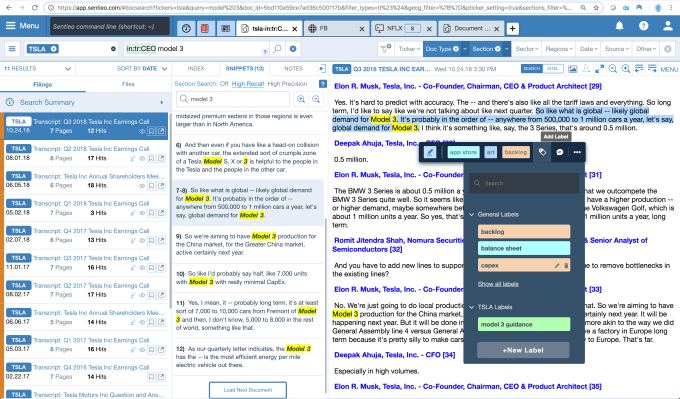
Sentieo does have a traditional financial equity data terminal with real-time pricing. But there’s also a machine learning and natural language processing-powered document search tool that can sort through SEC documents, earnings call transcripts, press releases, and more. It taps Alexa web traffic data, Apptopia app download rates, and Twitter chatter, as well as Thomson Reuters analyst estimates and fundamentals. Customers can annotate files, organize ideas, generate visualizations, and share their insights through Sentieo’s Notebook.

For example, Sentieo could look through all of Tesla’s earnings calls and financial documents for mentions of guidance on Model 3 production volume. It could highlight them all, analyze the sentiment of those mentions, and chart them against Tesla’s share price. Or you could search for all the companies starting to list President Trump as a risk factor for their business, which would surface how the medical cannabis companies are concerned about his Attorney General Jeff Sessions’ stance on legalization.


Sentieo’s synonym library allows it to hunt down different ways of saying the same thing with the goal of not forcing investors — or their dutiful analysts — to read through 100 page 10-Q documents manually. “You can get the same information at 10x the speed with something like Sentieo” Shah claims. It wants to a be a “research management system”, like a Salesforce CRM for tracking investment ideas.

But Sentieo’s 65-person India-based engineering must keep data from all 50 feeds, 25 million documents, and 64,000 equities flowing to keep customers satisfied. There are a ton of moving parts, and Sentieo is competing with much bigger companies. Beyond Bloomberg, there are lots of alternative data providers out there. And Microsoft’s software suite also has plenty of info management tools.

Sentieo’s hope is to emerge as an aggregator of information sources and an annotation tool that benefits from being purposefully designed for what analysts need. If Robinhood is on one side of the spectrum making investing easy for novice traders, Sentieo is on the other end making investing smarter for experts. “It’s really at the bleeding edge of how you get the data today” Shah concludes. “For every company driven by consumer demand, there are all these little breadcrumbs being left all over the internet.”

[Disclosure: I briefly rented a room in an apartment where Shah lived five years ago and I know him from the San Francisco social scene frequented by many Silicon Valley figures.]

Post by startupsnows.blogspot.com

Concord raises $25 million for its contract management platform

Concord is raising a new $25 million funding round led by Tenaya Capital, with existing investors CRV and Alven also participating. The company is building a platform that makes it easier to manage your contracts all the way from writing them to signing them.

Even if you used a service like DocuSign to sign a contract in the past, chances are you or the sender used Microsoft Word to write the contract. It’s fine if you’re the only one working on this contract. But it can quickly become a mess as your legal team gets larger.

“It's ultimately bringing a B2C experience to a really complex B2B experience,” VP of Marketing Travis Bickham told me.

And one of the company’s main challenge has been to make it convenient for all teams in your organization. If you work in human resources, you’re dealing with HR contracts. If you’re an office manager, you may need to sign a contract to order a new fridge. If you’re on the sales team, you want to make sure your client signs a contract. The procurement team also wants some sort of legal proof from its partners. And the list goes on.

Concord lets you create templates and workflows. For instance, the most basic contracts don’t require the same attention to details. A non-disclosure agreement is pretty standard. You just have to replace some fields and make the person sign it.

You can create an approval process for more complicated contracts. For instance, you can say that the legal team has to approve any sales contract above $100,000.

Concord has also built integrations with third-party tools. For instance, you can generate a contract in Salesforce using Concord’s integration.

There are currently 80 people working for Concord in San Francisco and Paris. With today’s funding round, the company plans to hire more people, get more clients, target bigger companies, etc. Concord currently works with 200,000 companies.

Post by startupsnows.blogspot.com

Valued at $500M, investors say HeadSpin is ‘one of the fastest-scaling software companies’ ever

HeadSpin has closed a $20 million Series B, valuing the provider of mobile application performance software at $500 million. New investors ICONIQ Capital, Battery Ventures and EQT Ventures participated in the funding round, as well as existing backers GV, Telstra Ventures, Danhua Capital, Nexus Ventures Partners and NextWorld Capital.

The company emerged from stealth last year with Manish Lachwani at the helm. Lachwani was the former principal architect of the Amazon Kindle, chief technology officer of mobile gaming company Zynga and co-founder and chief technology officer of Google-acquired Appurify, which helped developers automate testing and optimization of their mobile apps and websites.

He’s been in the application performance management business for a long time; under his leadership, Palo Alto-based HeadSpin has quickly grown into one of the fastest growing, though relatively unknown, startups in Silicon Valley.

“What HeadSpin has been able to achieve in its first three years is remarkable, and it has
already attracted dozens of major clients across the mobile ecosystem,” ICONIQ partner Will Griffith said. “The company is quickly becoming the new standard of record for all mobile ecosystem players going forward. It’s one of the fastest-scaling software companies we’ve seen.”

HeadSpin works with Tinder, DocuSign and some 200 other app providers, allowing the companies to test and monitor their apps in real-time and on real devices before, during and after an app is released. The AI-enabled platform gives developers the ability to experience their app just as any regular user would and highlights high priority issues so companies can quickly resolve customer’s problems at scale.

Founded in 2015, HeadSpin says it expects to double revenue in 2018 but did not disclose any financial metrics.

Chief technology officer Brien Colwell is the other half of the company’s founding team. Colwell is the founder and former CEO of Nextop.io, a Y Combinator graduate and app optimization startup. Colwell and Lachwani are joined by HeadSpin’s head of product Sriram Krishnan, Tinder’s former head of international growth. Krishnan joined HeadSpin in January after working with HeadSpin’s toolset in his role at the app-based dating company.

“When I signed up for HeadSpin, I found out how phenomenal the product was,” Krishnan told TechCrunch.

“A lot of what we built was predicated on the fact that the mobile ecosystem is still very new,” he added. “If you think about the apps world, it’s only been around 10 years … It’s the Wild West out there when it comes to understanding performance.”


Post by startupsnows.blogspot.com

Monday, October 29, 2018

Ian Small, former head of TokBox, takes over as Evernote CEO from Chris O’Neill

Former TokBox head Ian Small is replacing Chris O’Neill as CEO of Evernote, the note-taking and productivity app company said this morning. In a blog post, Small said that the leadership change was announced to employees this morning by Evernote’s board. “We are all hugely appreciative of the energy and dedication Chris has shown over the last three years, and in particular for putting Evernote on solid financial footing so we can continue to build for the future,” he wrote.

Small added, “When Stepan Pachikov founded Evernote, he had a vision for how technology could augment memory and how an app could change the way we relate to information at home and at work. Evernote has been more successful at making progress towards Stepan’s dreams than he could have imagined, but Stepan and I both think that there is more to explore and more to invent.”

O”Neill had been Evernote’s CEO since 2015, when he took over the position from co-founder Phil Libin. Small previously served as CEO of TokBox, which operates the OpenTok video calling platform, from 2009 to 2014, and then as its chairman from 2014 to July of this year.

O’Neill’s departure as CEO is the latest significant leadership shift for Evernote, which has withstood several key executive departures over the last few months. In early September, we reported that the company had lost several senior executives, including CTO Anirban Kundu, CFO Vincent Toolan, CPO Erik Wrobel, and head of HR Michelle Wagner, as it sought funding in a potential down-round from the unicorn valuation it hit in 2012. According to TechCrunch’s sources, Evernote had struggled to grow its base of paid users and active users, as well as enterprise clients, for the last six years.

Then a few weeks later, Evernote announced that had to lay off 54 people, or about 15 percent of its workforce. O’Neill wrote a blog post about the company’s future growth strategy, including streamlining specific functions like sales so it could focus on product development and engineering.

Post by startupsnows.blogspot.com

Lime hires its first chief business officer amid push into car-sharing

After four months “on the beach,” per his LinkedIn profile, Uber’s former global head of business and corporate development has a new gig. Lime has hired David Richter (pictured) as its first-ever chief business officer and interim chief financial officer.

Based in San Francisco, Richter will be overseeing the bike- and e-scooter-sharing startup’s business operations. Richter spent more than four years at Uber leading the ride-hailing giant’s global business development, corporate development, experiential marketing, autonomous vehicle alliances and brand relevance teams. He left in May after expressing frustrations with a series of departures in his group, according to The Information.

“As Lime continues to grow, David will bring in unparalleled expertise, particularly in the realm of business development and corporate partnerships, as well as in managing our overall business strategy and deal flow,” Lime co-founder and chief executive officer Toby Sun said in a statement. “His leadership experience, coupled with his keen understanding of the fast-moving shared mobility industry will be a huge advantage to our company as we continue to expand our global footprint.”

Lime is said to be completing the fundraising circuit right now, asking investors for a valuation north of $3 billion. The company, which entered the unicorn club in June, has raised a total of $467 million to date from GV, Andreessen Horowitz, IVP, Section 32, GGV Capital and more.

The company is using the buckets of capital to expand beyond bikes and scooters. Last Monday, rumors emerged that it was planning a brick-and-mortar push. The company confirmed that it would indeed build scooter “lifestyle stores” in major U.S. and international markets, starting with Santa Monica, Calif.

The next day on stage at the JD Power Automotive Roundtable, Lime announced its official foray into car-sharing. The company has since applied for a car-sharing permit in Seattle and plans to rent out small electric vehicles, which it’s calling “transit pods,” by the end of the year.

According to Axios, Lime plans to spend $50 million on the pods, which will cost $1 for consumers to start, plus an additional 40 cents per minute.

“You can expect electric vehicles to be an additional micro-mobility option for Lime riders to choose from within the Lime app soon,” a spokesperson for Lime said in a statement provided to TechCrunch. “More details on timing, specs of the vehicle, locations for the first rollout, etc. will be announced in the coming weeks.”

Lime launched in 2017 and has since recorded 11.5 million scooter and bike rides.

Post by startupsnows.blogspot.com

YC-backed Observant uses the iPhone’s infrared depth sensors to analyze user emotions

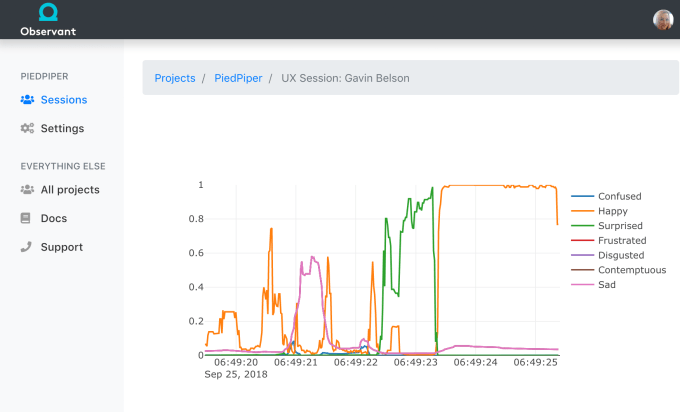
Observant has found a new way to use the fancy infrared depth sensors included on the iPhone X, XS and XR: analyzing people’s facial expression in order to understand how they’re responding to a product or a piece of content.

Observant was part of the winter batch of startups at accelerator Y Combinator, but was still in stealth mode on Demo Day. It was created by the same company behind bug reporting product Buglife, and CEO Dave Schukin said his team created it because they to find better ways to capture user reactions.

We’ve written about other startups that try to do something similar using webcams and eye tracking, but Schukin (who co-founded the company with CTO Daniel DeCovnick) argued that those approaches are less accurate than Observant’s — in particular, he argued that they don’t capture subtler “microexpressions,” and they don’t do as well in low-light settings.

In contrast, he said the infrared depth sensors can map your face in high levels of detail regardless of lighting, and Observant has also created deep learning technology to translate the facial data into emotions in real-time.

Observant has created an SDK that can be installed in any iOS app, and it can provide either a full, real-time stream of emotional analysis, or individual snapshots of user responses tied specific in-app events. The product is currently invite-only, but Schukin said it’s already live in some retail and ecommerce apps, and it’s also being used in focus group testing.

Observant

Of course, the idea of your iPhone capturing all your facial expressions might sound a little creepy, so he emphasized that as Observant brings on new customers, it’s working with them to ensure that when the data is collected, “users are crystal clear how it’s being used.” Plus, all the analysis actually happens on the users’ device, so no facial footage or biometric data gets uploaded.

Eventually, Schukin suggested that the technology could be applied more broadly, whether that’s by helping companies provide better recommendations, introduce more “emotional intelligence” to their chatbots or even detecting sleepy driving.

As for whether Observant can make achieve those goals when it’s only working on three phones, Schukin said, “When we started working on this almost a year go, the iPhone X was the only iPhone [with these depth sensors]. Our thinking at the time was, we know how Apple works, we know how this technology propagates over time, so we’re going to place a bet that eventually these depth sensors will be on every iPhone and every iPad, and they’ll be emulated and replicated on Android.”

So while it’s too early to say whether Observant’s bet will pay off, Schukin pointed to the fact that these sensors have expanded from one to three iPhone models as a sign that things are moving in the right direction.

Post by startupsnows.blogspot.com

The corpse of Kodak coughs up another odd partnership

Kodak isn’t feeling very well. The company, which sold off most of its legacy assets in the last decade, is licensing its name to partners who build products like digital cameras and, most comically, a cryptocurrency. In that deal, Wenn Digital bought the rights to the Kodak name for an estimated $1.5 million, a move that they hoped would immediately lend gravitas to the crypto offering.

Reader, it didn’t. After multiple stories regarding the future of the coin it still has not hit the ICO stage. Now Kodak is talking about another partnership, this time with a Tennessee-based video and film digitization.

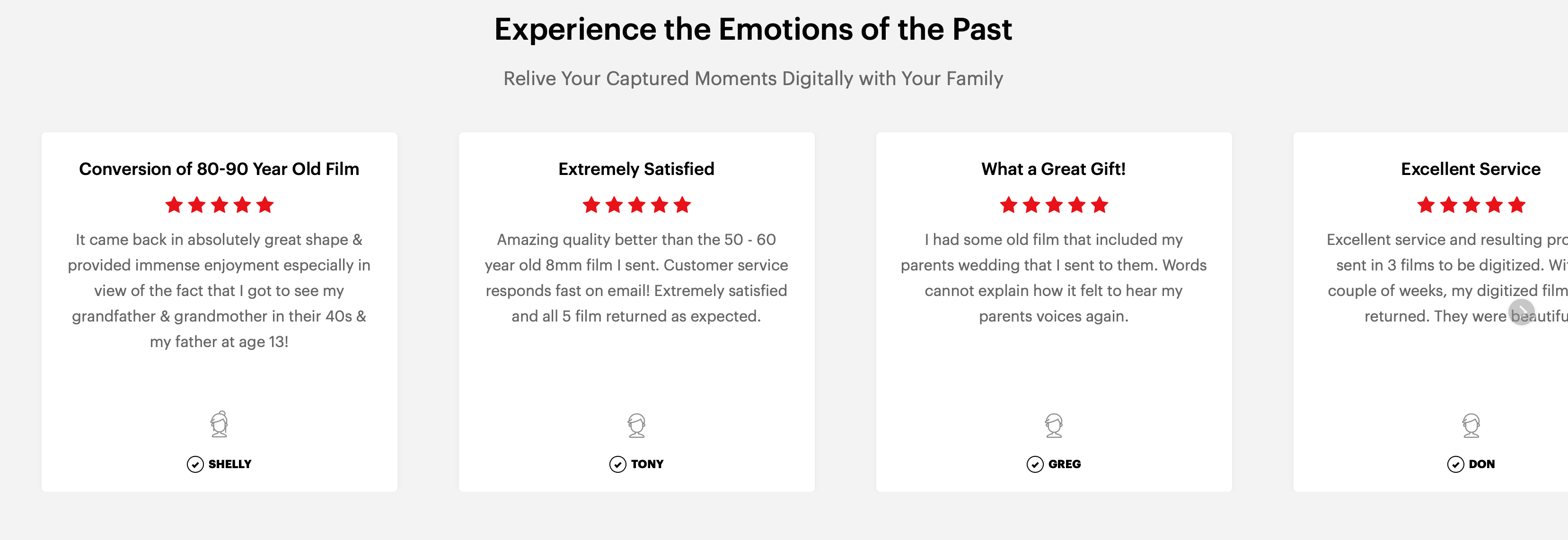
The new product is essentially a rebranding of LegacyBox, a photo digitization company that has gone through multiple iterations after a raft of bad press.

“The Kodak Digitizing Box is a brand licensed product from AMB Media, the creators of Legacy Box. So yes, we’ve licensed the brand to them for this offering,” said Kodak spokesperson Nicholas Rangel. Not much has changed between Kodak’s offering and LegacyBox. The LegacyBox site is almost identical to the Kodak site and very similar to another AMB media product, Southtree.

The product itself is a fairly standard photo digitization service although Southtree does have a number of complaints including a very troubling case of missing mementos. The entry level product is a box into which you can stuff hundreds of photos and videos and have them digitized for a fee.

Ultimately it’s been interesting to see Kodak sell itself off in this way. Like Polaroid before it, the company is now a shell of its former self and this is encouraging parasitical partners to cash in on its brand. Given that Kodak is still a household name for many, it’s no wonder a smaller company like AMB wants hitch itself to that star.

Post by startupsnows.blogspot.com

Failed drone startup Airware auctions assets, Delair buys teammates

Airware desperately sought cash for 18 months before running out of money and shutting down last month, leaving about 120 employees without jobs after the startup had burned $118 million in funding. Bandaid strategic investments from construction company Caterpillar and others kept Airware alive as it looked for a $15 million round, according to a former employee.

A late pivot from hardware to drone software sales through Caterpillar’s dealers went sour, as Airware lacked the features found in competitors and suffered from slow engineering cycles. “So Caterpillar told them, ‘We’re not going to fund you any more. We’re pulling our money.’ So Airware didn’t make payroll,” the source says. The sudden shutdown of one of the most-funded drone startups sent a shock wave through the industry.

Luckily, at least part of Airware’s team is being rescued from the wreckage. French drone services company Delair is buying Airware’s Redbird analytics software and IP, plus the 26 employees who ran it. Airware had acquired Redbird and its 38-member team in 2016 to integrate its analytics that derived business metrics from 2D maps and 3D models of work sites based on imagery shot by drones.

Now the Redbird team will do that for Delair, bringing along its relationships with 30 drone dealers and 200 customers to try to make sense of aerial imagery from construction sites, mines, energy infrastructure and more. “We managed to keep that business alive with Delair,” says Redbird CEO Emmanuel de Maistre. “Customers wanted us to keep this going. They were very worried to not have a solution anymore.” He says that Airware still isn’t formally in bankruptcy or administration, and that as it’s been “actively reaching out to players in the market, to sell the assets . . . Interest from software companies and hardware companies was quite high.”

Founded in 2011, Delair now has 180 employees selling its UX11 mapping drone, data processing software and enterprise integration services to get businesses properly equipped with unmanned aerial vehicles. Delair had previously raised $28.5 million, and last month added a strategic Series B of undisclosed size from Intel — also an Airware investor. Delair co-founder Benjamin Benharrosh tells me that while his company started in hardware and bought Trimble’s UAV business Gatewing in 2016, “lots of the growth now is dedicated to the software,” so the Redbird buy makes sense.

Meanwhile, Airware’s hardware assets are going to auction on Wednesday. Heritage Global Partners will be selling dozens of DJI drones plus networking equipment and computers. Terms of the Delair deal weren’t disclosed, but the money from that sale and the auction could help Airware pay off any outstanding debts or commitments. However, Airware’s A-List investors, including Y Combinator, Google’s GV, Andreessen Horowitz, First Round, Shasta, Felicis, Kleiner Perkins and Intel, aren’t likely to recoup much of their capital. We’ve reached out to Airware, its founding CEO Jonathan Downey and its final CEO Yvonne Wassenaar for comment and will update if we hear back.

Founded in 2011, Airware tried to build a drone operating system before moving to sell drone hardware to commercial enterprises. But the rapid ascent of Chinese drone maker DJI pushed Airware to pivot out of hardware sales and toward drone data collection and analysis services. But a source says that since the startup entered this market late after the hardware boondoggle, “Airware’s technology was pretty far behind. They didn’t have a lot of the feature set a lot of others in the space did, like Propeller, 3DR and DroneDeploy.” Airware lacked seamless data uploads and quick processing times.

“What happened in the company wasn’t so much that the management team didn’t manage it correctly. The sales team just couldn’t sell a product that didn’t work as easily as it needed to compared to other products in the market,” our source says. They noted that Wassenaar, who’d replaced Downey as CEO in June 2017, had done a good job and been dedicated to fundraising to save the company since she joined. “Ultimately it was a matter of bad timing, and they didn’t have the engineering to overcome bad timing,” our source says. “The issue Airware had was a lack of funding. They ran out of runway,” confirms Redbird’s de Maistre.

Airware’s story should serve as a warning to startups raising at high-flying valuations. If a pivot doesn’t go smoothly or new competitors emerge, investors may disappear rather than back a down-round that might save the company but leave it in a downward spiral. Once a startup loses momentum, even having top investors and a ripe potential market can’t always stop it from disappearing into the sunset.

Post by startupsnows.blogspot.com

Unu raises $12 million to build new electric scooter

German startup Unu raised a $12 million funding round led by Ponooc with existing investors Capnamic Ventures, Iris Capital, Michael Baum and NRW.BANK also participating. The company has been building electric scooters (the motorcycle kind) and is working on new products and services.

For the past five years, Unu has sold 10,000 scooters. The market for electric scooter is quite different depending on your country. In parts of Asia, they are massively popular and are slowly overtaking gas-powered scooters. You can see more and more electric scooters in Europe, but it’s still uncharted territories for the most part.

Unu is one of the successful European manufacturers with Govecs, BMW and others. Compared to electric cars, electric scooters present a massive advantage — weight. It’s much more energy-efficient to power a scooter compared to a full-fledged car.

That’s why batteries remain relatively small. You can open the battery compartment, pull the battery and plug it at home. It’s quite heavy as Unu’s battery weighs around 9 kg (nearly 20 pounds). But it’s fine if you just need to carry your battery to your home and plug it overnight every now and then.

Up next, the company plans to release a second generation of its product. The company doesn’t have much to say just yet. But it sounds like Unu is working on connected vehicles so that Unu could work with scooter-sharing services.

There’s a huge market opportunity as scooter-sharing companies are booming in Europe. In Paris alone, Cityscoot and Coup have flooded the streets with scooters from Govecs and Gogoro. There are many other companies working on similar services across Europe.

If Unu could convince a company to buy some of their scooters for their fleet, that could lead to thousands of sales in no time. The company is working on multiple partnerships. Now let’s see if Unu plans to create its own service in the future and work on other types of vehicles.

Post by startupsnows.blogspot.com

Eaze co-founder Keith McCarty raises $5M for his new B2B cannabis startup

Keith McCarty couldn’t stay out of the booming weed business for long.

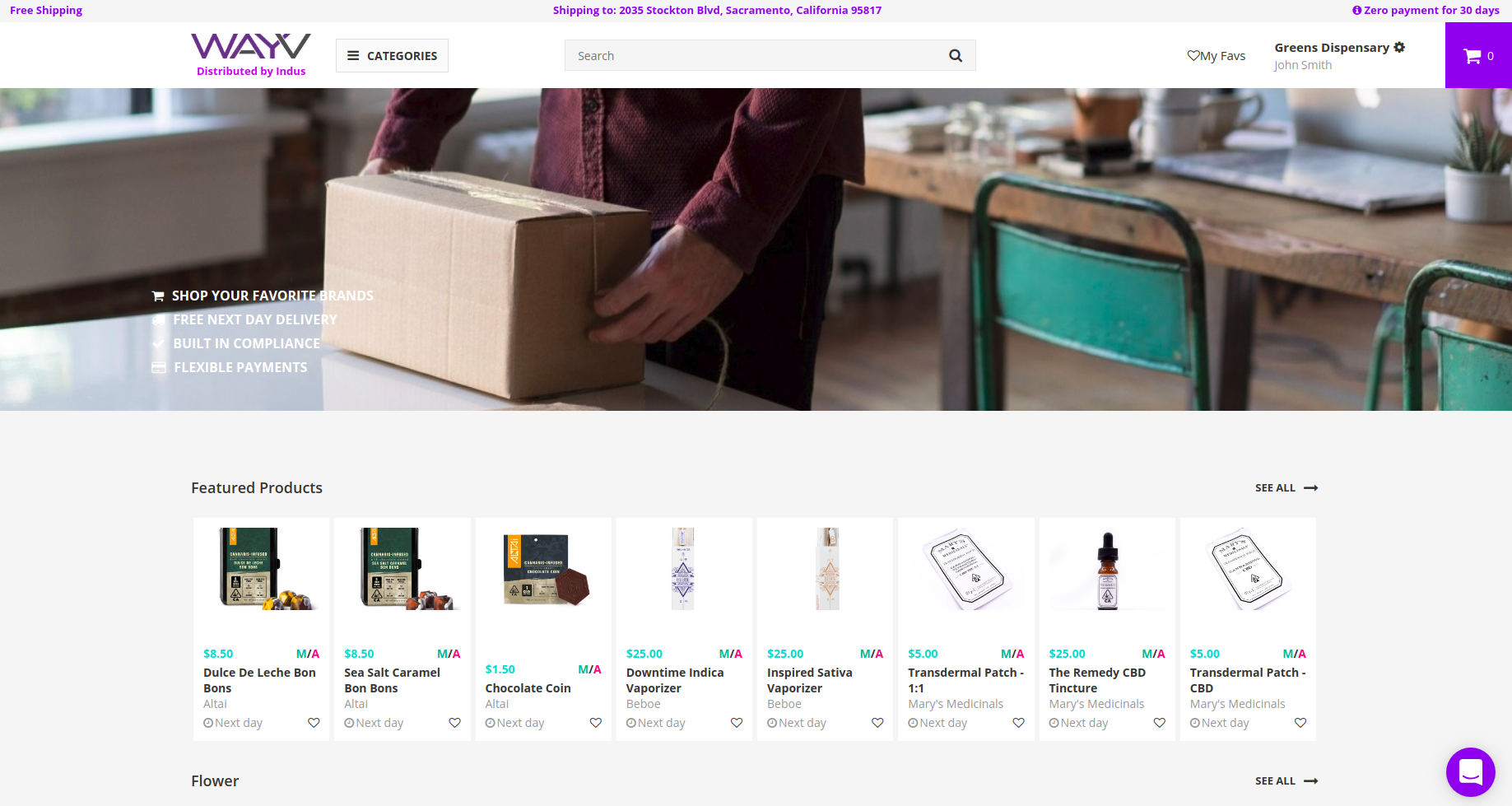
The co-founder and former chief executive officer of the well-funded marijuana delivery startup Eaze has launched WAYV, a B2B cannabis logistics and compliance platform that delivers inventory to cannabis retailers. Today, the company is announcing its first round of funding, a $5 million seed round led by David Sacks at Craft Ventures. The round represents the former PayPal executive’s first investment in the cannabis technology sector.

Other investors in the round declined to be named.

McCarty and Sacks previously worked together at Yammer, a private social networking tool used by businesses created by Sacks in 2008. The company sold to Microsoft in 2012 for $1.2 billion, giving McCarty and several others enough cash to experiment. For McCarty, that meant exploring the hazy and uncharted territory that was marijuana delivery.

McCarty, however, mysteriously left Eaze right as the company gained significant traction. Neither the company nor McCarty ever explained the shake-up; McCarty was quickly replaced by another former Yammer employee, Jim Patterson, the founder and former CEO of Zinc. In a conversation with TechCrunch, McCarty didn’t clarify the nature of his exit.

He did say that the idea for WAYV came from observing the difficulties of cannabis supply chain logistics during his time at Eaze.

Headquartered in Los Angeles, WAYV connects licensed cannabis companies to licensed brands and provides next-day delivery of cannabis products — it’s essentially Eaze for the cannabis enterprise not the average cannabis consumer. The startup was founded last year and has so far delivered to retailers in California only.

As a second-time cannabis founder, McCarty said building WAYV has been a lot different than launching Eaze, which was one of the first big-name marijuana tech companies.

“Back in 2014, [Eaze was] one of the first to raise venture capital, it was kind of unheard of,” McCarty told TechCrunch. “Now, the majority of Americans favor legalization. For medical, it’s 90 percent and for adult recreational, it’s more than 60 percent. As we Americans continue to favor legalization and that stigma is removed, not just medical but also adult use, it’s going to draw attention and also investment.”

Venture capital investment in cannabis startups has continued to climb, most notably after the state of California voted to legalize recreational marijuana use in 2016. According to Crunchbase, $700 million has been funneled into the space since 2014.

“The industry is moving at such a fast cadence, it’s really exciting to be a part of,” McCarty added.

Post by startupsnows.blogspot.com

Friday, October 26, 2018

Expedia acquires Pillow and ApartmentJet to conquer the short-term rental market

To keep up with the rising demand for short-term rentals in U.S. cities and compete with the home-sharing giant Airbnb, travel booking site Expedia has picked up a pair of venture-backed hospitality startups, Pillow and ApartmentJet.

Employees of both companies will join Expedia. The company declined to disclose the financial terms of the deals.

“Acquiring Pillow and ApartmentJet will help unlock urban growth opportunities that, over time, will contribute to HomeAway’s ability to add an even broader selection of accommodations to its marketplace and marketplaces across Expedia Group brands, ensuring travelers always find the perfect place to stay,” the company explained in a statement.

Expedia paid $3.9 billion for HomeAway and its portfolio of travel brands in 2015. The deal was its first major move in the alternative accommodations space, as well as the beginning of a series of efforts to outdo VC darling Airbnb. Its latest targets provide software tools for property managers to easily manage short-term rentals on Airbnb competitors like HomeAway and VRBO.

Located in San Francisco, Pillow helps residents list their apartments as short-term rentals without violating their leases. It’s raised a total of $16.5 million in VC backing since 2013, including a $13.5 million round last year led by Mayfield, with participation from Sterling.VC, Peak Capital Partners, Expansion VC, Chris Anderson, Gary Vaynerchuk, Dennis Phelps and Veritas Investments.

ApartmentJet helps property owners earn money off vacancies. Founded in 2016, the Chicago-headquartered startup had raised a reported $1.2 million in capital from Network Ventures and BlueTree.

Bellevue-based Expedia Group owns several travel brands, including HomeAway, VRBO, Travelocity, trivago, Orbitz and Hotels.com. The company is both an active investor in and acquirer of startups.

Expedia’s shares rose 9.4 percent Thursday after its third-quarter earnings beat analyst expectations. The company posted $3.28 billion in revenue, a notable increase from last year’s $2.97 billion.

Post by startupsnows.blogspot.com

Epic Games, the creator of Fortnite, raises $1.25 billion

It pays to have the most popular game in the world.

Epic Games, the creators of the runaway gaming smash hit Fortnite, have raised $1.25 billion in a new round of financing.

via GIPHY

It’s been 20 years since Epic Games first released its Unreal game development engine in concert with its first person shooter, Unreal. Since then, the company has been releasing free-to-play games as a loss leader to show off what its powerful development toolkit can do.

Now, with the insane success of Fortnite, the company has flipped the script.

Since Fortnite became the thing that nearly every gamer in the world plays, the company has slashed prices on the Unreal game engine even as it keeps upgrading the technology.

And the company has been plowing that cash back into the community to support esports tournaments with a $100 million prize pool to support competitive Fortnite gamers.

The company’s game has become the kind of old-school cultural phenomenon that one rarely sees in the fractured age of internet silos. It’s inspired dance crazes, Halloween costumes, and even a Monopoly game and a Nerf gun.

And now it appears that the game has also inspired some of the biggest names in Silicon Valley’s venture capital investment scene to commit huge sums to continue its success.

Investors in the latest round include KKR, Iconiq Capital, Smash Ventures,Vulcan Capital, Kleiner Perkins and Lightspeed Venture Partners, as well as gaming companies like aXiomatic, which announced a significant investment from the NBA legend Michael Jordan earlier in October.

The new investors are joining Tencent, Disney, and Endeavor as minority shareholders in the company — which amazingly still is controlled by its chief executive and founder, Tim Sweeney.

Epic Games has fundamentally changed the model for interactive entertainment under the company’s visionary leadership,” said Ted Oberwager of KKR, in a statement.

Post by startupsnows.blogspot.com